


Summer Heat Apocalypse: Record Temperatures Coming!


Turkey is on the brink of a radical transformation in its climate map. Prof. Dr. Murat Türkeş, a board member of the Climate Change and Policies Implementation and Research Center at Boğaziçi University, issued clear warnings against the looming danger. According to Türkeş, this year could see a refresh of temperature records due to a strong El Nino effect; however, the real significant risk lies in a 'total drought' scenario post-2040.

The summer of 2026 is set to shatter new records.
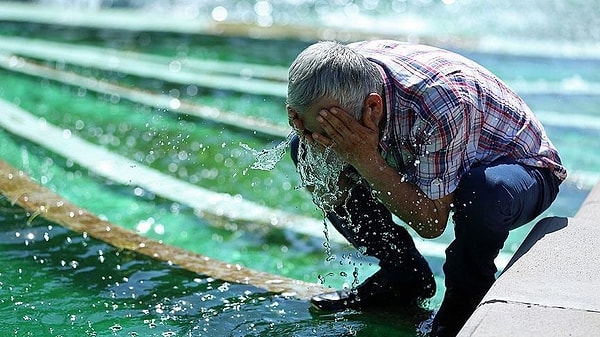
Professor Murat Türkeş from Boğaziçi University has issued a serious warning about the meteorological dangers that Turkey may face. Highlighting the possibility that the extreme heat experienced last year could reoccur this year, Professor Türkeş particularly emphasized the end of June. He stressed that there is a high chance of new heat records being broken in the inland regions, Central Anatolia, and Southeastern Anatolia, cautioning that surface temperatures could rise 'well above the norm.'
For the summer of 2026, Türkeş made the following remarks:
'The observed long-term warming, climate change, and El Nino could cause temperatures to exceed the norms in many places this year as well. Just like in recent years, particularly in the inland regions, Central Anatolia, Southwestern Anatolia, and Southeastern Anatolia, there is a chance that some stations could break high temperature records this year in Turkey, just as they did last year.'
Turkey could potentially turn into a desert by the year 2040.
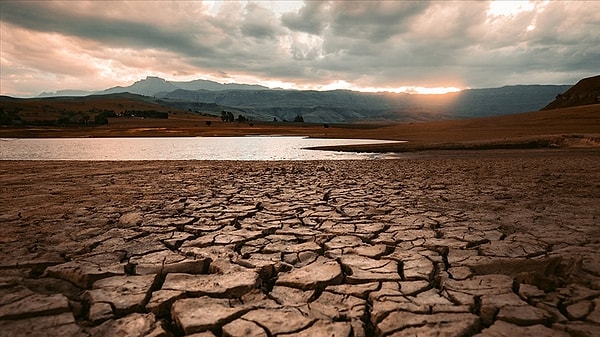
One of Türkeş's most striking warnings pertained to the future climate structure of Turkey. According to pessimistic scenarios, the 'absolute desert climate' currently prevailing in northern Syria could infiltrate Turkish lands from the 2040s onwards. The regions at risk were listed as the Konya Basin, Southeastern Anatolia, Central and Western Anatolia, and Thrace.
Türkeş elaborated, 'Today, we observe a semi-arid steppe climate at the Turkey-Syria border. If climate change continues at this pace, if the rise in temperatures persists and the precipitation regime changes, if soil moisture decreases, there is a possibility of the arid, even desert-like climate currently in northern Syria extending into Turkey from the Syrian border. This could result in a climatologically arid region forming in the broad southern part of Southeastern Anatolia, including Turkey's grain barn, the Konya Basin, in the central and southern parts of Central Anatolia, even in Western Anatolia and Thrace. If this happens, it implies a likelihood of Turkey becoming a country suffering from physical and economic water scarcity, potentially becoming water-poor over time, and experiencing difficulties in terms of food security.'
Rising temperatures will escalate both the frequency and intensity of forest fires.
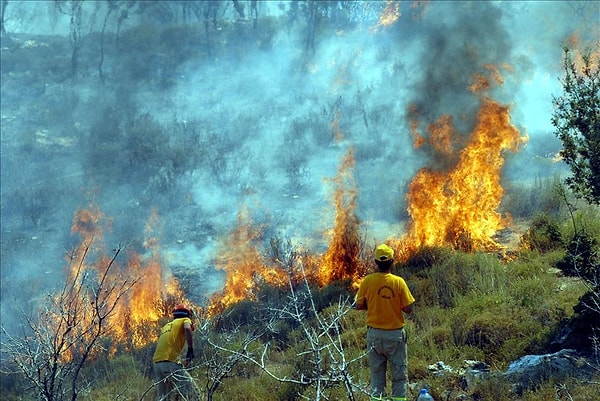
Prof. Dr. Türkeş pointed out that rising temperatures do not merely affect thermometers, but they could potentially trigger a chain of catastrophes. He reminded us of the record-breaking heatwaves that have swept across the Aegean region (Manisa, İzmir, Aydın) from North Africa and the Balkans, and emphasized that these conditions have increased both the frequency and intensity of forest fires.
Prof. Dr. Türkeş concluded his remarks as follows:
'Temperatures recorded in Manisa, İzmir, Aydın, Denizli, and occasionally in the districts of Muğla, can surpass those in Southeastern Anatolia. The escalation of temperatures intensifies summer droughts and the new fire regime, thereby increasing the frequency, intensity, duration, and impact area of forest fires. This exerts excessive pressure on water resources and leads to soil desiccation. Consequently, the long-term rise in temperatures does not merely result in high atmospheric temperatures and heatwaves.
Heatwaves can exacerbate summer droughts and lead to a much more severe fire regime. When prolonged drought and summer heat combine, issues arise with irrigation water in agriculture. To mitigate the impacts of these adverse conditions, it is necessary to develop integrated water resources, drought, and forest fire management systems. Additionally, agricultural systems, soil, and water resources need to be made sustainable and climate-resilient.'
Keşfet ile ziyaret ettiğin tüm kategorileri tek akışta gör!
 Test
Test
 Gündem
 Magazin
 Video
Video



Send Comment