


Rising Temperatures Force Farmers to Spray Clay on Tomatoes


Farmers grappling with global climate change, severe heatwaves, and drought have found an unusual solution to protect their crops from the relentless sun. Producers seeking to safeguard a variety of products, from peppers to tomatoes, apples to grapes, are spraying a natural 'white clay' (Kaolin clay) onto their plants.

During the summer months, temperatures reaching record levels cause severe sunburns and heat stress in plants, just as they do in human skin.
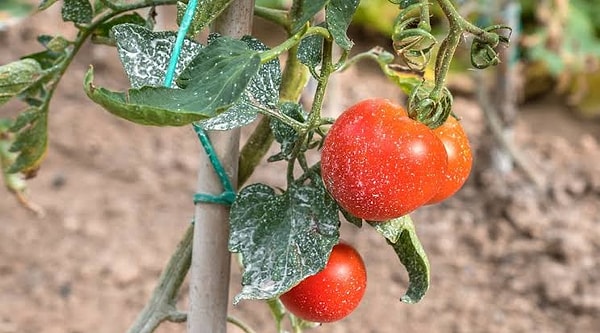
While irrigation systems meet the water needs of plants, they alone are insufficient against the scorching UV rays from above. Fruits that suffer from sunburn lose their ornamental and market value, and in plants that close their stomata (pores) due to extreme heat, photosynthesis slows down, causing a significant drop in yield.
This is where Kaolin clay, which farmers use almost like a 'high-factor sunscreen' for plants, steps in.
This traditional method, which dates back centuries in China and Central Asia, has become one of the most significant components of sustainable agriculture today.
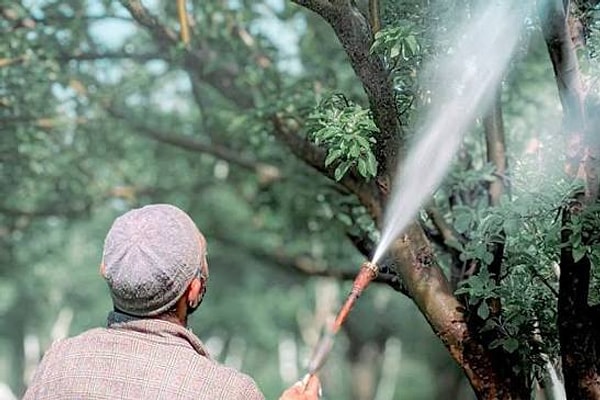
White kaolin clay, a natural mineral, forms a thin white layer on the surface of leaves and fruits when mixed with water and sprayed onto plants.
Just as white clothing protects us from the heat, this protective layer serves as a natural mirror:
Reduces Heat: By reflecting UV rays, it lowers the temperature on the plant surface and prevents heat stress.
Prevents Water Loss: It offers water conservation by helping the plant retain moisture during periods of drought.
Keeps Pests and Diseases at Bay: The physical barrier formed makes it difficult for insects to navigate on the plant and inhibits the spread of fungal infections (pathogens).
Enhances Photosynthesis and Quality: The clay layer, which scatters sunlight deep into the leaves, supports the formation of chlorophyll. This results in more colorful, larger, and healthier fruits, even on hot days.
This method, which has become widespread worldwide, from apple orchards in Germany to vineyards in California and vegetable fields in Spain, offers both a budget-friendly and a completely organic alternative.
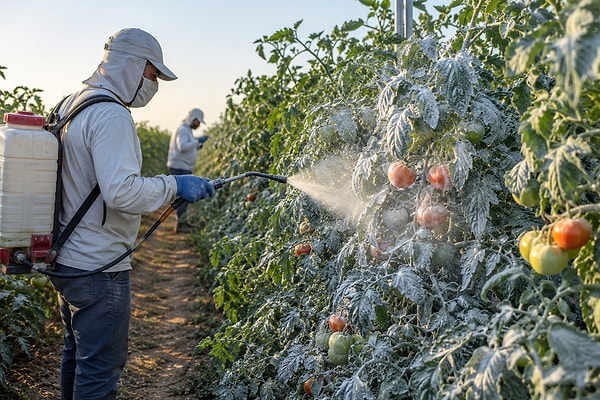
The price of kaolin clay, which varies between 100 and 300 dollars per ton depending on its quality, promotes environmentally friendly production by reducing the need for agricultural pesticides.
In countries like Bulgaria, which boasts a colossal kaolin reserve of approximately 200 million tons, it is noted that this method is not yet widely known. However, with rising temperatures, it is predicted to become a strategic advantage for producers.
Preparing and applying the Kaolin solution, an indispensable part of sustainable agriculture, is quite practical:
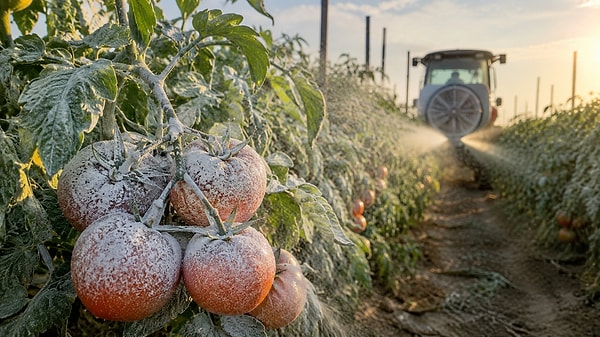
Preparation: To prevent clumping, 3 cups of powdered kaolin clay should be gradually added to 4.5 liters of water while stirring. A few drops of natural liquid soap can be added to ensure better adherence to the leaves.
Application Time: It should be applied during the early morning or evening hours when there's no wind, no rain, and the sun isn't directly overhead.
Frequency: Twice a month, all leaves and stems should be sprayed with a pulverizer to be covered with a thin white layer. (Although the dust is harmless, it is recommended to wear a mask and goggles during application.)
In today's world where temperature records are being broken, kaolin clay not only saves today's harvest but also secures the future of agriculture against the global climate crisis.
Keşfet ile ziyaret ettiğin tüm kategorileri tek akışta gör!
 Test
Test
 Gündem
 Magazin
 Video
Video



Send Comment