


Once Home to 10,000 People, Ghost Town Zaozerny Now Has Only 216 Residents Left


Kazakhstan, possessing one of the world's lowest population densities and ranking ninth in terms of geographical size, is currently grappling with one of the largest internal migration crises in its history. Since the turn of the century, approximately 1,800 settlements have vanished from the map in this country. This rural exodus is not only giving rise to ghost villages but also pushing major cities to the brink of infrastructure collapse.

The town of Zaozerny is the most tangible example of the dramatic decline in the countryside.
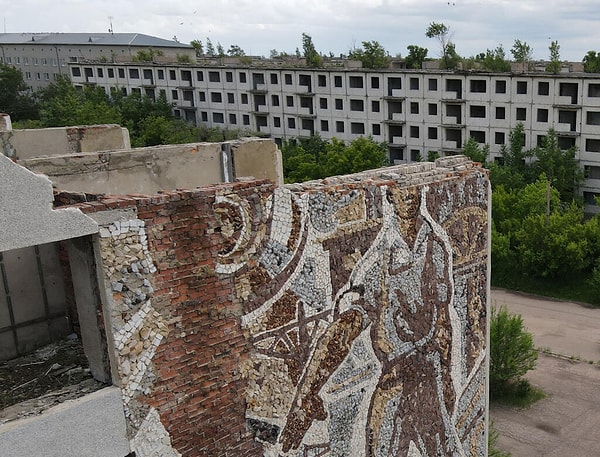
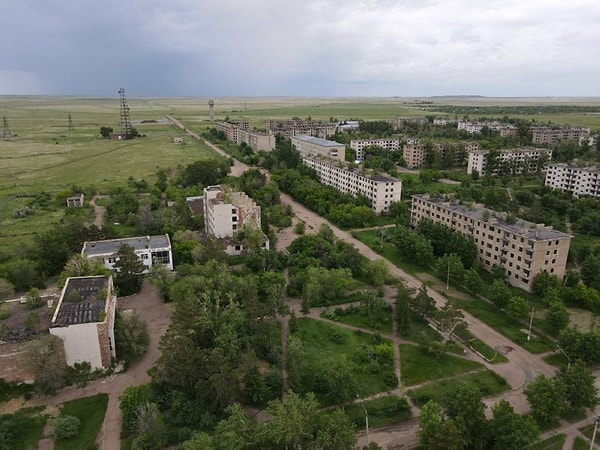
In the year 1991, when the Soviet Union collapsed, the town, which had a population of about 10,000 due to the employment provided by the nearby uranium mine, is now home to only 216 people.
The town, filled with thousands of abandoned homes, bears striking traces of a life succumbed to time:
Cows roam the floor of the old city theater.
The former hospital has completely turned into a pile of rubble.
Half of the face depicted in the enormous Soviet mosaic of a uranium miner has disappeared.
A rare detail reminding that life has not completely frozen is the upcoming municipal election poster outside the school.
In the town surrounded by the solitary cement factory tower on the horizon, the only transportation route, a neglected road, becomes impassable in rain and snow. The journey to the nearest city takes 2 hours.
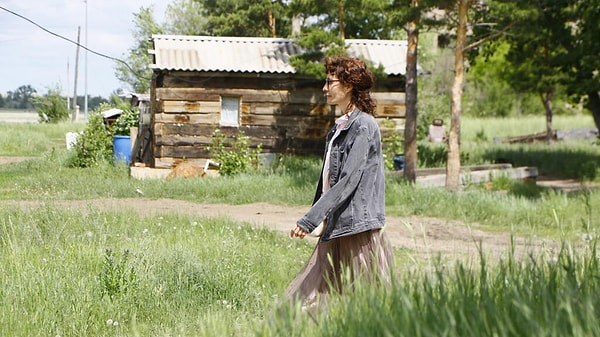
Yulia Sadvakasova, a 33-year-old teacher and mother of two, appreciates the tranquility of her surroundings and the ease of watching over her children. However, she acknowledges the harshness of her circumstances, stating, "Everything is in a terrible state. Whenever we get a chance, as challenging as it may be, we go places."
Since 1991, 1.2 million people have departed from the northern region of the country. The primary reasons for this migration include a lack of economic opportunities, the quest for dynamism among the youth, and the aging and departure of the ethnic Slav population, most of whom are descendants of individuals forcibly relocated during the Soviet era.
In a country with a population of approximately 20 million, 25-30% of the people are concentrated in just three centers: the capital city of Astana, and the southern metropolises of Almaty and Shymkent.
President KassymJomart Tokayev has warned that this mass exodus, due to a lack of social amenities in the regions, is exerting 'tremendous pressure' on the cities. It's reported that schools in Astana are becoming overcrowded and heating and water supply systems are proving inadequate.
On the other hand, the suburb of Kosshy, located 20 kilometers from the center of Astana, has seen its population increase from 2,000 to 80,000 in the last 25 years due to this influx. Anara Batalova, a teacher who moved from a small and dirty industrial town to Astana, sums up the allure of the cities by saying, 'Astana drew me in with its lights, youth, dynamism, new activities, and exhibitions. All our neighbors came from different villages and towns.'
Here are the measures taken by the government aiming to prevent rural depopulation and alleviate urban pressure, along with their current status:
Government-backed incentives to move north faced backlash due to harsh winters and low wages, leading most of those who left to return.
Starting from the spring, the government took a radical decision, prohibiting foreigners returning from abroad and ethnic Kazakhs from obtaining residence permits in three major cities (Astana, Almaty, Shymkent).
Deputy Mayor Olga Zhukova noted that last year, the village was connected to the mains water and street lamps were installed. The reopening of the nearby cement factory, which caused new migrations when it ceased production last year, and the start of hiring experts and workers, is seen as the only source of hope for the town's future.
Keşfet ile ziyaret ettiğin tüm kategorileri tek akışta gör!
 Test
Test
 Gündem
 Magazin
 Video
Video



Send Comment