


Not an Ordinary Asteroid: Cosmic Coincidence That Changed Earth's Fate and Wiped Out Dinosaurs!


Did an ordinary asteroid or a rare 'space oddball' from billions of km away cause the massive catastrophe that ended the dinosaurs? Scientists traced the cosmic object that caused the extinction of dinosaurs by examining the isotopes in the 66 million-year-old K-Pg clay layer.
Here is the cosmic coincidence that rewrote the fate of the Earth

The Stone That Hit The World Was Not An Ordinary Meteor
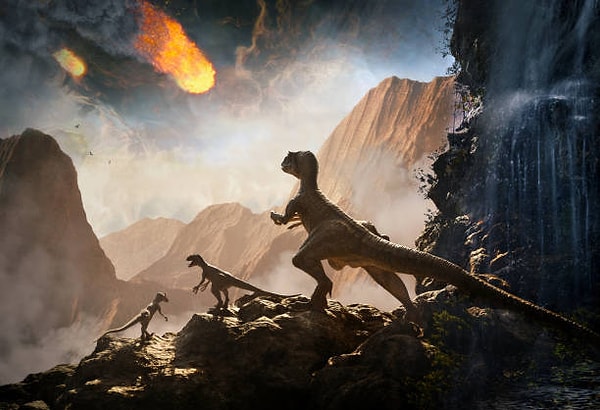
66 million years ago, a seemingly ordinary light shone in the sky that completely rewrote Earth's history. The Chicxulub impact, which occurred near the Yucatán Peninsula in Mexico, created a large debris cloud that plunged the atmosphere into darkness and led to the extinction of approximately 75% of the species on Earth, including dinosaurs. However, the question that scientists have been seeking an answer to for years was:
Where did the asteroid that caused this devastating blow actually come from and what was its structure?
An international new study led by the University of British Columbia (UBC) and published in the journal Science Advances, revealed a significant part of this mystery. The researchers determined that the object that caused the disaster was not an ordinary meteor, but belonged to one of the rarest and most pristine members of the Solar System.
Was the End of Dinosaurs a "Cosmic Misfortune"?
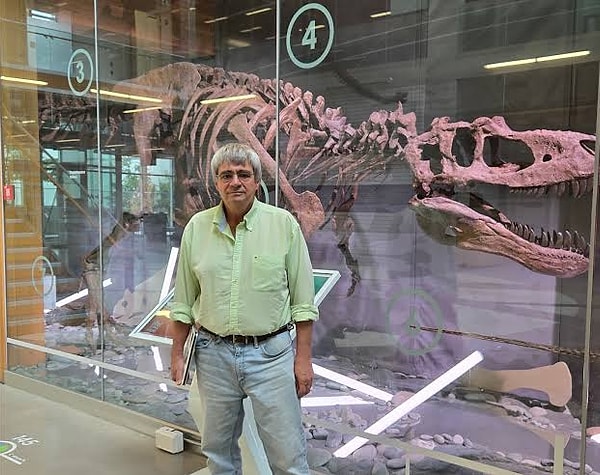
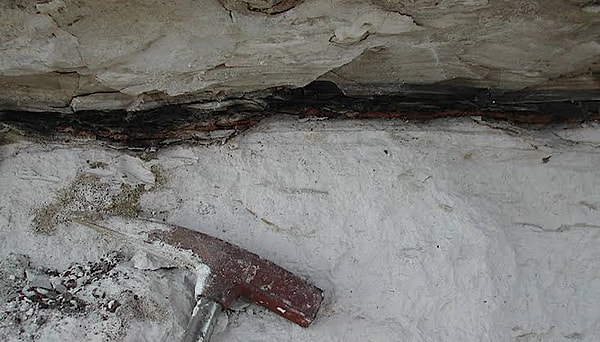
In the research, scientists examined the chemical traces found in the thin clay layer at the Cretaceous-Paleogene (KPg) boundary, which belongs to the period of dinosaur extinction.
Precise analyses conducted especially on nickel isotopes showed that the asteroid that hit the Earth belonged to the 'CO chondrite' (Ornans class) group, an extremely rare subtype of carbonaceous chondrites.
These types of meteors are among the oldest and least altered materials left from the formation of the Solar System. In other words, the object that brought about the end of the dinosaurs was not just a massive asteroid; it was also an extremely rare cosmic piece from the depths of space. Therefore, scientists consider it not as an ordinary celestial body, but rather as a “space oddball” (rare space deviation).
A One in a Billion Chance that Changed the Fate of the World
The impact of the Chicxulub asteroid was a disaster in itself. However, according to researchers, the striking point is that such a large object intersected with Earth after billions of kilometers of space travel.
Despite the numerous asteroids in the Solar System, very few of them possess such rare chemical properties. Therefore, the extinction of dinosaurs was not only the result of a major collision; it was also the result of an extraordinarily rare cosmic encounter.
The Earth Changed After the Impact
The energy released by the impact of the asteroid, approximately 1015 kilometers in width, scattered billions of tons of rock and dust into the atmosphere.
The new research revealed that this rare stone detected was poor in volatile substances such as sulfur and water. This confirms that the real cause of the disaster was not the sulfur in the meteor's chemical structure, but the massive cloud of fine dust and debris scattered into the atmosphere by the collision.
These particles covering the sky blocked the Sun's light from reaching the Earth, causing global temperatures to drop, plant life to be damaged, and food chains to collapse.
As the age of dinosaurs ended, a new era began for mammals. Millions of years later, this change paved the way for the conditions that would lead to the emergence of the human species.
A 66 Million Year Old Mystery Solved
The new research has more clearly identified the cosmic culprit behind one of the greatest extinctions in Earth's history. Looking at it today, the fate of our planet was dependent on a small chance coming from billions of kilometers away.
The event that ended the dinosaurs was perhaps one of the greatest cosmic coincidences in the universe.
Keşfet ile ziyaret ettiğin tüm kategorileri tek akışta gör!
 Test
Test
 Gündem
 Magazin
 Video
Video



Send Comment