


Massive Engineering Mistake Locks 7 Giant Turbines Built 200 Meters Underground


Situated 200 meters below ground within the boundaries of a national park, Manapōuri, the largest hydroelectric power station in New Zealand, was shaken by a monumental engineering blunder that would go down in history. When an attempt was made to operate the seven giant turbines side by side at full capacity, a simple, uncalculated physics rule nearly submerged the entire facility under water.

The Manapouri Hydroelectric Power Station, completed in 1971 and located in the Fiordland National Park on the South Island of New Zealand, was one of the most audacious engineering projects of its time.

This colossal underground power station, constructed by excavating solid rock to a depth of 200 meters, was designed to steer the country's industry with its installed capacity of 850 megawatts (MW). However, a minor detail overlooked by the engineers virtually locked down the giant facility.
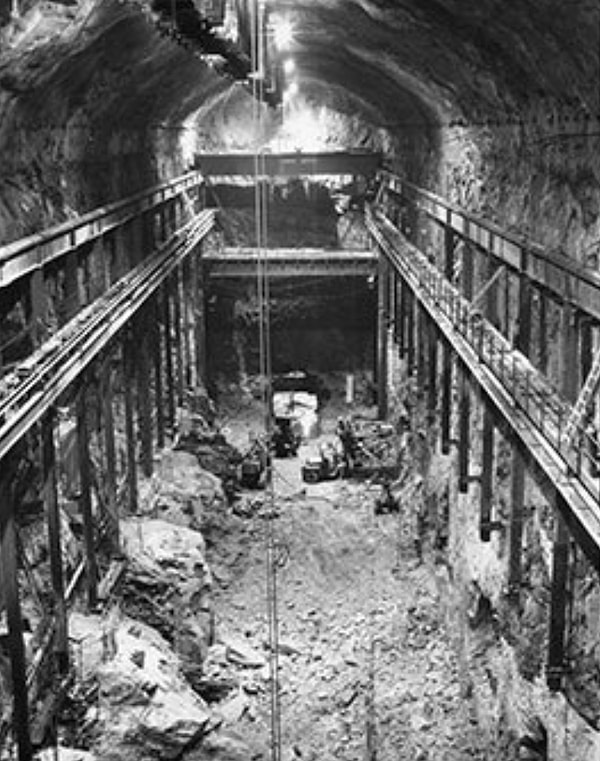
Construction of the project, which cost an astronomical sum of $135.5 million for its time, commenced in 1964 and consumed a total of 8 million working hours. To build the massive machine room, where 18 workers tragically lost their lives during the construction process, a staggering 1.4 million tons of rock were removed from the ground.
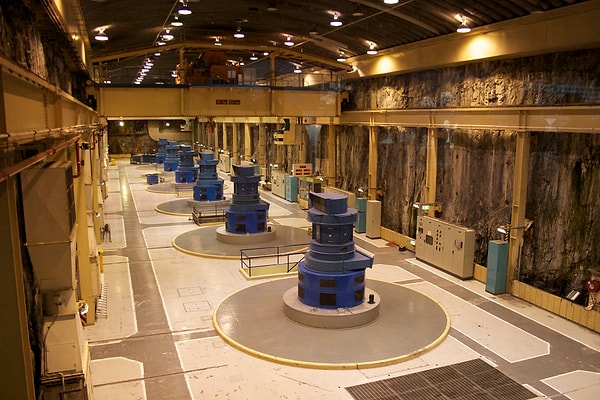
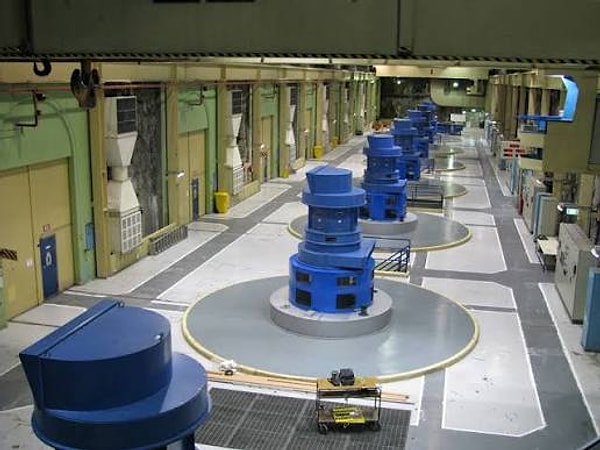
Engineers have crafted a colossal underground hall, stretching 111 meters in length, spanning 18 meters in width, and towering 39 meters in height. They have strategically positioned a total of seven gargantuan turbine generators within this space.
The plan seemed flawless: Water falling from Manapōuri Lake through vertical pipes would spin these seven turbines, which would then be discharged into the sea (Deep Cove) through a colossal 10-kilometer discharge (tailwater) tunnel.
However, shortly after the power plant was fully operational in 1972, engineers stumbled upon a horrifying truth. When all seven turbines were activated simultaneously, the frictional force between the water discharged from the tunnel and the rock walls of the tunnel turned out to be far greater than anticipated.
This situation gave rise to the following fatal consequences:
Hydrodynamic Pressure Decreased: Due to excessive friction, the discharge speed of the water slowed down, leading to a rise in the water level in the tunnel.
Flood Risk: Had the power plant been ramped up to its designed peak capacity of 700 MW, the backflow of water would have completely submerged the massive underground machine room.
Capacity Dropped by 16%: To protect the system, engineers were forced to cap the output of the power plant at a safe limit of 585 MW. Consequently, the giant facility became incapable of operating at full capacity due to its own fault.
In fact, the government had a Plan B to overcome this blockage: Raising the lake level by 8 meters to increase the water pressure (the height of the drop).
However, this plan sparked the largest environmental movement in New Zealand's history. Under the 'Save Manapōuri' campaign, a staggering 264,907 signatures were collected in opposition to the disruption of the lake's natural structure. In 1972, the government backpedaled, deciding not to raise the lake level. This decision not only saved nature but also left the engineers to grapple with the tunnel issue.
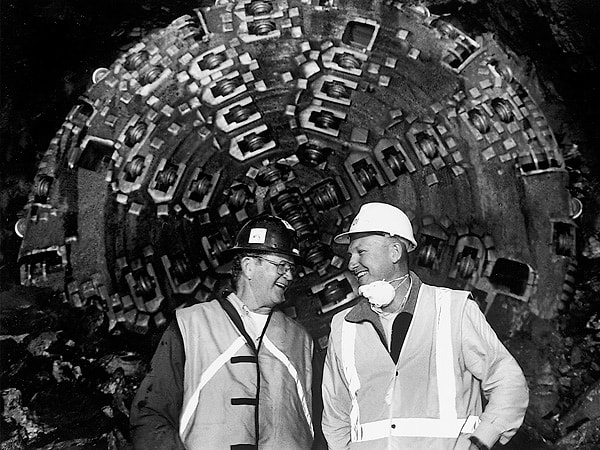
The operation to salvage the power station, which had been operating at limited capacity for decades due to an engineering error, was only able to commence in 1997. The solution was simple, but its implementation was anything but: the construction of a second evacuation tunnel.
The completion of the second evacuation tunnel in 2002, which is 10 meters in diameter and 10 kilometers in length, has significantly eased the water's exit route.
Once the friction resistance was overcome, the hydrodynamic load increased and the turbines began to operate at a much higher efficiency without consuming more water. As a result, the power plant's capacity finally reached the level of 850 MW.
Despite all the design crises it faced and environmental battles it endured, the Manapōuri Hydroelectric Power Station is considered one of New Zealand's greatest engineering achievements. This enormous underground facility was honored in recent years by being included in the 'Engineering Heritage' list by the New Zealand Engineering Institute.
Keşfet ile ziyaret ettiğin tüm kategorileri tek akışta gör!
 Test
Test
 Gündem
 Magazin
 Video
Video



Send Comment