


Engineering Triumph: China Builds Devasa Artificial Island Port to Reshape Global Trade


China has constructed a massive artificial island in the middle of the ocean to overcome its logistical bottleneck. Featured in the documentary 'Big Engineering', the Yangshan Deep Water Port, connected to Shanghai by a 32-kilometer ocean bridge, is altering the face of global trade with its record-breaking accomplishments and engineering triumphs.

The exponential growth of China's foreign trade at a rate of 30% annually since the turn of the century has led to a physical bottleneck at the Shanghai Port, the country's largest gateway for trade.
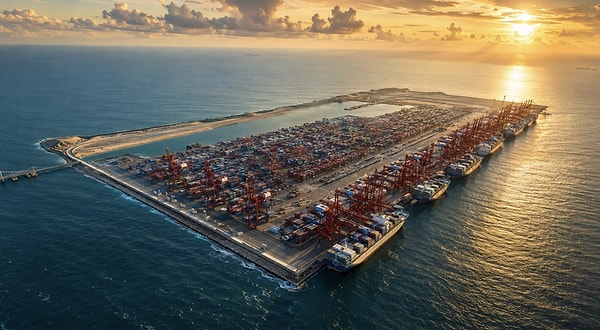
The Yangtze River's silt-laden waters, which reduced the water depth to as low as 7 meters during low tide, rendered it impossible for modern mega cargo ships (PostPanamax) requiring a depth of 12 meters to enter the port. In response to this crisis, the Shanghai administration embarked on one of the most radical and ambitious infrastructure projects in history in 2002: constructing a port from scratch in the middle of the ocean, 32 kilometers off the coast.
The 'Big Engineering' documentary aired on the Big Engineering channel in June 2026, vividly depicting how engineers battled mud, typhoons, fog, and colossal 6-meter waves to construct the world's largest deep-water port.
The chosen area of Yangshan was initially nothing more than a few tiny islands and a fishing village.
Over 60% of the region was submerged in sea water. The engineers decided to artificially fill in the missing area, while preserving the natural structure of the islands.
The cost: 18 billion US dollars.
A Race Against Time: In less than four years, the ocean, 15 meters deep, was transformed into an artificial harbor spanning 10 km². This area equates to more than 20,000 basketball courts.
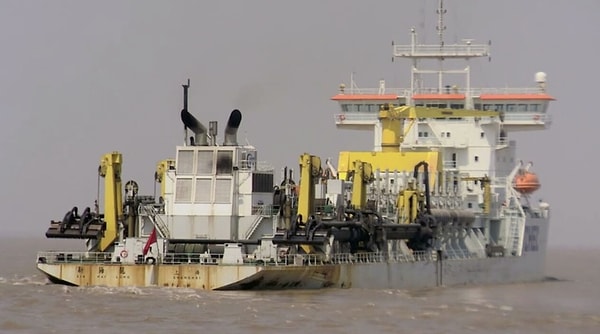
Enter the 'Sea Dragon': A giant dredging ship named 'Sea Dragon' from the Netherlands was used for seabed reclamation. This colossal machine, capable of drawing 12,888 m³ (over 200,000 beer barrels) of mud per hour, laid the foundation of the island by spewing mud and sand equivalent to more than a million Olympic swimming pools in just the initial phase.
With the inauguration of the port, both technology and speed limits were pushed to their extremes.
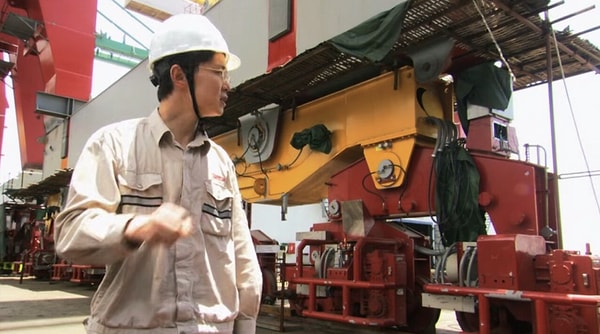
The port was equipped with 13 colossal ship-to-shore cranes, capable of lifting double the load of ordinary cranes and standing at a height of 50 meters. These cranes, likened to 'Godzilla' in the documentary, were transported in a single piece from a factory 125 km away, ready to be moved by ships.
This massive infrastructure quickly bore fruit. In the spring of 2007, a giant container ship longer than 300 meters docked at the port. The team had only 20 hours to unload 3,000 containers from the ship and load 2,000 in their place. While ordinary ports can move 30 containers per hour per crane, the operators at Yangshan exceeded 50. The local team set a hard-to-break world record by moving 5,812 containers in a single day.
The Donghai Bridge, a six-lane, 32-kilometer long structure, was constructed to facilitate the transportation of unloaded cargo to the mainland across the ocean.
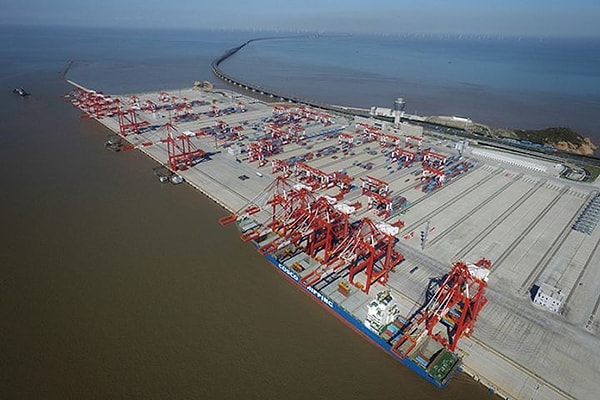
This structure, twelve times longer than the Golden Gate Bridge, claimed the title of being the second longest ocean bridge in the world at the time.
With the guidance of GPS and seven satellites, more than 6,000 piles were driven into the seabed mud with incredible precision of 3 to 5 millimeters. Over 600 concrete beams, each weighing more than 2,000 tons and manufactured on land, were transported to the sea by special barges. The bridge, designed in an 'S' shape to allow safe passage for ships, didn't even budge when it was directly hit by the super typhoon Chanchu in 2006.
Equipped with surveillance cameras, wireless commands for trucks, and artificial intelligence-backed control systems, Yangshan has quickly caught up with giant competitors like Singapore and Hong Kong.
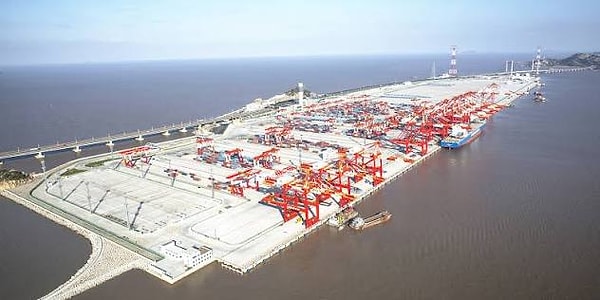
Boasting an annual capacity of 25 million containers, this port is now recognized as a reference point in global logistics.
The efficiency of Yangshan has a direct impact on China's major trading partners. For instance, Yangshan, single-handedly handling a volume far exceeding that of Santos Port, the largest port in Latin America (Brazil), reduces global trade costs. Infrastructure experts emphasize that the story of this artificial island serves as a 'case study' for long-term vision and public administration worldwide.
Keşfet ile ziyaret ettiğin tüm kategorileri tek akışta gör!
 Test
Test
 Gündem
 Magazin
 Video
Video



Send Comment