


Earth’s Twin No More: The Terrifying Secrets Behind the Hellish Evolution of Venus


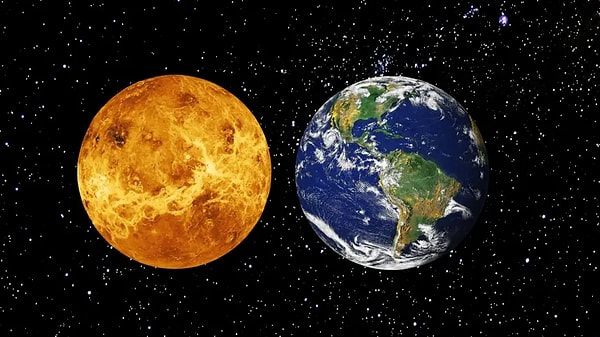
Venus, being almost the same size as Earth, holds the title of the hottest planet in the solar system with a scorching surface temperature of 464°C and an atmospheric pressure of 92. These extreme conditions are the result of what scientists refer to as the 'runaway greenhouse effect'. So, how did this twin planet with the same composition end up with such a vastly different fate?

What are the Fundamental Differences Between Venus and Earth?

Data collected by NASA's Magellan spacecraft between 1990 and 1994 reveals that a staggering 96% of Venus's surface is swathed in a dense atmosphere composed predominantly of carbon dioxide, with nitrogen making up another 3.5%. In his book 'Venus Revealed,' David Grinspoon from the Planetary Science Institute elucidates this situation, stating, 'Venus serves as a perfect example of how the greenhouse effect can spiral out of control.'
Grinspoon's research further unveils that the surface pressure on Venus is a whopping 92 times that of Earth, and this dense atmosphere effectively traps heat. As a result, temperatures on the planet's surface are so extreme that even lead could melt.
How Did Venus Lose Its Oceans?
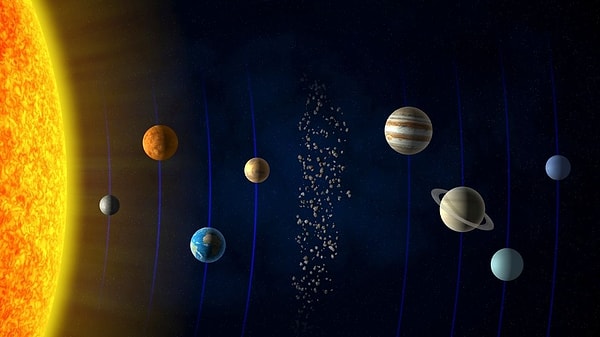
Compelling evidence suggests that Venus once harbored oceans. However, due to a runaway greenhouse effect, surface temperatures have caused water vapor to remain in the atmosphere. Researchers from NASA point out that Venus's intense volcanic activity, which continually pumps CO2 into the atmosphere, has accelerated this process.
On Earth, oceans and tectonic plates regulate the carbon dioxide cycle, but this mechanism doesn't function on Venus. As a result, CO2 accumulates in the atmosphere, creating an escalating greenhouse effect.
The Future of Venus Exploration
NASA's DAVINCI+ (Deep Atmosphere Venus Investigation of Noble gases, Chemistry, and Imaging Plus) mission is set to reach Venus in 2029, followed by VERITAS (Venus Emissivity, Radio Science, InSAR, Topography, and Spectroscopy) in 2031. The primary aim of these missions is to delve deeper into the planet's atmospheric dynamics and surface composition.
While DAVINCI+ will primarily focus on the chemical analysis of the atmosphere, VERITAS will engage in high-resolution radar imaging. The data gathered from these missions will not only enhance our understanding of Venus's evolution but also shed light on the processes of climate change here on Earth.
Keşfet ile ziyaret ettiğin tüm kategorileri tek akışta gör!
 Test
Test
 Gündem
 Magazin
 Video
Video



Send Comment