


Drought-Stricken Country Decides to Pump Ocean Water Through Giant Pipelines


The Moroccan government has initiated a mega seawater purification strategy, aiming to produce more than 1.7 billion cubic meters of freshwater by 2030. The most critical part of this strategy is the 'CasablancaSettat Seawater Purification Project', which is set to become Africa's largest and the world's largest desalination plant powered entirely by renewable energy.

This colossal facility, constructed in Sidi Rahal, located in the Greater Casablanca region, will boast an annual freshwater production capacity of 300 million cubic meters.
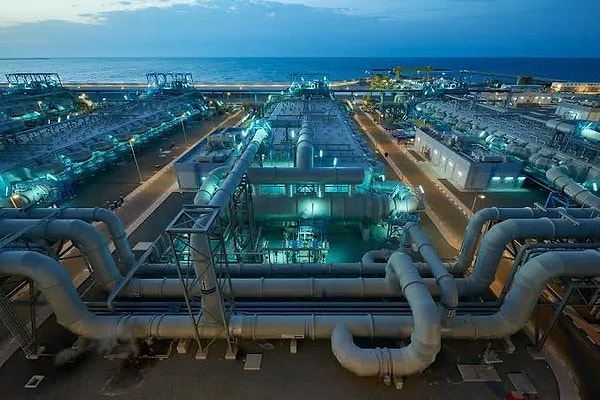
Of the water produced, 250 million cubic meters will be supplied to the network as drinking water, while the remaining 50 million cubic meters will be utilized for irrigating the regional agricultural lands grappling with drought.
Once fully completed, the project alone is set to meet the water needs of a whopping 7.5 million people living in neighboring areas such as Casablanca, Settat, Berrechid, and Bir Jdid. It is projected to be fully operational at maximum capacity by the year 2028.
The most significant feature that sets this project apart on a global scale is its commitment to preserving nature without inflicting harm on the environment.
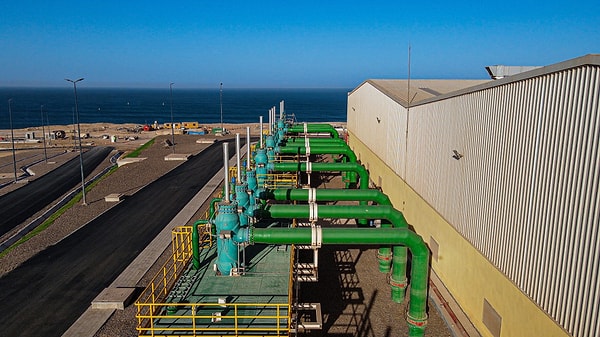
The facility, which will utilize the most advanced reverse osmosis technology for purifying seawater, requires a tremendous amount of electrical energy. To meet this demand without harming the environment, the National Office of Electricity and Drinking Water of Morocco (ONEE) has integrated a dedicated wind energy power plant into the facility.
The facility will operate entirely on renewable energy, thereby neutralizing its carbon emissions.
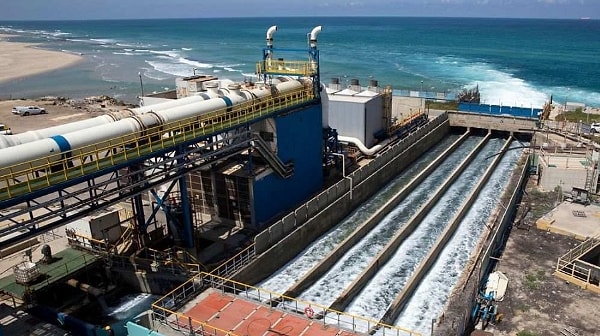
A colossal global consortium stands behind the project developed through a public-private partnership. The project, executed in collaboration with the Spanish infrastructure titan Acciona (holding a 50% stake), Green of Africa (with a 45% stake), and Afriquia Gaz (with a 5% stake), has a total investment cost announced to be 6.5 billion Moroccan Dirham, which is approximately 613 million Euros.
The Spanish firm Acciona, which has taken on the construction of the facility, will also be responsible for its operation and maintenance for the forthcoming 27 years.
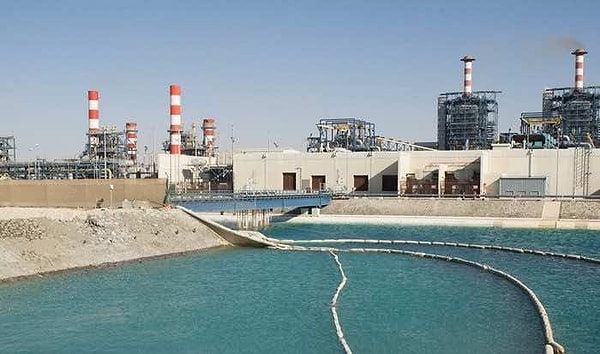
Spearheaded by global financial titan Societe Generale bank, and funded by the guarantees of Spain's Export Credit Agency Cesce under its Green Investment Policy, this colossal project will not only secure the future of Morocco. Moreover, it will serve as a milestone and a benchmark in sustainable water management for the entirety of North Africa and the world.
Keşfet ile ziyaret ettiğin tüm kategorileri tek akışta gör!
 Test
Test
 Gündem
 Magazin
 Video
Video



Send Comment