


Double Sky Spectacle: 2026 Perseid Meteor Shower to Align With Solar Eclipse! How to Watch


The Perseid meteor shower, which has been causing humanity to look up at the sky for thousands of years, is preparing for an unforgettable show in 2026. This unique natural event, which adorns the sky with streaks of light every year in August, coincides this time with a rare sky event.
The Perseid meteor shower will occur this year right after a total solar eclipse. So, when and where can the Perseid meteor shower be observed? Will the Perseid meteor shower and solar eclipse be visible from Turkey?
Here are the details.

When is the 2026 Perseid Meteor Shower?
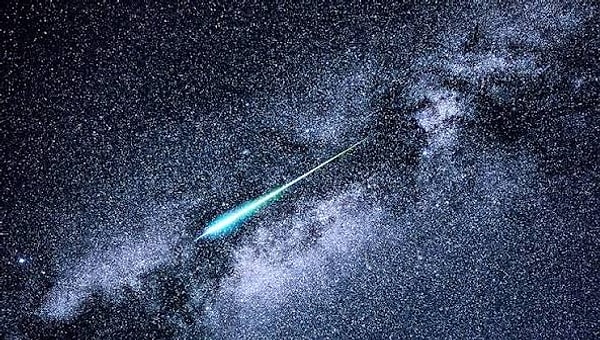
The 2026 Perseid meteor shower will be active between July 17 and August 24, 2026. However, the most intense activity in the sky will start on the night of August 12 and continue until the morning of August 13.
The best time to watch the meteor shower will be after midnight, especially in the early morning hours. During these hours, the Earth enters more directly into the meteor stream created by the particles left over from the SwiftTuttle comet.
What Time Can the 2026 Perseid Meteor Shower Be Watched?
The best time to watch the meteors will be the night connecting August 12 to August 13, when the Perseid meteor shower will peak. Observers will be able to witness this unique celestial event during the period starting after 23:00 and continuing until sunrise.
Especially the hours between 02:00 and 05:00 stand out as the most suitable observation time when the chance of catching more meteors in the sky increases.
Will the 2026 Solar Eclipse and Perseid Meteor Shower Occur at the Same Time?
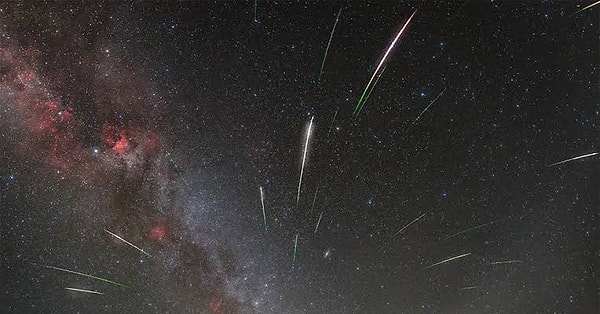
One of the most striking coincidences in the sky calendar of 2026 is revealed here. A total solar eclipse will occur on August 12, 2026. This eclipse can be observed from certain regions of Greenland, Iceland, Spain, Portugal, and Russia. A large part of Europe, on the other hand, will witness a partial eclipse.
Then, on the same night and in the following hours, the peak of the Perseid meteor shower will occur. The coincidence of these two events makes August 2026 one of the most special periods of the year in terms of astronomy.
Will the Perseid Meteor Shower be Visible from Turkey?
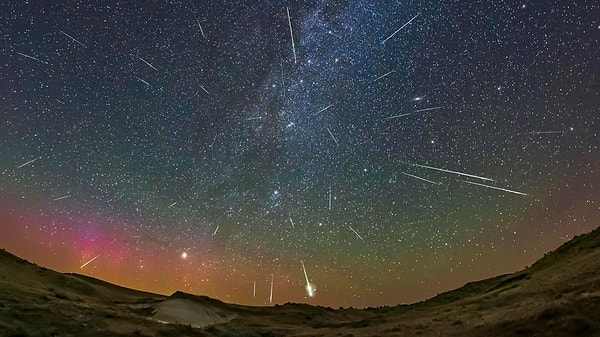
Unlike a total solar eclipse, the Perseid meteor shower will also be visible from Turkey. However, it is necessary to get away from city lights for the best view.
To watch the meteor shower:
Dark and open areas should be preferred,
Stay away from building lights,
A wide part of the sky should be visible,
Wait for about 20-30 minutes for the eyes to adjust to the darkness.
Perseids, which can be observed with the naked eye without a telescope or special equipment, can allow dozens of meteors to be seen per hour under the right conditions.
How Many Meteors Will Be Seen in the Perseid Meteor Shower?
In 2026, because it coincides with the New Moon period of the Moon, the sky will be much darker. This will make it easier to notice especially faint meteors.
Under suitable conditions, it may be possible to see approximately 50 to 100 meteors per hour. Some bright meteors may leave long-lasting light trails in the sky.
So, What is the Perseid Meteor Shower?
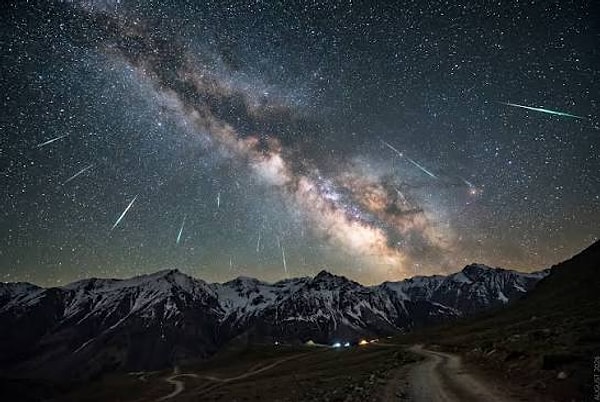
The Perseid meteor shower is a celestial event that occurs when dust and rock particles left behind by the 109P/SwiftTuttle comet enter the Earth's atmosphere.
These small particles, entering the atmosphere at high speeds, burn due to friction and create bright streaks known as 'shooting stars' in the sky.
In reality, the stars are not moving; the light trails we see are caused by the burning of small cosmic particles encountered during Earth's millions of kilometers long space journey in the atmosphere.
Why is it Named Perseid?
This meteor shower is named 'Perseid' because the meteors appear to be coming from the constellation Perseus in the sky.
In ancient Greek mythology, Perseus is known as the hero who killed Medusa. Therefore, the Perseid meteor shower is not only an astronomical event, but also one that attracts attention from a mythological perspective.
History of the Perseid Meteor Shower
The first records of the Perseid meteor shower are known to date back approximately 2,000 years. Chinese sky observers recorded that many bright lights were seen in the sky in 36 AD.
The Perseids, which have been attributed various meanings in different cultures over the centuries, became one of the important research areas of modern astronomy with the discovery of scientists in the 19th century that it was a regular meteor shower.
Belgian astronomer Adolphe Quetelet revealed that the Perseids recurred every year, while Italian astronomer Giovanni Schiaparelli explained the connection of this meteor shower with the SwiftTuttle comet in 1866.
Keşfet ile ziyaret ettiğin tüm kategorileri tek akışta gör!
 Test
Test
 Gündem
 Magazin
 Video
Video
Read More






Send Comment