


City Builds 120-Kilometer Underground Network to Cool Thousands of Buildings Without AC


The escalating use of air conditioning in response to global warming and scorching summer heat is transforming our streets into veritable ovens, thereby creating a vicious cycle. Paris, the capital of France, has launched a revolutionary project that promises to completely break this deadly cycle: The Seine River, running beneath the city, has been converted into a massive cooling source that can chill thousands of buildings without the need for air conditioning.

On a sweltering summer day, millions of air conditioners, in operation, draw in the heat from inside buildings and expel it out onto the streets.
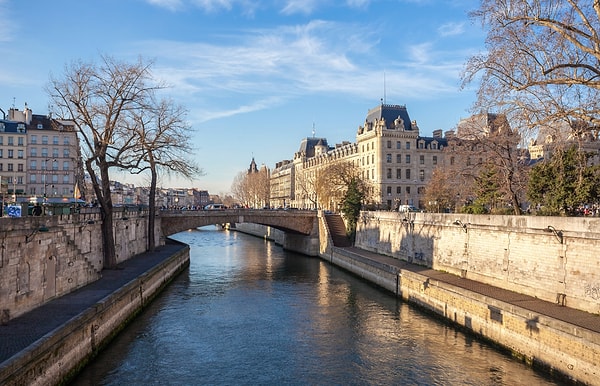
This phenomenon further escalates the temperature in cities, setting the stage for even hotter days to follow. Sophie Parison, a researcher in Paris focusing on urban heat and cooling, succinctly captures this threat: 'Everything that requires energy emits heat, and this heat has to go somewhere.'
Paris, in response to this environmental crisis caused by air conditioners, has been quietly developing an underground model for the past three decades. Now, the city is transforming this into a massive infrastructure initiative, spreading it across the entire city.
How Does the System Work? How Does the Seine River Breathe Life into Buildings?
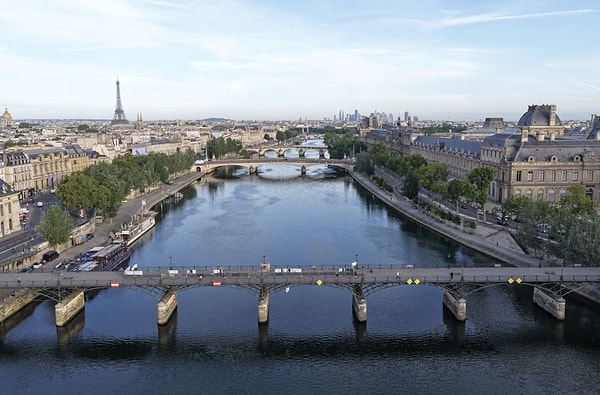
Entitled 'Fraîcheur de Paris' or 'Freshness of Paris,' this system operates a vast underground pipeline network stretching a staggering 120 kilometers beneath the city streets. The system ingeniously blends engineering with the laws of physics:
Never Touching: Cold water drawn from the Seine River flows parallel to the hot water pipes returning from the buildings.
Heat Exchanger Kicks In: Thanks to a thin metal wall between the two pipes, the heat from the buildings is transferred to the river water. The two liquids never mix.
No Harm to Nature: The chilled water, now warmed, is sent back to cool the buildings, while the water taken from the Seine River is returned to the river only a few degrees warmer. Measurements have confirmed that this process causes no harm to the river's ecology.
Currently, world-renowned establishments such as the Louvre Museum, the Grand Palais, large hospitals, schools, and major office areas are receiving cooling services from this underground pipeline just as they would receive electricity or mains water.
The city of Paris is planning to triple this network with a colossal 20-year contract worth 2.4 billion euros (approximately 2.6 billion dollars).
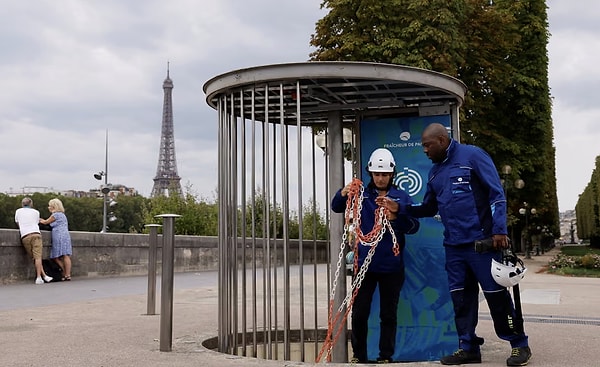
The goal is to connect over 3,000 buildings throughout the city, including hospitals, schools, nurseries, and nursing homes, to this system by 2042.
Tim Guigon, a spokesperson for Fraîcheur de Paris, emphasizes the scale of the project, stating, 'Our aim is to transition from a historic network that focused solely on large business centers, to a massive infrastructure that operates citywide.'
Pauline Lavaud, the city's Director of Climate Transition, points out that this underground network offers significantly higher energy and environmental performance compared to individual air conditioners. As the network expands, Parisians are expected to stop purchasing window-type air conditioners for their homes. This will also prevent the release of waste heat into the streets, thereby mitigating intense heatwaves throughout the city.
This system proved to be so successful that Stockholm developed similar methods using the Baltic Sea, while Toronto did the same with Lake Ontario.
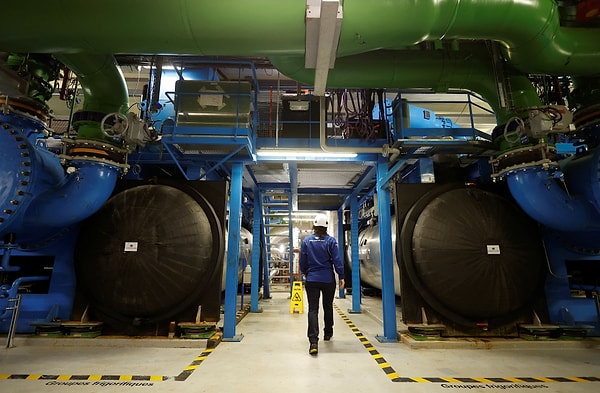
However, experts caution: This system cannot be directly applied to every city.
Emmanuel Gendreau, an ecologist at Sorbonne, emphasizes the critical importance of not directly applying solutions that have worked in one city to another. For instance, the Thames River in London does not have the right flow and temperature for this system; moreover, the space to lay pipes is virtually non-existent due to the already extensive network of tunnels beneath the London Underground. As for cities in the Global South that are still developing, the cost of constructing this colossal underground infrastructure from scratch, coupled with high interest rates, poses the greatest obstacle.
Keşfet ile ziyaret ettiğin tüm kategorileri tek akışta gör!
 Test
Test
 Gündem
 Magazin
 Video
Video



Send Comment