


Cement That Cools Buildings Like Air Conditioning Has Been Developed: It Uses No Electricity


We're all well aware of how hot concrete and cement surfaces can get during the summer months. As buildings, sidewalks, and the hard surfaces that blanket our cities absorb sunlight, the temperature only continues to rise. This not only complicates life, particularly in large cities, but also leads to an increase in air conditioning usage.
However, researchers from China have devised an alternative solution to this issue.

It remained 5.4 degrees cooler in the sun.

The newly developed cement operates on the principle of passive daytime radiative cooling, meaning it reflects sunlight and disperses heat into the atmosphere as infrared radiation, all without the use of electricity, air conditioning, or any mechanical system.
The research indicates that this unique cement can facilitate a temperature drop of 5.4°C during midday hours. It's reported that the material can stay considerably cooler than traditional cement, even under direct sunlight, and instead of retaining the heat on its surface, it can effectively expel it.
The key to this effect lies in the modifications made to the cement's internal structure. Researchers redesigned the chemical composition and surface texture of the cement, creating crystal-like structures capable of scattering light in various directions. As a result, the material largely reflects sunlight instead of absorbing it.
It's possible to reduce the air conditioning needs of buildings.
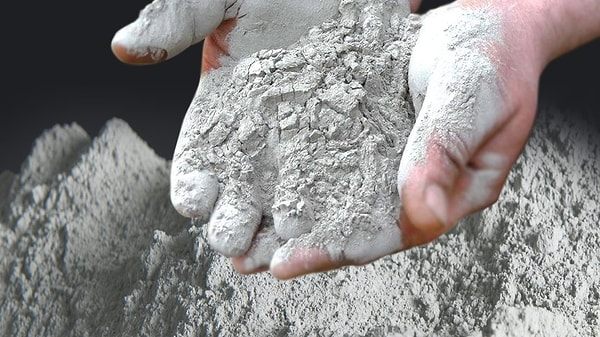
The most striking aspect of the new cement isn't merely its ability to stay cool. According to research, the material also boasts high durability. It has been noted to resist wear and tear, ultraviolet rays, freeze-thaw cycles, and some challenging environmental conditions.
The material is considered not just as an experimental coating, but as a broader solution that could be utilized in the construction industry. It could be a compelling alternative, particularly for roofs, exterior walls, and building surfaces in hot regions.
Although this technology is not yet in widespread use, researchers believe it opens a significant door in the construction industry. After all, cement is one of the most commonly used building materials worldwide. If such cooling materials can be produced on a large scale, the buildings of the future could stay cool during the summer months with far less energy than is currently required.
Keşfet ile ziyaret ettiğin tüm kategorileri tek akışta gör!
 Test
Test
 Gündem
 Magazin
 Video
Video



Send Comment