


A New Undersea Route Is Being Built Between Two Countries: 900 Meters of the 18-Kilometer Tunnel Completed


The fourth segment of the Fehmarnbelt Tunnel, which will connect Denmark and Germany beneath the sea, has been successfully installed on the seabed. With this latest development, approximately 900 meters of the 18-kilometer tunnel is now complete, bringing the project close to its first kilometer milestone.
Further details in our report.


The most recently installed piece was named after a Danish town.
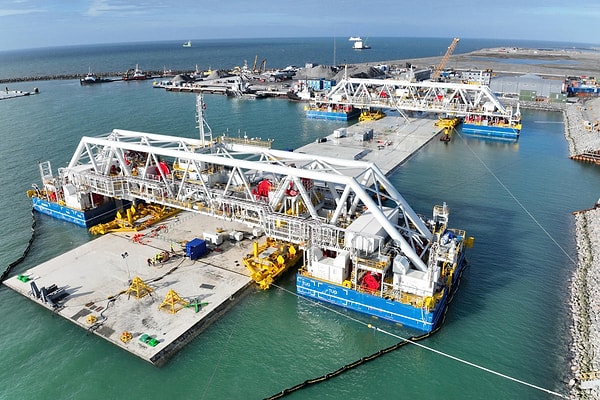
The segments of the tunnel bear the names of cities located on the European transportation corridor stretching from Malta to Finland. The fourth segment was named after Nykøbing Falster, the largest town on the islands of Lolland and Falster. This segment was lowered into the tunnel trench in the south of Lolland Island and connected to the previous sections.
The preceding segment had been put into place in the early days of August. This piece, bearing the name of the German coastal town of Heiligenhafen, had begun to be covered with stones and gravel for its permanent fixation in the trench.
Production continues unabated at the factory, with parts being transported to the sea via a special ship.
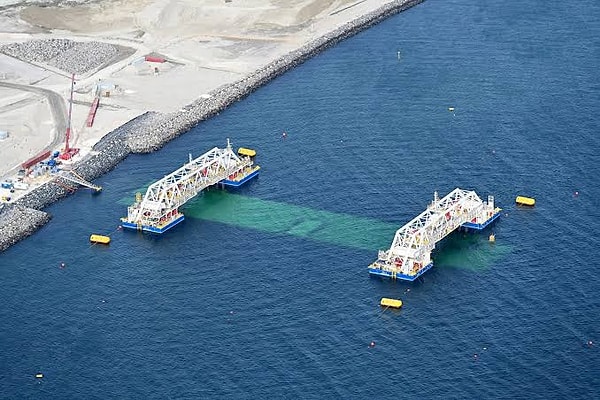
The segments of the tunnel are being manufactured at a factory established in Rødbyhavn on the island of Lolland. To date, the casting of 16 standard and 3 special segments has been completed.
Each standard segment, measuring 217 meters in length, is transported from the factory's port to the immersion area by tugboats and a special vessel named IVY. Once the tunnel is completed, it will consist of 79 standard and 10 special segments.
Next up, we have the first private piece, the size of a four-story building.
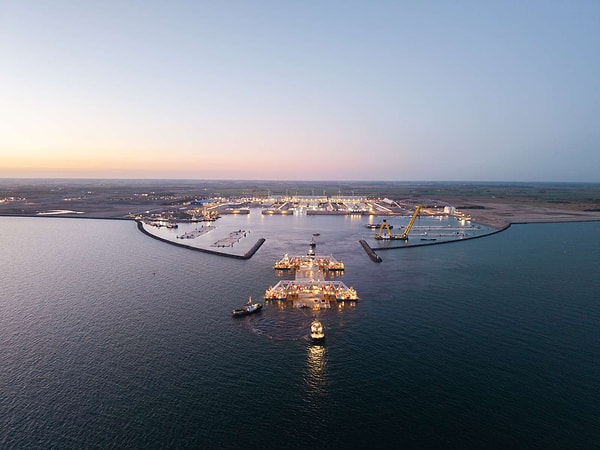
The basement of the special segments, measuring 39 meters in length, 47 meters in width, and 13 meters in height, houses the technical installations of the tunnel. At road level, there is a bay where service vehicles can stop without disrupting highway traffic. The first of these segments, which are to be placed approximately every 2 kilometers, is expected to be lowered into the sea in the fall.
Due to the basement level, this segment needs to be transported higher in the water, which puts more load on IVY. For this reason, the ship was tested under an additional load of 1,600 tons with water bags placed on the fourth segment and the tanks inside. Following the test, Lasse Vester, Deputy Contract Director of Sund & Bælt, stated, 'We now know that IVY can handle the extra load and lower the special element to the seabed in a safe and precise manner.'
Keşfet ile ziyaret ettiğin tüm kategorileri tek akışta gör!
 Test
Test
 Gündem
 Magazin
 Video
Video



Send Comment