


A Game-Changing Construction Project: They 3D-Printed a Two-Story House in 18 Hours


3D printing technology is no longer confined to just small objects or prototypes. This method, which is increasingly being used in the construction sector, is now making headlines with a two-story house in Australia.
In a project realized in the suburb of Tapping in Perth, the walls of a two-story house were printed on-site using a concrete 3D printer.

The walls were printed in approximately 18 hours.
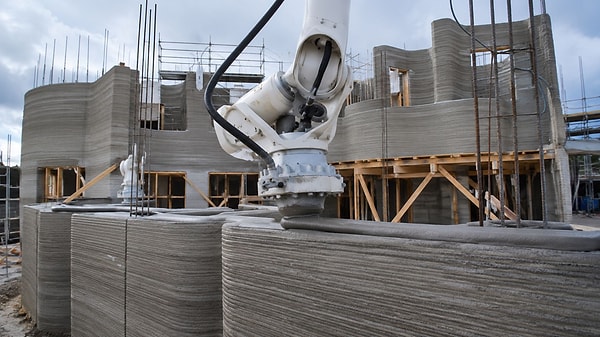
The most striking aspect of the project was the printing of the house's walls in approximately 18 hours. However, there's an important detail to note here: this 18-hour timeframe refers not to the house being fully ready for use, but rather to the process of printing the walls with a 3D printer.
The structure was built with a robotic system that poured concrete layer by layer. The printer moved according to a digital plan prepared on a computer, placing the concrete mixture along predetermined lines, one on top of the other. This approach significantly reduced the need for traditional bricklaying or wooden formwork.
The house reportedly has three bedrooms, two bathrooms, a garage, and a small balcony. While the printing process for the walls was relatively brief, it took approximately five months for the entire structure to be completed. Consequently, although the project stands out for its rapid wall production, it also demonstrates that the overall construction process still requires various stages.
Concrete that hardens in less than three minutes was utilized.
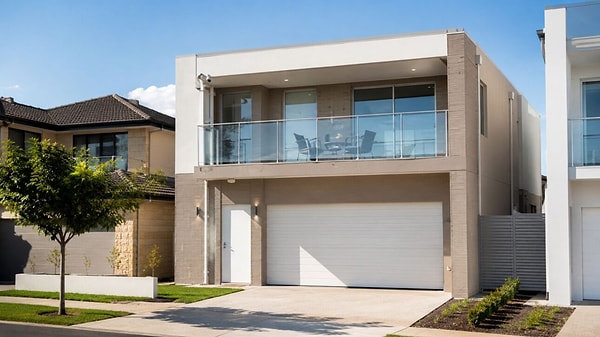
One of the most crucial aspects behind this method is the specific concrete mix used. This concrete has the ability to harden in less than three minutes after exiting the printer nozzle. As a result, new layers can be stacked on top of one another without the underlying layer collapsing.
The strength of the concrete used is reported to reach up to 50 MPa, which signifies a building material considerably stronger than ordinary brick. Moreover, it is reported that the walls are resistant to fire, water, and termites, and some sources even classify them as cyclone-resistant.
This method is also said to be 22% cheaper than traditional masonry. The main reasons for this cost saving include less labor, less material waste, and a much faster production process. However, this technology is not yet standard everywhere. Financing, regulations, scalability, and labor costs in different countries will play a decisive role in the widespread adoption of 3D printed houses.
Keşfet ile ziyaret ettiğin tüm kategorileri tek akışta gör!
 Test
Test
 Gündem
 Magazin
 Video
Video



Send Comment