


31 New Species Discovered in the Ocean’s Darkest Depths! Captured on Camera


A deep-sea exploration off the coast of Brazil has once again highlighted how much of the ocean remains uncharted. An international team working in the South Atlantic has discovered 31 new marine species in the ocean's dark middle layers. A wide range of species, from jellyfish to glass squid, from single-celled giant organisms to luminescent creatures, were examined using advanced imaging systems.

A deep-sea exploration off the coast of Brazil has led to the discovery of 31 previously unidentified new species in one of the most mysterious regions of the ocean.
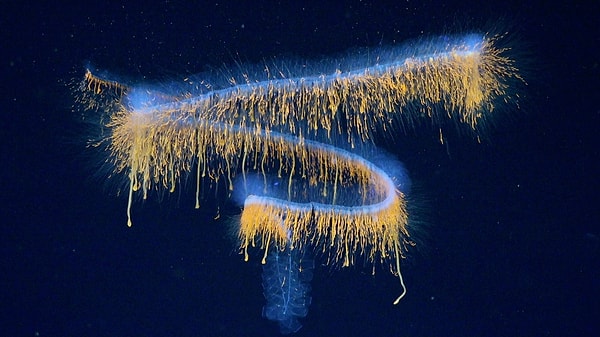
The international research team conducted their work in the vast region between the surface of the tropical waters in the South Atlantic, where sunlight remains, and the sea floor.
This area, known as the 'mid-ocean layer,' despite being one of the largest habitats on Earth, still ranks among the least explored ecosystems. Consequently, every investigation carried out in this region opens the door to new insights into marine life.
New species discovered in the dark layers of the ocean.
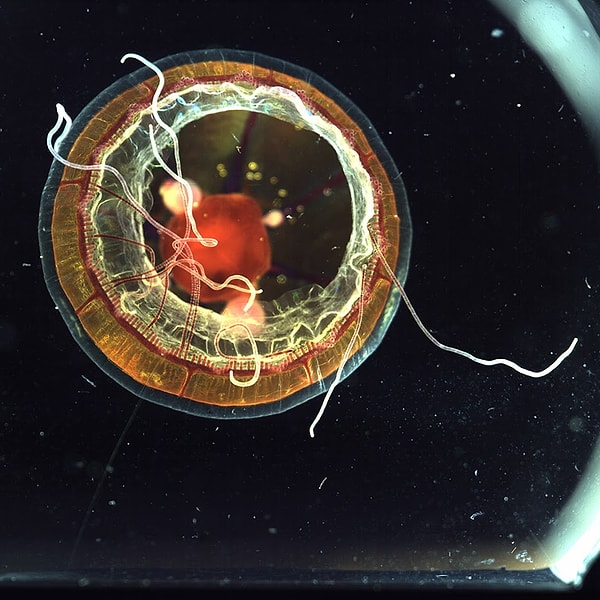
The discovered creatures included jellyfish, comb jellies, siphonophores, sea worms that appeared like tulle, larvaceans, and single-celled organisms large enough to be seen with the naked eye. Some creatures drew attention with their transparent and gelatinous structures, while others amazed scientists with their glowing extensions and unusual body forms.
The research team emphasizes that these creatures are significant not only for their appearances but also for their ways of adapting to the harsh environment they live in. Creatures that can survive under conditions such as darkness, pressure, and scarcity of nutrients play a crucial role in understanding how the ocean ecosystem operates.
The discovery also included striking observations such as an octopus feeding on glass squid and jellyfish.
They were captured on film without causing any harm to the creatures.
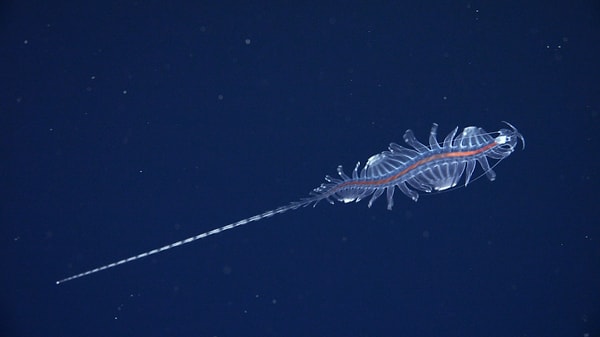
Most deep-sea creatures are extremely delicate and gelatinous in nature, making them easily susceptible to damage through traditional specimen collection methods. Consequently, the research utilized advanced imaging systems to examine these creatures in their natural habitats.
During the dives conducted with the remotely operated vehicle SuBastian, laser scanning, 3D imaging, high-contrast camera systems, and genetic analyses were collectively employed. This innovative approach enabled scientists to confirm species in a much shorter timeframe, bypassing the potentially years-long traditional processes.
In a groundbreaking first during the research, the live cellular structure of a single-celled microorganism was visualized in 3D.
Keşfet ile ziyaret ettiğin tüm kategorileri tek akışta gör!
 Test
Test
 Gündem
 Magazin
 Video
Video



Send Comment