


Where Is 95 Percent of the Universe? The Ultimate Dark Mystery


Stars, planets, and everything we know make up a mere 5% of the universe. The remaining 95%, unseen yet shaping the destiny of the cosmos, belongs to the greatest scientific mystery: dark matter and dark energy.
Let's delve together into this enigma of the universe.

Only 5% of our universe is composed of the normal matter we're familiar with, such as atoms, stars, and planets.
As confirmed by the precise data obtained from the Planck Satellite, a staggering 27% of the remaining universe is composed of dark matter, while dark energy accounts for 68%. The fact that the observable universe constitutes only a small minority is one of the most significant research topics in modern cosmology.
The issue of "missing mass" in galaxy clusters, first identified by Fritz Zwicky in 1933, gained clarity in the 1970s when Vera Rubin measured the rotational speeds of stars in spiral galaxies.
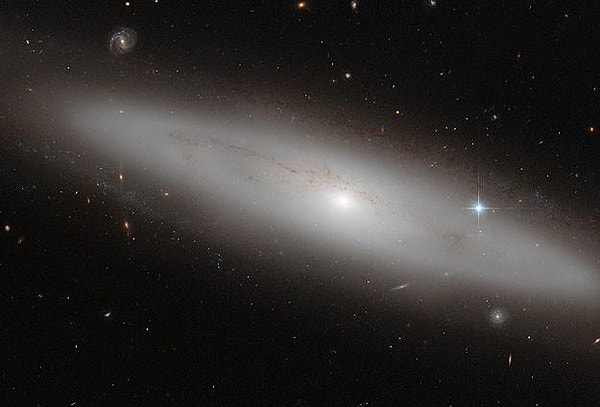
The fact that distant stars from the center do not lose speed in violation of physical laws was concrete evidence of an invisible mass halo enveloping galaxies.
Direct Detection and Experiments: The quest to find these mysterious particles is being pursued not only through collision experiments at CERN (ATLAS, CMS), but also with massive liquid xenon detectors such as LUXZEPLIN (LZ) and XENON, located deep within the earth.
'Dark Sector' Theory: The lack of definitive results from searches for the standard dark matter particle (WIMP) has boosted interest in new models, which theoretical physicists like Mariangela Lisanti from Princeton University are heavily focused on. Current approaches suggest that dark matter could be composed of a complex 'dark family' (dark sector) with its own internal forces similar to electromagnetism, rather than being a single type of particle.
Dark Energy: The Driving Force Behind Accelerating Expansion
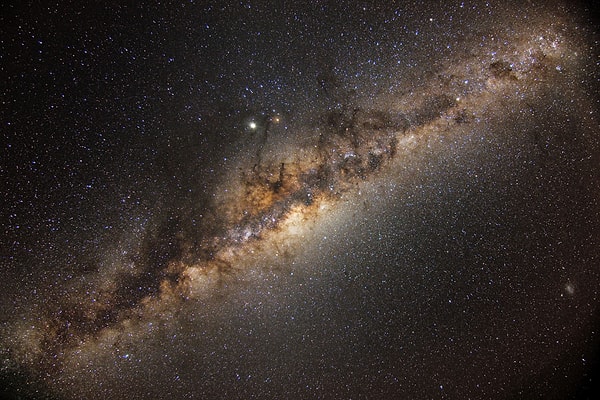
While dark matter strives to hold the universe together through gravity, dark energy acts as a repulsive force, stretching the fabric of spacetime and accelerating its expansion.
The Discovery of Expansion: In 1998, teams studying distant supernovae (led by Adam Riess and his colleagues) revolutionized physics by proving that the universe's rate of expansion was not slowing down, but rather, was accelerating. This groundbreaking discovery earned them the Nobel Prize. This energy is the most critical factor in determining the ultimate fate of the universe.
Keşfet ile ziyaret ettiğin tüm kategorileri tek akışta gör!
 Test
Test
 Gündem
 Magazin
 Video
Video



Send Comment