


What Does Constantly Checking Your Phone Mean According to Psychology?


The hand reaching out to the screen has now become a reflex. Even without notifications, the lock screen is swiped open. If there are no messages, social media is checked. If there's nothing new on social media, emails get refreshed. Psychology suggests that there are deeper motivations behind this behavior than we might think.
Have you noticed that most of the time, the phone is checked even when there's no real need? The issue at hand is not curiosity, but rather the anticipation of a reward.

The urge to check your phone operates on the same principle as a slot machine.

The mechanism defined as the 'intermittent and variable reward system' in psychiatry operates in the same manner as slot machines. Most notifications turn out to be mundane. Insignificant messages, content resembling advertisements, ordinary shares... However, every now and then, a message arrives that is truly important, exciting, or emotionally charged.
This is precisely where uncertainty comes into play. Since it's unknown when a reward will be received, the mind remains perpetually on alert. The thought, 'What if an important message has arrived?' keeps individuals glued to their screens. In fact, anticipation tends to exert a stronger influence than the pleasure derived from the reward itself. Even the mere possibility of a reward is enough to trigger the release of dopamine.
Constantly turning back to the screen is often associated with an inability to be alone.

In studies, participants were simply asked to think when their phones were taken away. An intriguing result emerged: Half of the participants preferred to receive a mild electric shock rather than just think.
Being alone with one's thoughts is not as easy as we might assume. When boredom, anxiety, past regrets, or future uncertainties surface, the screen operates like a safe escape route. Social media feeds, message traffic, or video content suppress the inner silence by keeping the mind occupied. In other words, the phone often transforms from a communication tool into an emotional regulation device.
Anxiety sources have also increased in modern life. Economic uncertainty, environmental crises, the culture of social comparison... The screen functions like a stress coping mechanism. However, in the long run, it creates a cycle that further exhausts the mind.
In psychology, behaviors are assessed on a spectrum.
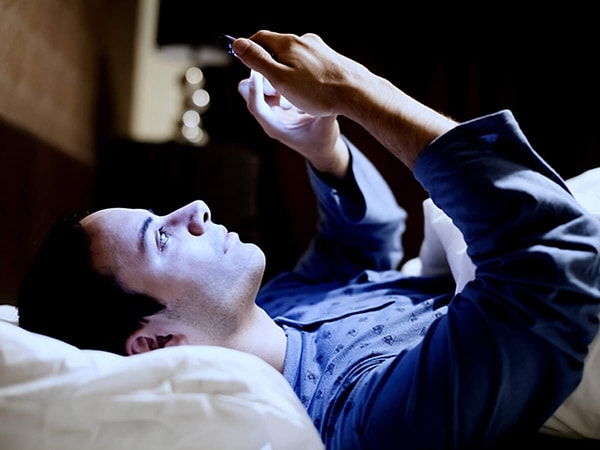
Checking your phone doesn't necessarily equate to a disorder. If the behavior doesn't cause distress, impair functionality, or interfere with social life, it's not considered pathological. It remains a coping mechanism.
The problem emerges when control begins to slip away. A constant rapid flow of dopamine can diminish the pleasure derived from reading books, studying, or engaging in calm activities. The mind becomes accustomed to more intense stimuli.
Fortunately, the brain is flexible. Thanks to neuroplasticity, new habits can be formed. Steps like taking screen breaks, turning off notifications, using the device at specific times, and increasing face-to-face social interaction can help rebalance the reward system.
Keşfet ile ziyaret ettiğin tüm kategorileri tek akışta gör!
 Test
Test
 Gündem
 Magazin
 Video
Video



Send Comment