


Watch Out If You Make This Mistake in Hot Weather: Your Kidneys Might Be Forming Stones!


With the arrival of warmer weather, everyone has switched into 'vacation' mode. However, the heat also brings with it an increased risk of certain illnesses. The elderly, children, and pregnant women, in particular, need to be cautious during the summer months. At the top of the list of diseases whose risk increases in the summer is kidney stones, known in the medical world as 'nephrolithiasis'.
Clinical studies and data from urology specialists indicate an increase in the number of patients reporting severe kidney pain during the peak heat of June to August.
So, what should we do?
Source

There's a noticeable uptick in the formation of kidney stones during the summer months.
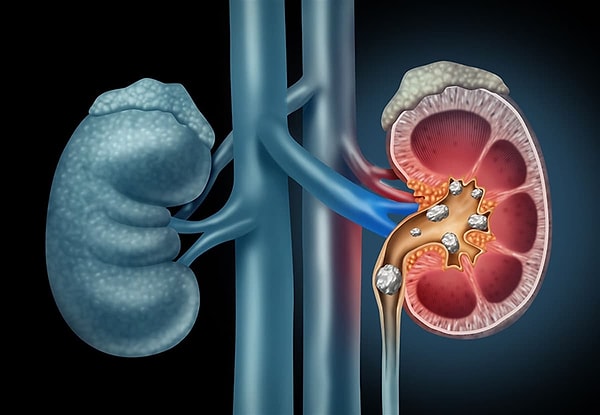
The primary reason for the peak in kidney stone cases during the summer months is chronic dehydration caused by insufficient fluid intake and excessive fluid loss. As the ambient temperature rises, the human body activates its sweating mechanism to maintain its internal temperature around 36.5°C. During this process, we lose liters of water through respiration and skin, often without even realizing it.
If this vital fluid loss is not replenished by drinking water throughout the day, the hypothalamus region in the brain sends a command to the kidneys to concentrate the urine and retain water.
With the kidneys reabsorbing water, the amount of urine produced significantly decreases and the color of the urine turns dark yellow. In this ultra-concentrated chemical environment, minerals that are normally dissolved in the urine and should be excreted, such as calcium, oxalate, uric acid, and phosphate, adhere to each other much more easily.
Just as excessive salt sinks to the bottom of a glass of water, these substances in the urine reach a point of supersaturation and first form microscopic crystals. Over time, these crystals combine to form kidney stones, which can block the urinary tract.
Dehydration is not the sole cause for the formation of kidney stones.

Summer is the season when we benefit most from the sun's rays, particularly the UVB wavelength, and our skin synthesizes vitamin D to its maximum capacity. Vitamin D plays a vital role in overall bone health, hormone balance, and maintaining a robust immune system.
However, for individuals prone to kidney stones, vitamin D can turn into a hidden trigger. When the level of active vitamin D in the body increases, this hormone sends signals to the intestines to maximize the absorption and bloodstream transition speed of calcium taken in through food.
The increase in circulating calcium in the blood elevates the filtering burden of the kidneys in an effort to maintain the body's calcium balance, leading to excess calcium being pumped into the urine. If the individual is not drinking enough water during this process, and urine volume is low, the concentrated amount of calcium passed into the urine can form a chemical bond with the oxalate substance also present in the urine, transforming into the most common type of stone: calcium oxalate stones.
In other words, the abundance of vitamin D brought about by the summer sun can be harmful to the kidneys when combined with dehydration.
Our changing dietary habits in the summer also play a role.
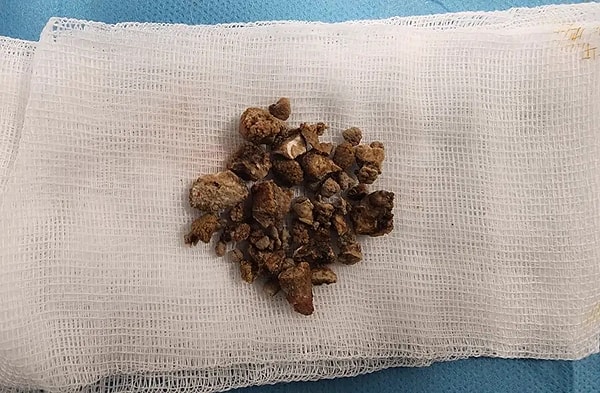
During the summer months, our dietary habits inadvertently shift in a way that directly triggers stone formation, in tandem with the increase in social activities. Salty snacks, sauces, barbecues... The sodium (salt) load in our bodies escalates dramatically. High sodium consumption disrupts the kidneys' ability to reabsorb calcium, directly increasing the amount of calcium in the urine and triggering the stone formation mechanism.
Moreover, in an effort to cool off on hot days, the frequent consumption of iced teas, carbonated drinks, coffees, or the excessive intake of summer fruits/nuts, play a leading role in stone formation due to their high oxalate content, often chosen over water.
So, what needs to be done?

Attempting to quench your thirst with caffeinated or high-fructose/sugary drinks instead of water only deepens dehydration and doubles the filtering burden on your kidneys. The most effective way to prevent kidney stones is to increase your water intake. Particularly during the summer months, the standard 2 liters of consumption may not be sufficient.
The critical point here is to consume water evenly throughout the day without waiting for the sensation of thirst to arise. This is because feeling thirsty is actually a delayed indicator that dehydration has already begun at the cellular level and the body is sounding the alarm.
So, how can you tell if you're drinking enough water?
During this process, your most practical and reliable guide is monitoring the color of your urine. For healthy kidney function and stone prevention, your urine should be pale, clear, or very light yellow. Adding a few drops of fresh lemon to your water is a natural protector that chemically blocks the transformation of calcium in the urine into crystals, thanks to its rich citrate (citric acid) content. Keeping daily salt intake below 5 grams (a teaspoon), limiting animal proteins, and not neglecting fluid replacement especially after exercise or intense heat, will protect your kidneys during the summer months.
Keşfet ile ziyaret ettiğin tüm kategorileri tek akışta gör!
 Test
Test
 Gündem
 Magazin
 Video
Video



Send Comment