


Visitors Bathe in Oil Instead of Water, but Only for 10 Minutes


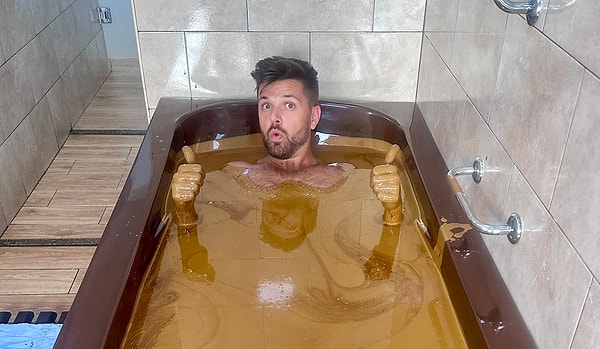
In Naftalan, a city located about 320 kilometers west of Baku, the capital of Azerbaijan, bathtubs are filled not with water, but with dark, warm oil. The dense Naftalan oil, which is not suitable for use as commercial fuel, has been positioned at the heart of health tourism in local facilities.

The bathtubs are being filled with dense oil at 38 degrees.
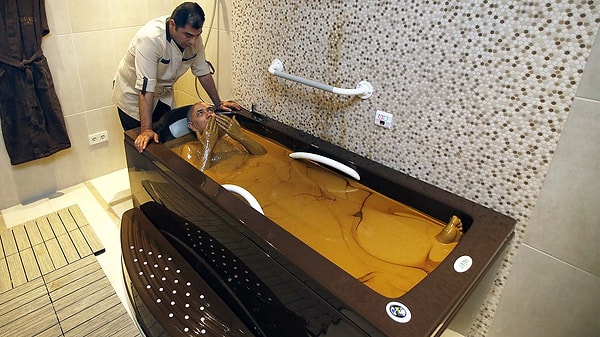
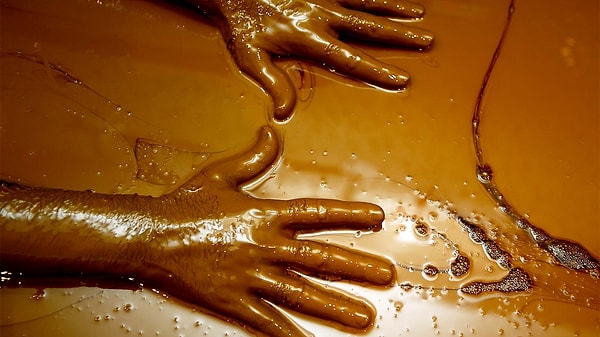
Naftalan oil, hailing from Azerbaijan, is distinctively denser compared to the lighter types of oil the country typically exports for energy. Due to its resistance to burning and the difficulty in processing it using conventional methods, it is utilized in spa treatments rather than industrial applications in the region. Most facilities require visitors to undergo a blood test and a general health check before they are allowed to take a dip in the oil bath.
Depending on the level determined by the doctor, an individual can partially or fully submerge into the oil. The duration of staying in the oil, which is usually heated up to about 38-39 degrees, is mostly limited to 10 minutes. After emerging from the bath, the thick layer of oil on the person's body is first scraped off with a special tool, followed by several showers and a period of rest.
During the Soviet era, it used to host 75,000 visitors annually.
Though the use of Naftalan oil for various purposes dates back centuries, regular health tourism in the city developed during the Soviet Union era. The first major holiday and treatment center was established in 1926; thanks to state-supported travel programs, sanatoriums became a hotspot for visitors seeking solutions for joint and skin ailments.
At the height of oil baths in the 1980s, approximately 75,000 people were visiting Naftalan annually. However, tourism largely halted with the onset of conflicts around Nagorno-Karabakh in 1988, and five out of the six facilities left from the Soviet era were converted into structures housing refugees. In the following years, the city began to be reintroduced as a health tourism destination with the opening of new hotels and centers.
Claims of treatment and health risks are being discussed in tandem.
Doctors and businesses in Naftalan argue that petroleum baths can potentially aid in relieving rheumatism, joint pains, psoriasis, and some skin issues. While some facilities claim that the oil is effective in treating more than 70 ailments, the majority of these assertions are based on local experiences and limited studies. Comprehensive, independent clinical research that substantiates the effectiveness of the practice and its long-term outcomes is insufficient.
Potential toxic effects associated with the hydrocarbons contained in petroleum and with naphthalene are also at the heart of safety debates.
Keşfet ile ziyaret ettiğin tüm kategorileri tek akışta gör!
 Test
Test
 Gündem
 Magazin
 Video
Video



Send Comment