


They Brought 5 Cats to an Island to Hunt Mice, but the Real Disaster Came Years Later


In 1949, on Marion Island, which is part of South Africa, five domestic cats were brought in to eradicate the mice that had invaded the meteorological station. However, in a short time, the number of cats reached into the thousands and they began to hunt the seabirds on the island instead of the mice, leading to an ecological disaster that would last for decades.
So, what happened after the cats were removed from the island?

Marion Island is situated approximately 2,300 kilometers southeast of Cape Town, in the southern part of the Indian Ocean.
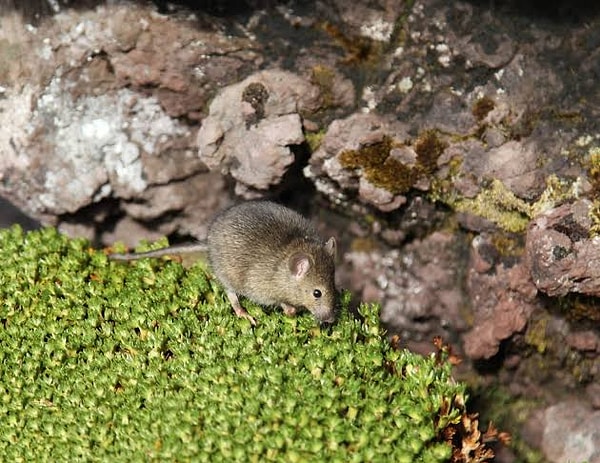
Marion Island, a part of the Prince Edward Islands, has been home to a permanent research and meteorological station operated by South Africa since 1948. Despite its harsh climate, the island hosts hundreds of thousands of seabirds, including penguins, albatrosses, and petrels.
The mice on the island, however, were unintentionally introduced by seal hunters in the early 19th century, brought aboard their ships. William Phelps, a seal hunter who stayed on the island between 1818 and 1820, wrote that the entire island was infested with house mice at that time.
In 1949, when the mouse infestation at the station became a significant problem, five domestic cats, natural predators of mice, were brought to the island as a solution.
The cats, which multiplied in a short time, started hunting the island's seabirds instead of mice.
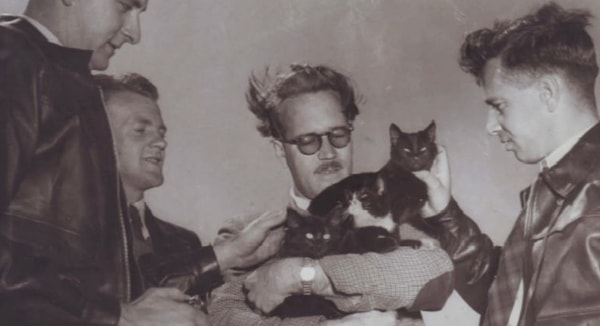
The first sighting of a wild cat on the island was in 1951. By 1975, it was estimated that the number of wild cats had reached 2,139 on the roughly 298 square kilometer island. This number rose to about 3,400 just two years later.
When it was calculated that the cats were killing approximately 455,000 birds annually, one of the most comprehensive projects ever conducted on the island's ecosystem was initiated. The cats were eradicated from the island using the following methods:
Virus: The feline panleukopenia virus was used as a biological control tool.
Traps and Night Hunting: Intense efforts were made to set traps, and night hunts were organized.
By 1982, the number of cats had been reduced to around 600. The last cat on the island was eliminated in July 1991.
With the disappearance of cats, rats, now devoid of their natural predators, have transformed into a significant threat for birds.
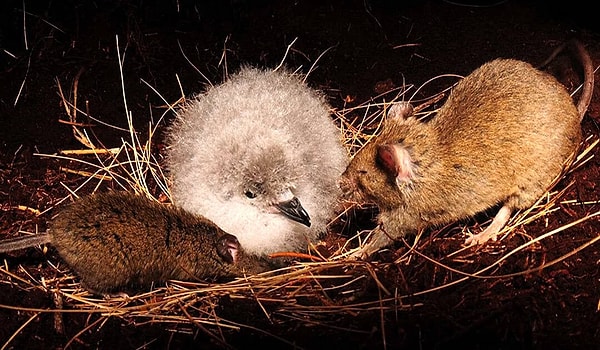
In the 20 years following the eradication of cats on the island, the mouse population has surged by approximately 430%. The mice, weighing only around 20 grams, have begun to attack a variety of birds, from small petrels to wandering albatross chicks that can grow up to 7 kilograms:
Nighttime Attacks: Mice gnaw on the chicks throughout the night. The surviving chicks spend their days exhausted and in pain, only to be attacked again the following night.
Scalp Attacks: Footage first recorded in 2009 revealed that mice have been gnawing on the scalps of larger chicks.
Chick Mortality: According to a study conducted in 2015, mice are responsible for the death of one in every ten albatross chicks.
Adult Albatrosses: Observations have shown that mice have now begun to attack adult wandering albatrosses as well.
Experts suggest that over the last 30 years, the increasingly warmer and drier climate has led to a surge in mouse density during the summer months. This, in turn, has resulted in a decrease in the invertebrates that the mice feed on during the winter.
A project has been prepared to completely eradicate rats from the island, a crucial step to prevent the extinction of 19 out of the 29 bird species inhabiting it.
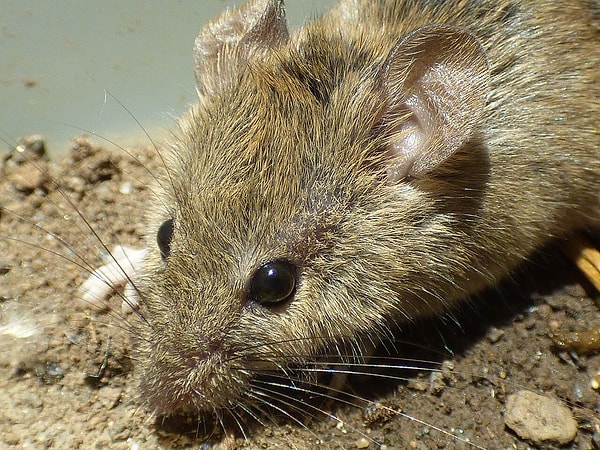
The project named MouseFree Marion aims to completely eradicate approximately 1 million mice on the island. As part of the project, GPS-supported helicopters will distribute bait containing rodenticide across the entire island twice, with a gap of 1014 days.
The operation is planned to be carried out during the winter months of April to September, when the mice are most hungry and most of the seabirds have left the island. A trial pesticide application with helicopters on the island is also planned for April and May of 2027. The total budget for the project is approximately 36.4 million dollars.
Mark D. Anderson, CEO of BirdLife South Africa, states that the outcome of the operation will be either success or failure:
'A single surviving pregnant mouse means failure. If two mice of different genders survive, that's also a failure,' says Mark D. Anderson, BirdLife South Africa.
Keşfet ile ziyaret ettiğin tüm kategorileri tek akışta gör!
 Test
Test
 Gündem
 Magazin
 Video
Video



Send Comment