


The Bizarre 1897 Story of How Lawmakers Tried to Change the Value of Pi


In 1897, a bill that effectively converted the value of pi to 3.2 was passed in the House of Representatives of the state of Indiana, USA, without a single dissenting vote. The bill was halted at the last minute by a mathematics professor who happened to visit the assembly.
Here are the details...

Behind the design, there was a doctor who believed he had found a way to square the circle.
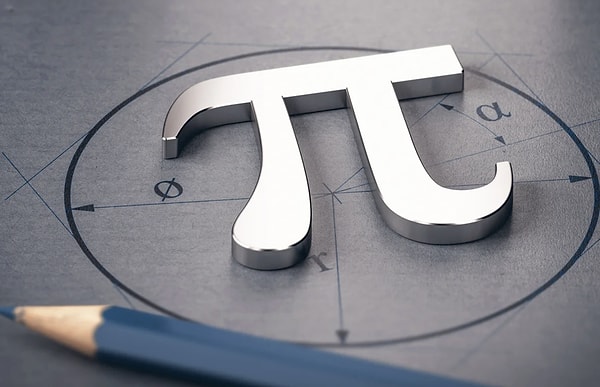
The design was penned by Dr. Edwin J. Goodwin, who resided in Solitude, a region in Posey County, Indiana. Goodwin was under the impression that he had solved the problem of drawing a square with the same area as a given circle using only rudimentary tools.
On January 18, 1897, the design was presented to the assembly by Taylor I. Record, the representative of Posey County.
The design wasn't explicitly stating the pi number, it was altering it with a roundabout ratio.
The text didn't contain a sentence like 'from now on, pi is 3.2'. Instead, it stated that the ratio of the diameter to the circumference was 'the ratio of four to five fourths'. This calculation approximated pi to 3.2 instead of the usual 3.14.
In return, Goodwin offered Indiana the privilege of using this method in school textbooks free of charge.
The design was first sent to the Channels, and then to the Education Committee.
The Committee on Channels was also referred to as the 'Swamp Lands Committee' during that period. The Education Committee, on the other hand, recommended the approval of the bill.
On February 5, 1897, the bill was unanimously approved with a vote of 67 to 0 in the House of Representatives and was then forwarded to the Senate. In the Senate, it was initially referred to the Committee on Proportions, which also returned it with a recommendation for approval.
A mathematics professor from Purdue University happened to stumble upon the parliament.
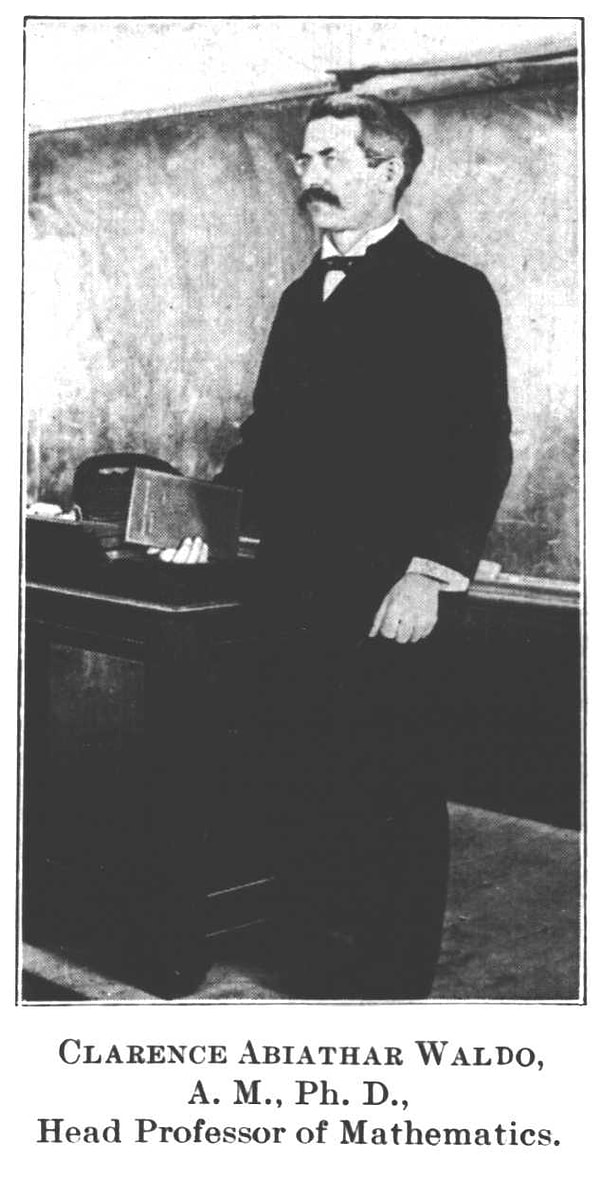
Clarence A. Waldo, the head of Purdue's mathematics department, had come to the state legislature to monitor the budget allocation of the Indiana Academy of Sciences. Upon entering, he found himself in the midst of a debate over a mathematical law.
Waldo was asked if he wanted to meet the author of the bill. Declining the offer, he replied that he already knew as many mad people as he wished to know. That evening, the senators were informed that the calculations were incorrect.
The Senate made a mockery of the bill for half an hour, then indefinitely postponed it.
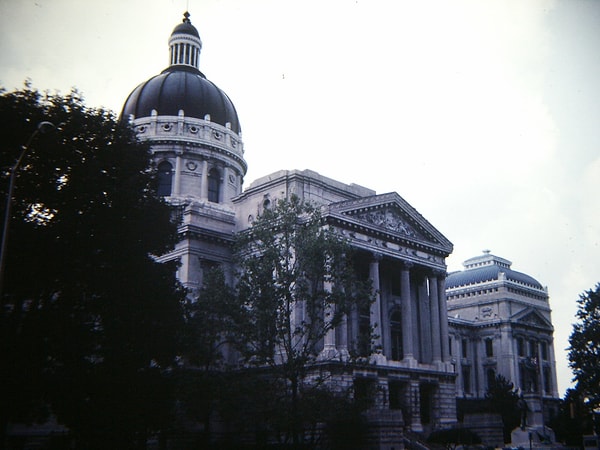
According to newspapers of the time, senators made word plays on the bill and ridiculed it. Senator Hubbell stated that the Senate cost the state $250 a day and should not waste time on such a futile task.
Subsequently, with Hubbell's motion, the discussion of the bill was indefinitely postponed. The bill never became law.
Keşfet ile ziyaret ettiğin tüm kategorileri tek akışta gör!
 Test
Test
 Gündem
 Magazin
 Video
Video



Send Comment