


The Animal That Makes Jaguars Change Their Path: It Eats 35,000 Ants per Day


Giant anteaters, inhabitants of the grasslands of Central and South America, are among the most intriguing mammals in the scientific world due to their biologically challenging characteristics. With a toothless mouth and a sticky tongue that measures 60 centimeters, this colossal creature can make 150 moves per minute, and in order to survive, it must consume at least 35,000 ants or termites daily.

Roaming the forests and grasslands of Central and South America, the giant anteater (Myrmecophaga tridactyla) boasts one of the most extraordinary anatomies in the mammalian world.
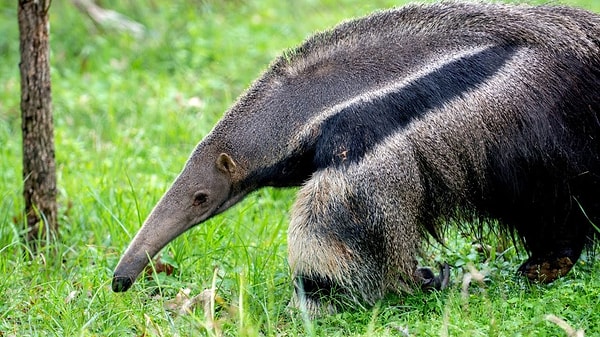
Recognized by its 1.2-meter body and magnificent 90-centimeter tail, this creature resembles a living 'vacuum cleaner' with its feeding habits.
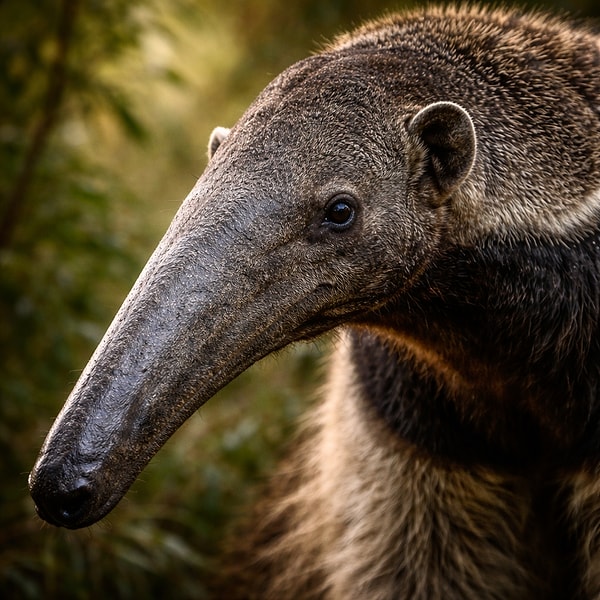
The most striking feature of the giant anteater is its sticky tongue, which can extend up to 60 centimeters. This toothless animal, incapable of chewing, swallows the insects it captures directly with the help of its tongue. Its tongue operates so swiftly that it can move in and out as many as 150 times within a minute. Despite consuming 35,000 ants in a single day, anteaters only spend a few minutes in a colony. The creature, which leaves the nest before the ants can counterattack, protects itself with this strategy and maintains the balance of the ecosystem without depleting it.
Although it may appear calm and slow-moving, the giant anteater boasts one of nature's most formidable defense mechanisms.
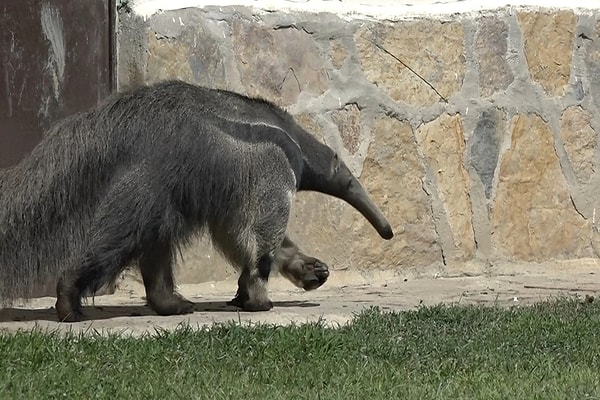
With a length of 10 centimeters, their front claws are powerful enough to tear apart termite mounds as if they were paper. When feeling threatened, the anteater stands on its hind legs and attacks with these sharp claws. Indeed, even jaguars, the largest predators in the region, alter their paths to avoid a confrontation with these claws.
Among mammals, anteaters are one of the species with the lowest body temperature. These creatures, whose body temperature is only 32°C, use their energy extremely sparingly to maintain their low metabolism. However, this slow-paced lifestyle makes them more vulnerable to external threats.
The giant anteaters, classified as "Vulnerable" by the International Union for Conservation of Nature (IUCN), are experiencing a decline in their population due to forest loss, road constructions, and vehicle collisions. Instead of a direct translation, this sentence has been restructured to maintain the natural flow of English language. It introduces the main idea at the beginning, guiding the English reader. The use of the term 'experiencing a decline' instead of a simple verb like 'losing', reflects a more natural English phrasing. The repetition of 'loss' in the original Turkish text has been avoided by using 'decline' and 'loss' interchangeably, showcasing the richness of English vocabulary.
Although not naturally found in Turkey, pangolins, which share a similar feeding strategy, also face similar threats. Pangolins, residing in Asia and Africa, hold the title of being the most smuggled mammal species in the world due to traditional medicine production and meat trade.
Giant anteaters, which have a relatively low reproduction rate, bring only a single offspring into the world each time. The young one is protected by staying on its mother's back for a year. This slow reproduction rate, combined with habitat fragmentation and human-induced deaths, poses a serious risk for the future of the species. Even though they are protected in countries like Brazil and Argentina, experts continue to issue warnings about the preservation of their natural habitats.
Keşfet ile ziyaret ettiğin tüm kategorileri tek akışta gör!
 Test
Test
 Gündem
 Magazin
 Video
Video



Send Comment