


Seabed-Hopping Robot Plants 20,000 Seeds


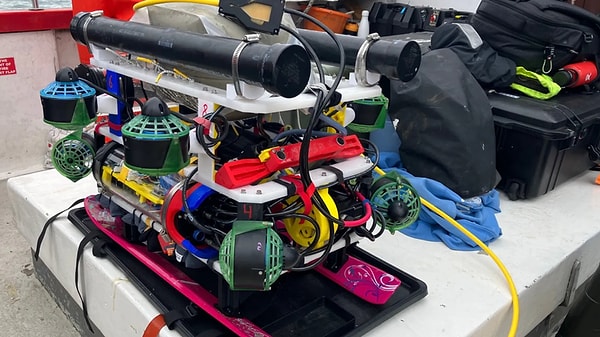
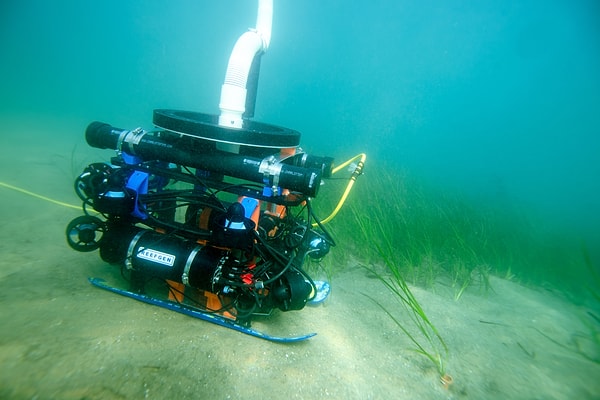
The robot named Grasshopper, developed for the reconstruction of underwater meadows, navigates the sea floor with its 23-kilogram body. The system, capable of sowing 60 seeds per minute, carries approximately 20,000 seeds in its 20-liter capacity storage.

They are mixing the seeds with mud and placing them on the seabed.
The hopper of the Grasshopper is filled with a mixture of seagrass seeds and fluid mud. The density of this mixture is specifically adjusted to allow the seeds to move within the system and be regularly deposited on the sea floor.
After injecting approximately four seeds at each point, the robot advances about 30 centimeters. Its hopping-like motion not only prevents excessive disturbance of the sea floor but also ensures a regular distance between the planting points.
Speeding up the slow and exhausting work of divers.
The manual planting of seagrass seeds by divers is a time-consuming method and difficult to implement over large areas. The robot aims to take over the repetitive planting task, thereby reducing the amount of time divers spend underwater and the cost of the operation.
Grasshopper is not yet fully autonomous. While divers are needed to steer the system from the boat and prepare the planting line, there are plans to add semi-autonomous navigation capabilities in the next phase.
The aim is to transform the sea meadows into vast expanses.
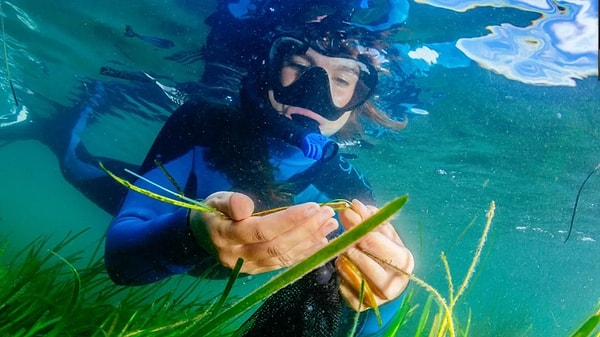
Despite covering only a small portion of the ocean floor, seagrass meadows serve as crucial habitats for fish and other marine life. The vegetation, which also shields coastlines from waves, contributes to the storage of carbon in marine ecosystems.
As part of the trials conducted with a robot, approximately 25,000 seeds were sown in Wales. The ongoing efforts in various countries aim to adapt the system to diverse coastal conditions, with the ultimate goal of restoring damaged seagrass meadows on a larger scale.
Keşfet ile ziyaret ettiğin tüm kategorileri tek akışta gör!
 Test
Test
 Gündem
 Magazin
 Video
Video



Send Comment