


Scientists Finally Solve Mystery of Why Pickles Glow Orange When Plugged Into Outlets


A pickle speared with two metal forks and plugged into an electrical outlet, glowing orange at one end, is a classic science experiment. Yet exactly how the glow forms remained a mystery for years. A researcher at Portland State University in the U.S. says he may be closing in on the answer after making more than 100 pickles glow.


Pickles conduct electricity because of the brine inside them.
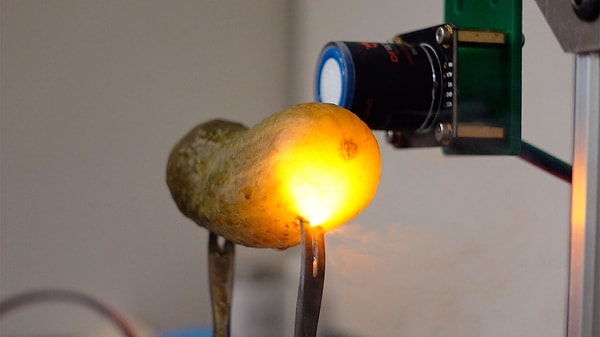
Because saltwater contains electrically charged atoms, or ions, pickles can conduct electricity. When an electric current passes through one, a bright orange glow appears at one end.
For years, two explanations were put forward for the source of this light: an electrical spark or burning hydrogen gas.
New research suggests that the light may be produced when a spark ignites hydrogen gas.
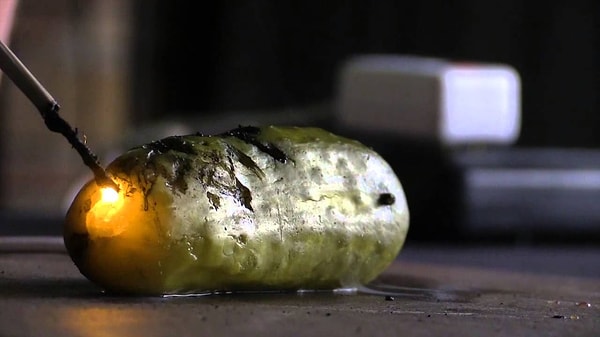
Electrical engineer Joshua Méndez Harper and his team applied alternating and direct current to pickles in a lab, monitoring them with a high-speed camera and a hydrogen sensor. As the current heats the pickle and boils the liquid inside, pockets of gas form. Electrolysis also splits water into hydrogen and oxygen, creating an explosive mixture.
Hydrogen formed under both types of current, but the flash appeared only with alternating current. This suggests that both explanations are at work: a spark ignites the hydrogen. Méndez Harper compares it to the reason you shouldn’t light a cigarette at a gas station. The findings were presented in June at the annual meeting of the Electrostatics Society of America.
The orange glow comes from sodium, while the glowing tip is the wettest part of the pickle.

According to Méndez Harper, the orange glow comes from sodium ions being excited. If the pickle had been made with a different salt, the light would have taken on a color characteristic of the elements in that salt.
As for why the glow appears at only one end, the answer is simple: when a pickle is positioned vertically, it always lights up at the lower end, where the brine collects.
This experiment carries a risk of fatal electric shock and should never be attempted at home.
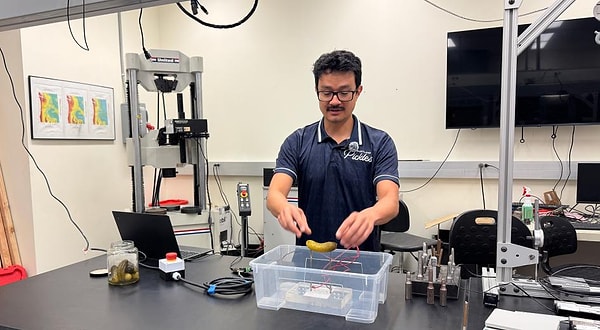
This demonstration, which uses exposed wires, poses a potentially fatal risk of electric shock. It should therefore be carried out only with extreme caution and under qualified supervision.
Méndez Harper, who performed the experiment, is a professional. Experts stress that it should not be attempted at home.
Keşfet ile ziyaret ettiğin tüm kategorileri tek akışta gör!
 Test
Test
 Gündem
 Magazin
 Video
Video



Send Comment