


Scientists Discover a Color Human Eyes Have Never Seen


Researchers made a groundbreaking discovery in our understanding of color perception in 2025, when they used laser technology to directly stimulate the green-sensing cells in the human eye, unveiling 'olo', an ultra-saturated teal color, unlike anything ever encountered in nature. This discovery has been recorded as a milestone in the science of color perception.

What is the "Olo" Color and How Was It Created?

'Olo' is a color that is considered impossible in standard vision physics, representing an ultra-saturated shade of teal. The research team created this unique color experience by directly stimulating only the cone cells in the participants' eyes that are sensitive to green light using laser light. Under normal conditions, the human eye perceives colors through the combined work of three different cone cells (red, green, blue). However, in this experiment, a color perception that the brain had never experienced before emerged as a result of only the green cone cells being stimulated to the maximum level.
Color scientist Dr. Sarah Martinez, from the University of Cambridge, stated in her announcement, 'This discovery is pushing the boundaries of human color perception and opening new doors on how your brain interprets colors.'
Findings Challenging the Trichromatic Theory
Human color vision is based on the trichromatic theory, which has been accepted since the 19th century. According to this theory, the three types of cone cells in our eyes respond to light at different wavelengths: L-cones (long wavelength/red), M-cones (medium wavelength/green), and S-cones (short wavelength/blue). In the normal vision process, the stimulation of these three cell types in different proportions allows us to perceive approximately 10 million different color tones.
The discovery of the 'Olo' color is causing us to question this classic model. Researchers have shown that in the case of overstimulation of only the M-cones, the brain can create a color category it has never encountered before. Neurobiologist Prof. James Chen from MIT describes this situation as 'like hacking your brain's color processing system.'
The Mysteries of Cone Cells and Color Perception
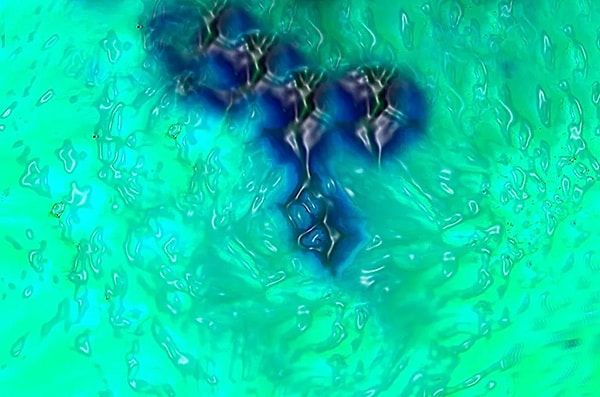
The human retina houses approximately 67 million cone cells, which are densely concentrated in our central visual field. Each cone cell is sensitive to specific wavelengths of light, thanks to the opsin proteins they contain. M-cones, in particular, exhibit the highest sensitivity to green light, at roughly 530 nanometer wavelength.
According to findings published in the Vision Research journal, this new study revealed that when M-cones are stimulated beyond their usual limits, the brain creates a new color category that could be termed as 'ultra-green'. Ophthalmologist Dr. Lisa Park from Stanford University commented on the findings, stating, 'These results demonstrate that our perception of color is much more flexible than we previously thought.'
Understanding the Implications of Surpassing Natural Vision Boundaries
Under normal conditions, no light source in nature can stimulate M-cones in such an isolated manner. Sunlight, LED lights, and even the most vibrant green objects always stimulate all three types of cones in varying ratios. Therefore, the 'olo' color cannot be experienced without technological intervention.
The practical implications of this discovery are vast: it could pave the way for new approaches in virtual reality technologies, visual arts, and even treatments for color blindness. Moreover, it offers significant insights into the plasticity and adaptability of your brain.
Future Applications and Research

The research team suggests that the expansion of this technique could lead to the creation of more 'supernatural' colors. With the advancement of laser technology, it may be possible to stimulate other cone types in a similar manner in the future.
Dr. Michael Thompson, a color perception expert from UCLA, stated, 'This discovery could not only revolutionize color science, but also neurology. The ability to control the brain's responses to external stimuli in such a specific way brings new hope for the treatment of many neurological conditions.'
Keşfet ile ziyaret ettiğin tüm kategorileri tek akışta gör!
 Test
Test
 Gündem
 Magazin
 Video
Video



Send Comment