


Robot Designed to Work as Fast as 100 Construction Workers: It Will Build a House in One Day


As the use of robots in the construction industry becomes increasingly prevalent, a new robot named Charlotte is making waves with its striking claim. This spider-legged robot is being developed to construct a house of approximately 200 square meters in just one day. It's suggested that the speed of the robot could potentially match that of around 100 bricklayers.
Charlotte, developed in collaboration between Australian companies Crest Robotics and Earthbuilt Technology, operates with a system similar to 3D printing, setting it apart from traditional construction methods.

Construction begins with compressed waste materials.
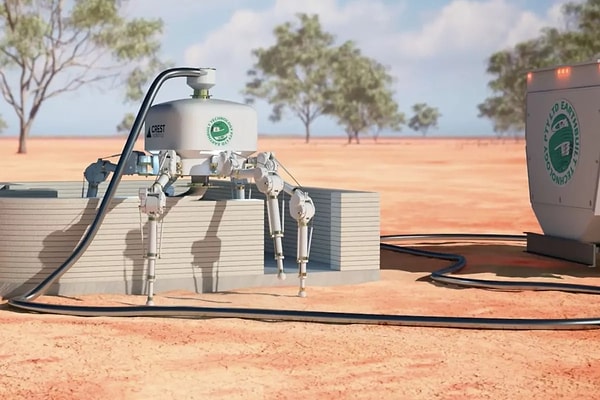
What sets Charlotte apart is not just her speed, but also the concept of the materials she uses. It is planned for the robot to utilize an environmentally friendly construction mixture, prepared from locally available materials such as sand, waste glass, and broken bricks.
This material is printed in layers, one on top of the other, through the robot's extrusion system. Thanks to her spider-like legs, Charlotte is not only mobile, but she can also elevate herself as the construction progresses, continuing to build the structure. Consequently, the process advances largely autonomously with just a single machine.
Still in the development stage.
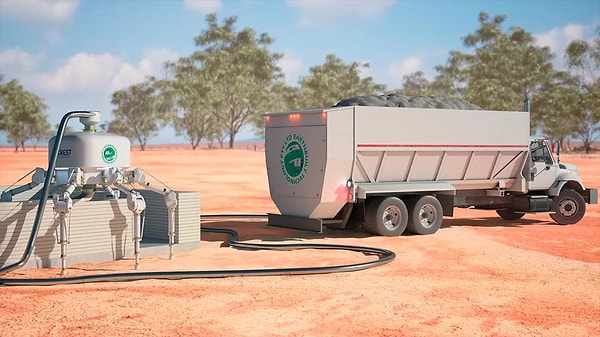
Charlotte is not yet a ready-made robot that builds full-scale houses. The development process is ongoing, and it's reported that a small-scale prototype was recently showcased. Therefore, it may still take a few years for the robot to construct a real dwelling.
Nevertheless, the project is seen as an alternative solution to issues in the construction sector, such as labor shortages, delays, and high costs. The aim is for the robot to be able to build simple structures quickly and at a lower cost. It's also suggested that the 3D printed structures it creates could be resistant to fire and flooding.
In the future, we might even be able to construct a base on the Moon.
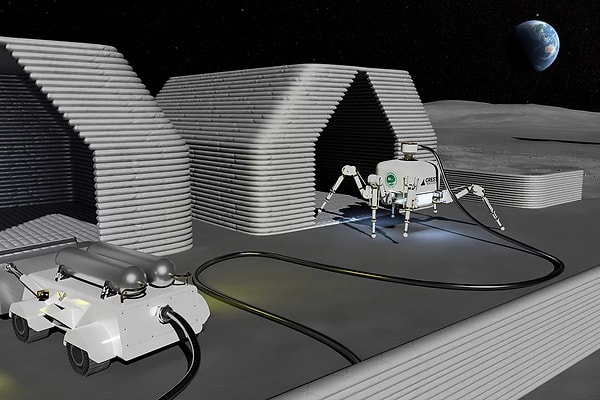
Charlotte is also being considered for potential research bases that could be established on the Moon in the future. Its compact, autonomous, and flexible design makes it a promising candidate for constructing simple structures on the lunar surface.
Of course, it's not expected that such robots will be suitable for every climate, market, and construction need. However, in regions particularly plagued by housing shortages, labor deficits, and urgent shelter needs, construction robots similar to Charlotte may become increasingly prevalent in the future.
Keşfet ile ziyaret ettiğin tüm kategorileri tek akışta gör!
 Test
Test
 Gündem
 Magazin
 Video
Video



Send Comment