


Google's New Open-Source AI: What Is Gemma 4, and Why Is It Important?


Something happened in the tech world last week. Quietly, without a big launch event. Google unveiled Gemma 4—and to be honest, I was a bit taken aback when I saw the numbers. A model with 31 billion parameters is outperforming DeepSeek, which has 671 billion parameters, on the Arena AI rankings. You didn’t misread that. How is this possible? Let me try to explain.

Google Gemma 4 — The New Titan of Open-Ended AI Models

What Exactly is Gemma 4?
Short answer: Gemma is a family of artificial intelligence that Google distributes for free and you can run on your own computer.
However, this description falls a bit short. Consider this: when you use ChatGPT or Claude, you type into a box, not knowing what's happening inside, and that service could shut down one day or its pricing could change. With Gemma, on the other hand, you download the model itself — the weights, the parameters — and run it on your own server. There's no dependency on anyone. Announced on April 2, 2026, Gemma 4 is the fourth and, so far, the most powerful version of this family. It comes with an Apache 2.0 license, which means you can use it without any restrictions in your commercial projects.
Four Models, Four Different Worlds
Gemma 4 is not just a single product — it comes in four different sizes, each designed to solve a unique problem. Let's start with E2B and E4B. These are 'edge' models, designed to operate on devices such as phones, tablets, and even Raspberry Pi. They have a 128K token context window, allowing them to process even lengthy PDFs in a single go. They also support audio input, a feature exclusive to these two models and not found in their larger counterparts.
Next up is the 26B MoE. MoE stands for 'Mixture of Experts' — an architecture that activates only the relevant expert sections of the model for each question. The result? It behaves like much larger models while consuming far less energy. It has a 256K token context window and finally, we have the 31B Dense. The most powerful member of the family. This model is the one that's making waves on benchmark lists.
A common feature of all these models: they understand images and videos, are proficient in over 140 languages, and support function calling.
Artificial intelligence models can now operate on much smaller devices.

Is it on your MacBook? Yes, indeed.
To be honest, I was a bit skeptical about Apple Silicon. Saying 'it works' is easy, but how many tokens per second?
The results turned out better than expected. The 26B MoE model in the M1 Ultra Mac Studio produces 6070 tokens per second with llama.cpp. This speed is sufficient for real-world usage. It's reported that even better results are achieved on newer devices like the M3 Pro. Why does Apple Silicon perform so well? Thanks to an architecture called 'Unified memory'. The CPU and GPU share the same memory pool — which makes running large models on RAM unusually efficient. This is a significant difference for those without an Nvidia GPU. Even a Mac mini with 16GB RAM could be a starting point for E2B/E4B models.
On the setup side, there's no difficulty: Install Ollama, type ollama run gemma4 into the terminal. It's up and running within five minutes.

What's Happening with Gemma 4 by MLX
MLX is a machine learning framework that Apple has built from scratch for its own hardware. It made its debut at the end of 2023, initially without making much of a splash. However, over the past year, it has quietly taken a central position in the ecosystem. MLX is capable of utilizing the 'unified memory' architecture - that is, the sharing of the same memory pool by the CPU and GPU - in a much more aggressive manner. This creates a noticeable difference, particularly with large models.
In the mlxcommunity collection at Hugging Face, quantized versions of nearly every variant of Gemma 4 are readily available. With 4bit quantization, E4B fits into approximately 5GB, 26B MoE into 18GB, and 31B Dense into 20GB. Thus, even an ordinary M series Mac with 32GB RAM can easily handle 31B Dense. All it takes is a weight file to download and three lines of code to write - and then it's up and running.
Numbers: Where Does Arena AI Actually Stand in Reality?
Arena AI presents one of the most intriguing ways to compare artificial intelligence models. Users are pitted against two responses, unaware of the identity of the model behind each, and are tasked with choosing one. From hundreds of thousands of such interactions, an elo rating emerges — much like in chess tournaments.
As of April 2026, the ranking of open-source models is as follows:
1 Kimi K2.5 Thinking (Moonshot) — 1.471 elo
2 Kimi K2.5 (Moonshot) — 1.456 elo
3 Kimi K2 (Moonshot) — 1.452 elo
4 Gemma 4 31B (Google) — 1.451 elo ✅
5 Qwen 3.5 397B (Alibaba) — 1.447 elo
11 DeepSeek V3 — 1.425 elo
12 DeepSeek R1 — 1.424 elo
Looking at this list, one cannot help but ask: Why is Qwen, with its 397 billion parameters, lagging behind Gemma, which only has 31 billion? Part of the answer lies in architectural efficiency, while another part is rooted in the knowledge transfer from the Gemini 3 research. Google refers to this as 'intelligenceperparameter' — intelligence per parameter.
Here are a few figures from official benchmarks:
AIME 2026 Mathematics: 89.2%
GPQA Diamond Science: 84.3%
LiveCodeBench Coding: 80.0%
MMLU Multilingual: 85.2%
Note: The Arena AI ranking is updated daily, so for the most current standings, please refer directly to the site.
📌 Arena AI leaderboard
📌 Model card
Competitors from China: Seeing the Situation As It Is
To be frank, the real surprise in the open-source AI world over the past two years has emerged from China. This situation both presents a challenge and marks a success for Gemma.
Kimi K2.5 (Moonshot AI)
Quietly launched in January 2026, it swept Arena AI off its feet. It can process text, visuals, and videos. Both Alibaba and the former Sequoia China (now HongShan) have invested in this project. It ranks ahead of Gemma – a fact we must admit. However, the hardware required to run it is on a whole different level; it doesn't run smoothly on Apple Silicon.
DeepSeek R1 and V3 (MIT licensed)
It shook the AI world at the beginning of 2025. With 671 billion parameters, it's truly powerful in math and coding. However, it ranks 1112th in Arena AI – far behind Gemma 4. Moreover, the hardware you need to run it is undeniably larger compared to Gemma 4. DeepSeek Hugging Face
Qwen 3.5 (Alibaba, Apache 2.0)
This family is interesting. It spans a wide range from 2B to 397B. It particularly leaves Gemma behind in language support: 201 languages and dialects vs. Gemma's 140+. The price is competitive. It leads in some categories in benchmark tables. However, it loses to Gemma's 31B in Arena AI chat preferences – this gap is significant in terms of end-user experience. Qwen Hugging Face
GLM4.7 (Zhipu AI / Z.ai, MIT)
It's striking in Chinese tasks. It's offered as open source. It lags behind Gemma in English and general multi-language scenarios.
MiniMax M2.5 (Modified MIT)
It doesn't appear on the radar much, but its rank in Arena AI is noteworthy. It's strong in long-context processing. Since its license is 'Modified MIT', it needs to be checked for commercial use.
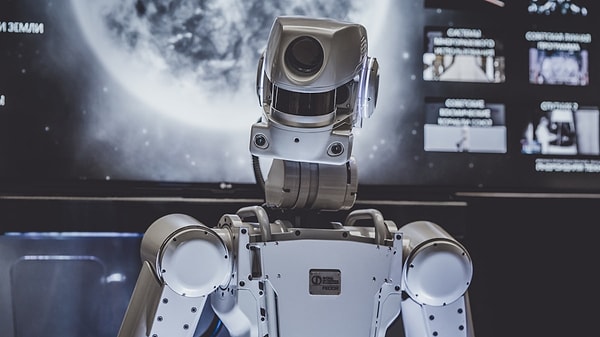
In the open-source artificial intelligence competition, Chinese models hold a strong position.
Comparing with Western Competitors
Llama 4 (Meta)
Meta's ace in the hole is the Scout model: a 10 million token context window. This lengthy document analysis is truly significant for large codebases. The Maverick, on the other hand, is colossal with a total of 400 billion parameters — but it's a heavy lift. Gemma 4 31B manages to achieve similar scores with the comfort provided by its size.
Mistral Small 4 (Apache 2.0)
The French have always been adept at crafting compact models. It scores around 25 on Arena AI, with a 1.415 elo. Gemma 4 takes the lead in the realm of audio and visual processing.
Llama 3.1 405B
Meta's previous generation giant, it's in the 6768 band on Arena AI. Gemma 4 31B surpasses it with just seven percent of its size. Consider what this efficiency means on paper: server costs, energy, ease of setup — it all changes.
Who Finds It Useful and Why?
For Developers:
If you're looking to infuse your product with an AI layer and prefer not to rely on OpenAI, Gemma 4 presents a solid alternative. It comes with function calling, JSON output, and an Apache 2.0 license. The integration process is relatively seamless.
For Apple Silicon Users:
Running a robust local model without an Nvidia GPU is now feasible. If you own a Mac with an M1 chip or higher and have 16GB+ of RAM, it's worth giving it a shot. The MLX backend particularly makes a significant difference.
For Researchers:
If you're hesitant about exporting data to the cloud, this is crucial. Gemma was utilized in a cancer treatment research conducted by Yale University in collaboration with Google - the advantages of a local model become very tangible in such projects that require sensitive data.
For Corporate Use:
The Apache 2.0 license allows you to transition to a production environment without incurring additional fees or obtaining permission. This is a significant advantage for sectors sensitive about data sovereignty, such as finance, healthcare, and public services.
📌 All Gemma 4 models - Hugging Face
📌 Google DeepMind page
Final Word
Open-source artificial intelligence models have long been in the 'almost good' category. They were getting close to their closed-source counterparts, but couldn't quite catch up. Has Gemma 4 bridged this gap? Not entirely. In some instances, K2.5 takes the lead, while in other benchmarks, Qwen comes out on top. However, I can say this: to be ranked 4th in Arena AI with 31B parameters, and to be able to run this on your own computer — this would have been unimaginable a year ago.
With over 400 million downloads and more than 100,000 derivative models, these figures tell us one thing: developers have already begun building on top of Gemma.
📌 Try it out on Google AI Studio right now.
Keşfet ile ziyaret ettiğin tüm kategorileri tek akışta gör!
 Test
Test
 Gündem
 Magazin
 Video
Video



Send Comment