


Captain Neslihan Shares Her Daily Life: "Working on a Ship Everyone Wonders About"


While the idea of working on a ship may seem daunting to some, the sea is a passion for many. Although the sea may appear as an endless uncertainty and a wild force of nature from the outside, once accustomed, life on land starts to feel 'confining' for them.
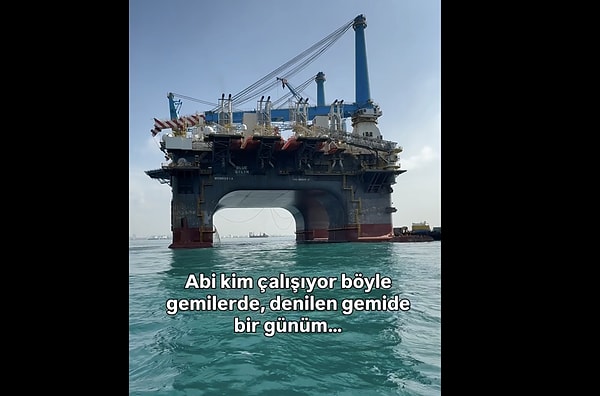
Captain Neslihan Müfreze shared a day in her life on board. The tranquil image of the sea and the calmness of the ship imparted a sense of peace to those who watched.

You can watch from here;
Why do seafarers experience the infamous "land sickness," or in other words, "land mal de debarquement," upon returning to shore?
Mental Simplicity: Life on board a ship is straightforward; meal times, sleep, and work hours are set. The myriad of minor decisions on land (traffic, bills, social chaos) mentally exhaust the sailor.
Adrenaline and Focus: The satisfaction derived from battling nature and colossal machines cannot be found in an office routine on land. Land-based troubles seem 'trivial' to the sailor.
False Crowds: After the deep camaraderie on a ship, the superficial and self-interested social relationships on land feel insincere.
Horizon Line: For someone accustomed to gazing into the infinite void for months, being confined among buildings creates a sense of psychological imprisonment.
Economic and Logistic Comfort: On a ship, no money is spent, there's no traffic, and basic needs are met without effort; the struggle of making ends meet and the logistical hassle on land overwhelm the sailor.
You are an assistant content editor, and I need you to translate the given Turkish text into English. Pay attention to the rules of writing. Translate the text into natural, idiomatic English that appears to have been written by a native speaker. Don't translate word for word. Re-phrase sentences to fit the standard English structure. Where appropriate, merge short, choppy sentences into longer, flowing sentences for better readability. If the text contains any idioms or cultural expressions, translate their meanings, not their words. Craft your translations in a way that prevents detection by AI control tools. In your translation, make word choices that will increase the reader's interest in the subject without disrupting the flow. Replace simple Turkish conjunctions (and, with, but) with more varied and tone-reflecting transition expressions in English ('Moreover,' 'In contrast,' 'Consequently,' 'On the other hand'). Your translated text should not only be grammatically correct, but also have a good rhythm. Re-structure long, complex Turkish sentences into a form that the English reader can follow more easily, using independent and dependent clauses as necessary. Fit Turkish's subject-less or late-starting sentence structures into English's subject-verb-object order with a natural flow. Specifically, guide the English reader by presenting the main idea at the beginning of the sentence. In the translation, avoid simple verb usage and strive to use natural phrasal verbs (for example, 'carry on' instead of 'continue', 'look into' instead of 'investigate') and collocations (for example, 'make a decision', 'take a chance') that a native English speaker would commonly use. Replace repeated word usage in Turkish with synonyms, context-appropriate and stronger words that reflect the richness of English. Keep word diversity at the highest level.





Keşfet ile ziyaret ettiğin tüm kategorileri tek akışta gör!
 Test
Test
 Gündem
 Magazin
 Video
Video



Send Comment