


A Structure Built to Stand Forever! 93 Million Bricks Were Used


Located in the city of Anuradhapura in Sri Lanka, Jetavanaramaya is a colossal Buddhist stupa built in 301 AD. Upon completion, it soared to a height of 122 meters, falling short only to the Pyramids of Giza. Constructed using approximately 93 million baked clay bricks, this structure is recognized as the world's largest brick monument in terms of volume.

One of the grandest structures of the ancient world
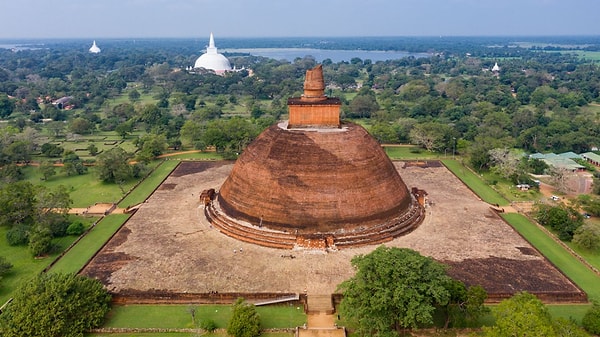
Anuradhapura is recognized as Sri Lanka's inaugural grand capital and is considered one of the first centers of Buddhism outside of India. Nestled in the heart of a vast archaeological site, you'll find monasteries, water reservoirs, and towering stupas. Dominating over all these structures is the Jetavanaramaya, with its giant dome shaped like a bubble.
Constructed around 301 AD, the building reached a height of 122 meters during its time, surpassed in height only by the Pyramids of Giza.
Built with approximately 93.3 million baked clay bricks, the stupa is regarded as the largest brick structure ever constructed in terms of volume. Today, it stands at around 71 meters tall.
Centuries of destruction and restoration have left just over half of its original size standing. Nevertheless, its mass is so colossal that archaeologists estimate that the bricks used could construct a three-meter-high wall stretching from London to Edinburgh.
What's most striking about Jetavanaramaya is that it was predominantly built from baked clay bricks, rather than stone.
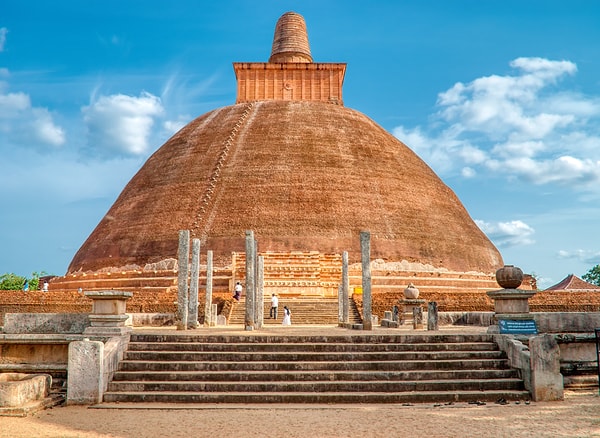
According to archaeologist Anura Manatunga, opting for bricks instead of stone blocks implies the production and precise placement of millions of pieces. Such a colossal operation demanded advanced planning and a substantial workforce. Remnants of ancient brick kilns have been detected in the vicinity of Anuradhapura.
In the process of preparing the foundation, the ground was filled with water to observe absorption. These seemingly primitive soil tests were, in fact, quite functional methods. Cylindrical voids were discovered in the areas that had sunk, which are believed to hint at knowledge of early ventilation techniques.
The mortar mixture was composed of finely ground dolomite, limestone, sifted sand, and clay. It is assessed that the addition of cement in the modern era has accelerated deterioration in some parts.
Excavations unearthed sacred relic chests that were strategically placed at various levels.
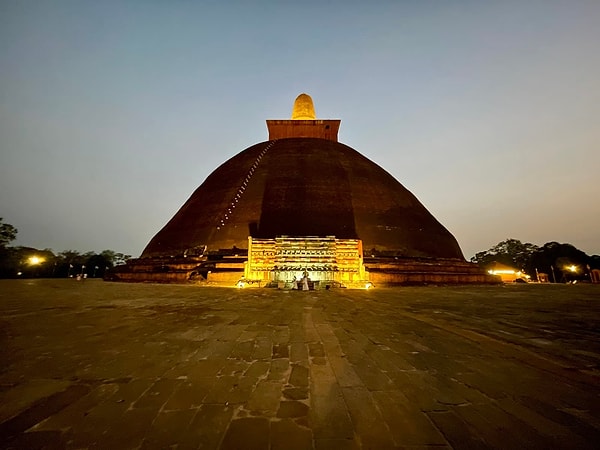
Depictions of Bodhisattva and sections of the Prajñāpāramitā sutra, inscribed in Sanskrit, have been discovered on golden plates. These artifacts are currently on display at the National Museum in Colombo. The findings suggest that Jetavana was considered one of the cosmopolitan centers of Buddhist thought during its time.
According to legends, a diamond was placed at the peak to ward off lightning strikes. It is proposed that the sharp tower form bears architectural influences that arrived via Mediterranean trade networks. However, this is not yet confirmed and investigations are ongoing.
Keşfet ile ziyaret ettiğin tüm kategorileri tek akışta gör!
 Test
Test
 Gündem
 Magazin
 Video
Video



Send Comment