


8 Breathtaking Works by Gaudí, Known as "God's Architect": One Has Remained Unfinished for 144 Years


Most of the buildings that linger in the minds of those who visit Barcelona bear the signature of a single architect: Antoni Gaudí.
Believing that there are no straight lines in nature, despising right angles, and known as the 'Architect of God' due to his faith, Gaudí designed his buildings as if they were living entities. Today, seven of his works are on the UNESCO World Heritage List.
Source

Sagrada Família
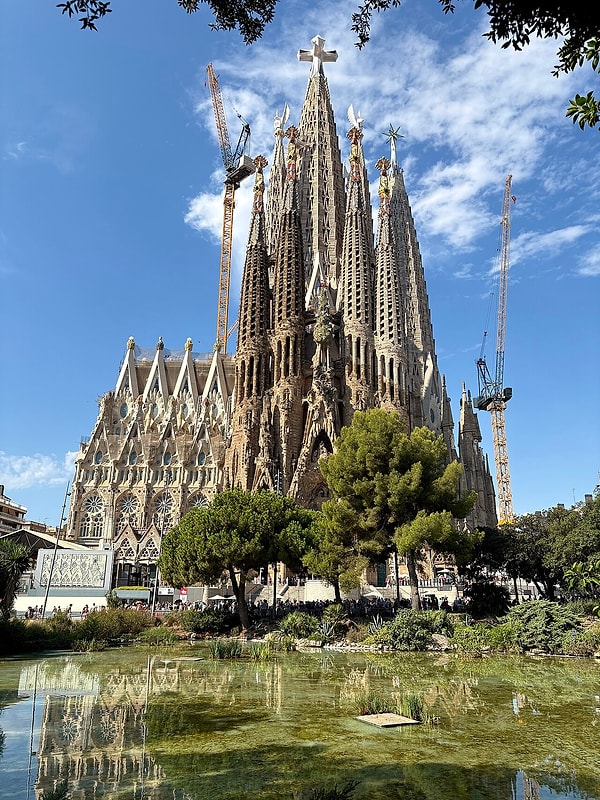
The foundation of the basilica was laid in 1882, and a year later, Gaudí took over the project, dedicating the last 43 years of his life to it. Inside, pillars branch out like tree trunks, giving visitors the sensation of walking through a stone forest. To this day, the construction continues, funded solely by ticket revenues and donations.
In February 2026, a cross was placed on top of the central Jesus Tower. The structure, reaching 172.5 meters, surpassed Germany's Ulm Cathedral, becoming the tallest church in the world. When asked why the construction was taking so long, Gaudí had a ready answer: 'My client is not in a hurry.'
Park Guell
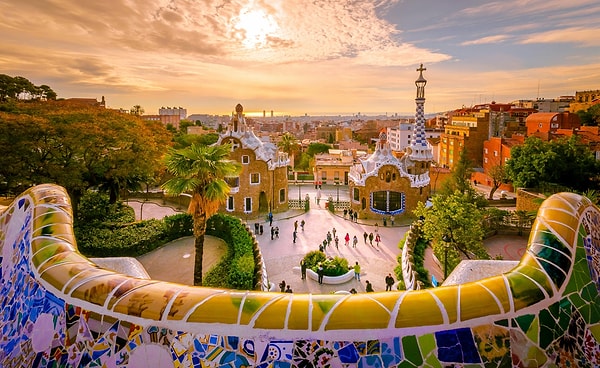
Park Güell was originally conceived not as a park, but as a garden city for wealthy families. However, of the planned houses, only two were built, and the area ultimately transformed into a public park.
The vibrant mosaic salamander that greets you on the entrance stairs is the symbol of the park. The long, wave-like bench that encircles the terrace overlooking the Barcelona skyline is covered in mosaics made from broken ceramic pieces.
Casa Batlló
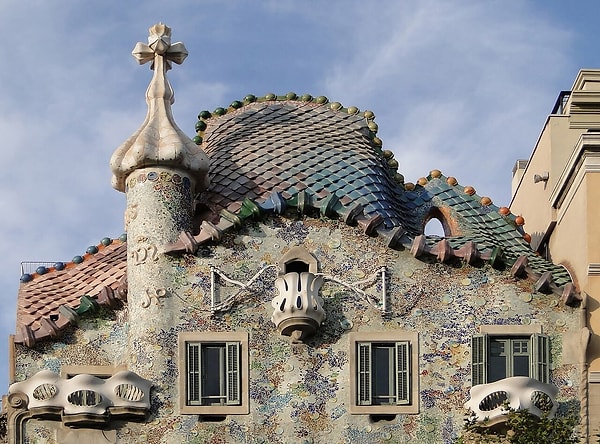
This building, located on Passeig de Gràcia, the busiest street of Barcelona, was completely reinvented by Gaudí between the years of 1904 and 1906. Due to its skull-like balconies and columns resembling bones, it was colloquially dubbed 'The House of Bones' by the locals.
The wavy roof, coated with shimmering ceramics, bears a striking resemblance to a dragon's back. It's virtually impossible to find a single straight line on the facade.
Casa Milà (La Pedrera)
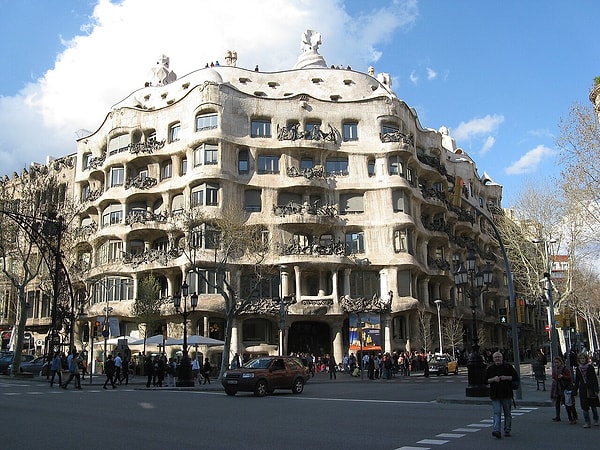
Constructed between the years of 1906 and 1912, Casa Milà's undulating stone facade was so unconventional that the locals of Barcelona dubbed it La Pedrera, meaning 'the stone quarry'. There were officials who, fearing that Gaudí's peculiar proportions would disrupt the cityscape, even attempted to halt his constructions from time to time.
The most renowned corner of the building is its rooftop: Here, chimneys resembling statues of helmeted soldiers are lined up in a row.
Casa Vicens
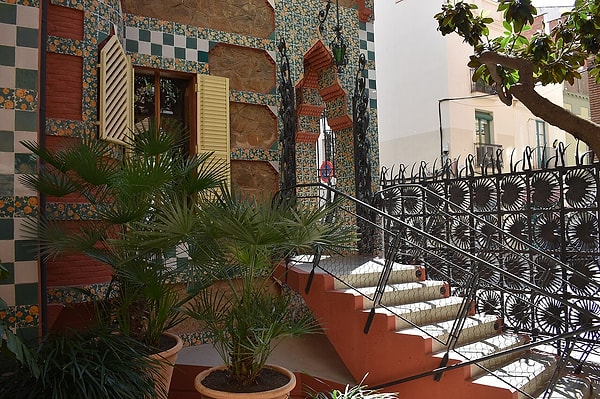
Casa Vicens, which was Gaudí's first major house project, commenced in 1883. The building carries traces of Eastern and Moorish architecture that influenced Gaudí in his youth.
The floral patterned ceramic tiles adorning the facade and the colorful brickwork are early indications of his future passion for color. Since 2017, the house has been open to the public as a museum.
Guell Palace
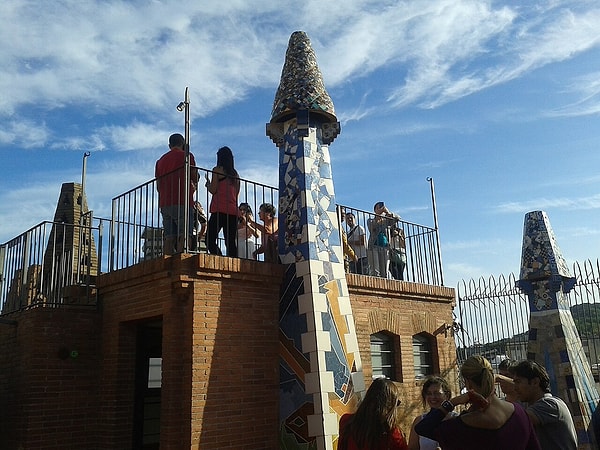
The figure who transformed Gaudí's career was Eusebi Güell, a textile industrialist. Güell discovered the young architect's work at the 1878 Paris World Fair and granted him virtually an unlimited budget.
Situated right next to La Rambla, Palau Güell was constructed as the Güell family mansion between 1886 and 1888. Not only the parabolic arches inside, but also the colourful mosaic chimneys on the roof are quite eye-catching.
The Caprice
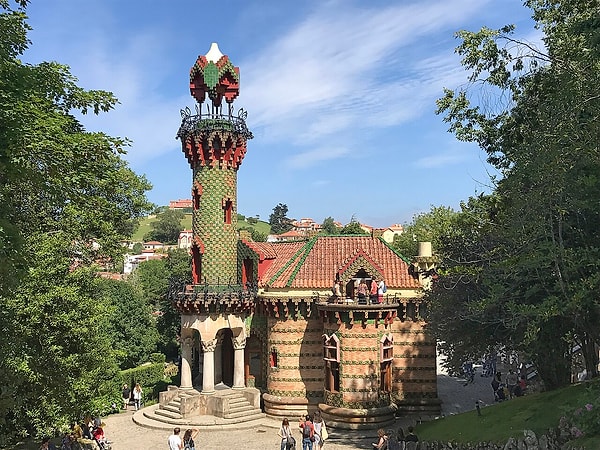
El Capricho, a rare masterpiece of Gaudí located outside of Barcelona, is a summer house that began its existence in the northern Spanish town of Comillas in 1883.
Adorned with sunflower-patterned tiles that grace its facade, the house, whose name translates to 'caprice' in English, exudes whimsy. The slender tower, reminiscent of a minaret, lends a fairytale-like charm to the structure.
Crypt of Colònia Güell
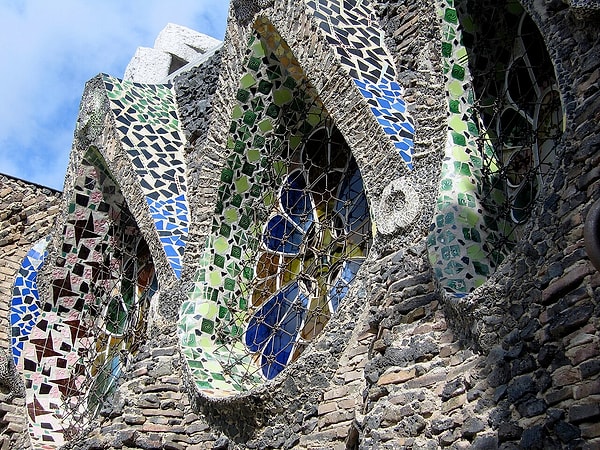
Only the crypt of the church, designed for the worker settlement Colònia Güell near Barcelona, could be completed. However, this small structure is considered a laboratory of Gaudí's genius.
Gaudí was not fond of drawing. Instead, he would construct three-dimensional models using chains and weighted ropes, and hang them over large mirrors. He would then derive the most natural form of arches from the inverted image reflected in the mirror. The slanted columns in the crypt are a product of this method. The same technique later paved the way for Sagrada Família.
Keşfet ile ziyaret ettiğin tüm kategorileri tek akışta gör!
 Test
Test
 Gündem
 Magazin
 Video
Video



Send Comment