


390-Million-Year-Old Meteorite Crater Found While Searching for a Campsite


Canadian amateur astronomer Joël Lapointe stumbled upon an almost perfectly circular depression in the north of Quebec while browsing Google Maps to plan a camping route. Realizing that the structure, which spans about 25 kilometers in width, was not recorded in known crater logs, he conveyed his observation to scientists.

While searching for a camping route, he noticed the giant circle on the map.
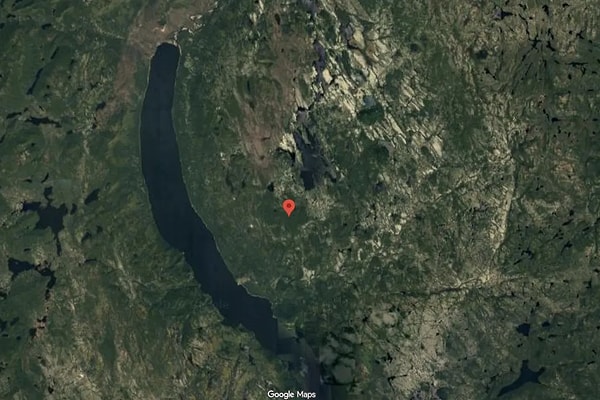
Joël Lapointe was mapping out a route on Google Maps for his camping trip in the CôteNord region of Quebec, Canada, set for 2024. While doing so, he noticed a nearly perfect circular depression, about 25 kilometers in diameter, around Marsal Lake. Lapointe, an amateur astronomer, thought that the structure didn't resemble an ordinary valley or eroded terrain.
Upon realizing that the structure was not listed in databases where known meteorite craters are recorded, he reported his observation to experts. Preliminary examinations of digital elevation data, geological maps of the region, and previously collected rock samples reinforced Lapointe's suspicion. However, stronger evidence on the ground was needed to prove that the depression was formed by an impact from a celestial object.
The traces on the rocks revealed evidence of the impact.
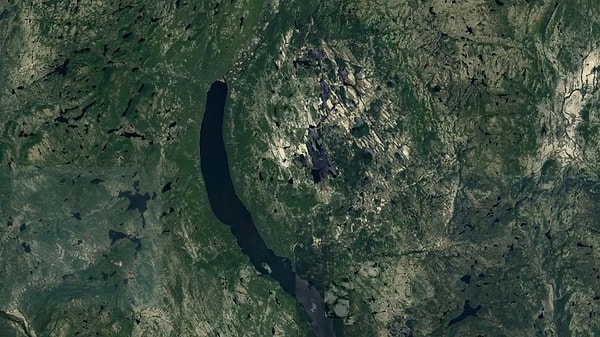
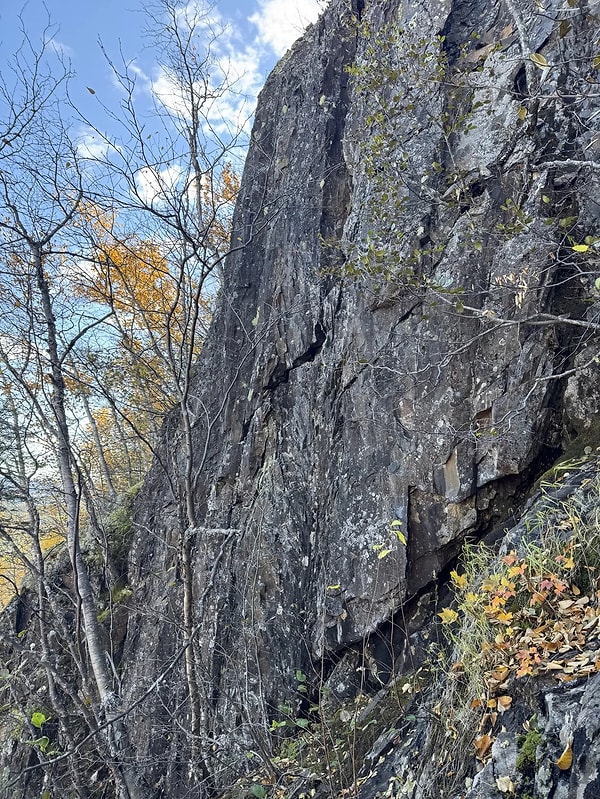
The research team, which included planet geologist Gordon Osinski from Western Ontario University, conducted a field study in the area in October 2025. The team, navigating through the rugged and hard-to-reach terrain, came across striated structures on rock surfaces, known as 'shatter cones,' formed during high-pressure collisions.
The researchers also discovered large layers of rock that had melted and then solidified again due to the extreme heat and pressure caused by the meteorite impact. These melt rocks, reaching thicknesses of several tens of meters at some points, were among the strongest evidence indicating that the depression was not formed by volcanic activity or ordinary geological processes.
It has been determined that the crater was formed approximately 390 million years ago.
Paleomagnetic studies conducted on rock samples have dated the formation to between 370 and 400 million years ago. Initial data obtained from zircon minerals also pointed to a similar time frame. By evaluating all the findings together, the research team concluded that the structure, which is approximately 25 kilometers in diameter, was formed by a high-speed meteorite impact that occurred 390 million years ago.
Following discussions with the Ekuanitshit Innu Council, the crater was named 'Uhackatik'. It is planned to present the findings to the scientific community at the 88th Meteoritical Society meeting to be held in Germany in August 2026. While there are approximately 200 confirmed impact craters on Earth, it is considered quite rare for a formation of this size to be noticed from publicly available satellite images.
Keşfet ile ziyaret ettiğin tüm kategorileri tek akışta gör!
 Test
Test
 Gündem
 Magazin
 Video
Video



Send Comment