


Why do Cats Lick Each Other?


Cats exhibit many behaviors that may seem strange to us, one of which is their tendency to lick each other. You might think that this behavior is a show of affection, akin to humans kissing each other. However, you would be mistaken.
Research conducted at Ghent University and Lincoln University has proven that cats' licking behavior is not a demonstration of love.
According to the study, mutual licking could even indicate conflict.
Source

You might consider cats licking each other as akin to humans kissing each other.
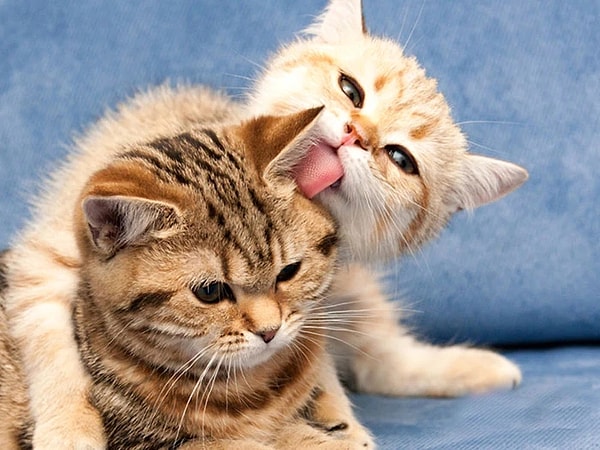
This seemingly sweet situation from the outside is not so sweet after all.
According to The Independent, the grooming behavior of house cats, where they clean each other's fur, is not always a sign of love and friendship as one might assume. In fact, it could even indicate conflict. A recent study has turned long-standing assumptions about this behavior on their head. In households with multiple cats, one cat grooming another, or mutual grooming, was generally considered a sign of cats getting along well with each other. However, researchers pointed out that there hasn't been a comprehensive study examining this behavior.
A new study has been conducted at Ghent University and Lincoln University.
In the recent study, 53 households with two cats each were examined.
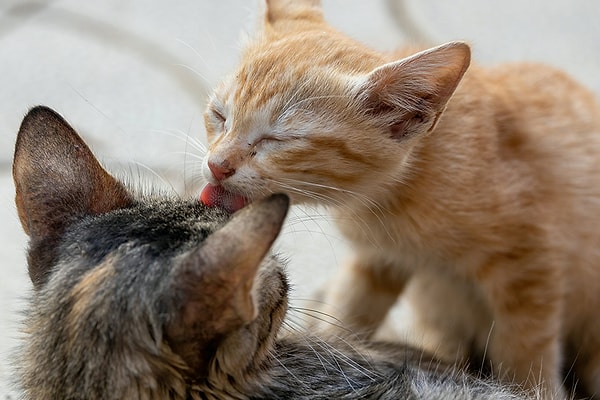
In households where cats are observed to groom each other, it has been discovered that this action is not always a sign of affection, and can sometimes even indicate conflict. In a study published in the academic journal Applied Animal Behaviour Science, researchers concluded that 'mutual grooming in domestic cats serves multiple social functions,' and added that the context of this action could help better understand the behavior.
From a positive perspective, it was observed that in some cases, mutual grooming could strengthen social bonds, serve a hygienic purpose, or even assist in relaxing the cat being groomed.
If one cat is licking the other cat's head or ears, there is no cause for concern. The synchronization of the cats' movements at that moment is a sign that the cats are getting along well.
It can be used to initiate a game, to avoid conflict, or to convey a passive-aggressive message.
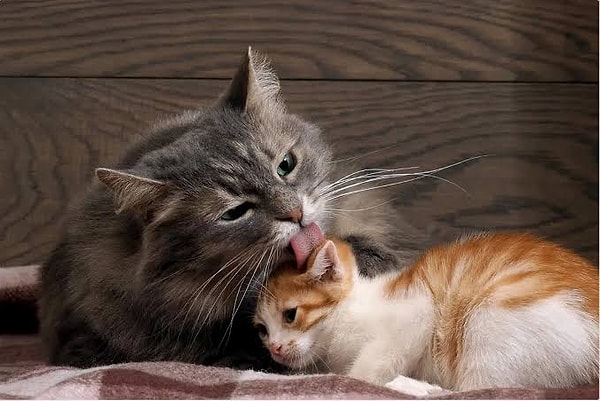
If a cat is biting another cat's neck, it could be an indication that the cat wants to initiate play. Research has revealed that cats grooming each other often triggers mutual wrestling.
In certain situations, reciprocal grooming can also serve as a signal to avoid conflict or convey a passive-aggressive message. For instance, this behavior may be driven by a cat's desire to take over a favorite resting spot of another cat. According to the study, in such instances, the receiving cat may flatten its ears, indicating a lack of enjoyment in the interaction, when groomed by the other cat.
In other words, not every cat enjoys being groomed by another cat all the time. Signs of discomfort or stress include the cat lightly swatting with its paw, shaking its head, scratching behind its ears, biting, yawning, or licking its lips.
Researchers point out that their resources are currently limited and a more in-depth investigation is needed to understand the reasons behind this behavior in cats. In conclusion, cats grooming each other in multi-cat households does not always yield positive outcomes.
Keşfet ile ziyaret ettiğin tüm kategorileri tek akışta gör!
 Test
Test
 Gündem
 Magazin
 Video
Video



Send Comment