


Vanished Overnight: The Bizarre Story of the Village That Mysteriously Disappeared


The phenomenon of 'ghost villages,' where entire communities seemingly vanish without a trace, reflects a historical reality that has left profound imprints on our cultural memory. Perhaps one of the most debated instances of such disappearances is the alleged incident at Anjikuni Lake in the northern Manitoba region of Canada between 1914 and 1930. According to the claim, a trapper named Joe Labelle discovered that all inhabitants of a familiar Inuit village had mysteriously disappeared when he visited; meals were left half-cooked on stoves, and dogs were found tied up, starving. However, the specifics of the incident have morphed over time, with different accounts surfacing depending on the source.

Is there any truth to the Anjikuni Lake incident?
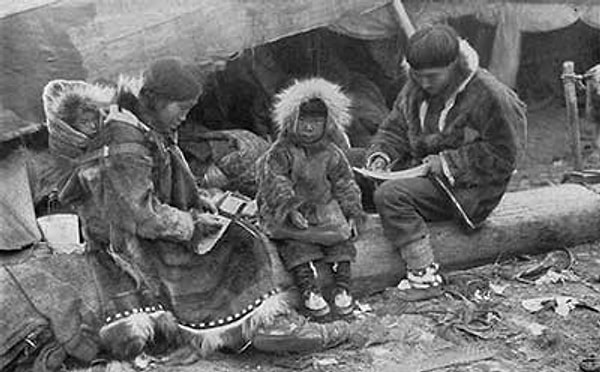
The narrative was nourished by a news story that circulated in Canadian newspapers in the 1930s; however, over time, archival researchers discovered some significant inconsistencies. In his review for Skeptoid magazine (2013), historical researcher Brian Dunning revealed that the incident was reported in different versions in the newspapers of the time, and there was no official investigation document related to this incident in the records of the Royal Canadian Mounted Police. Considering the seasonal migration tradition of the Inuit people, it was highly plausible that the village appeared 'abandoned'; therefore, the story could have been exaggerated as it was passed from one narrator to another, eventually morphing into an urban legend.
What are some instances of mass disappearances that have actually occurred in history?
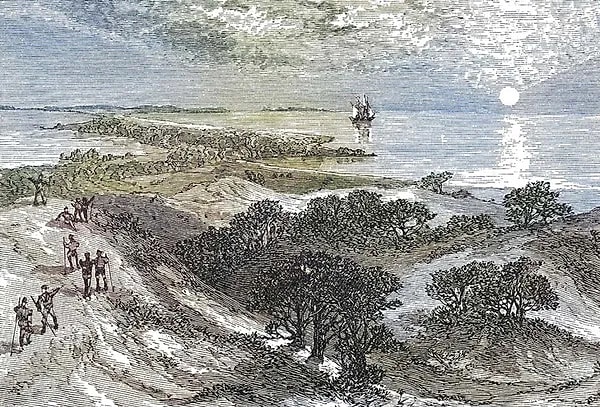
However, there are indeed mass disappearances in history that have truly occurred and been documented. The Roanoke Colony, established in 1590, was one of the first English settlement attempts in North America; when John White returned for aid in 1590, he found the colony of 115 people completely deserted. All that was left was a piece of wood inscribed with 'CROATOAN'. There is still no consensus among historians trying to explain the incident: some suggest that the population assimilated with the Croatan natives on Hatteras Island, while others advocate theories of northward migration or Spanish attack. This topic resurfaced with archaeological excavations conducted by the First Colony Foundation between 2012 and 2015.
What usually lies behind mass disappearances?
Historians and social anthropologists emphasize that there is a documentable reason in the vast majority of cases presented as 'mysterious disappearances'. Famine, epidemic disease, war, seasonal migration or the decision to abandon the region are among the primary causes. Anthropologist Clark Erickson from the University of Arizona points out that such narratives usually stem from a mystery-loving narrator and ordinary historical events are dramatized. On the other hand, some archaeological data indeed point to sudden and unexplainable urban abandonment phenomena: The Pueblo communities in Chaco Canyon also vanished abruptly at the end of the 13th century; modern research blames long-term drought.
What makes these stories so captivating?
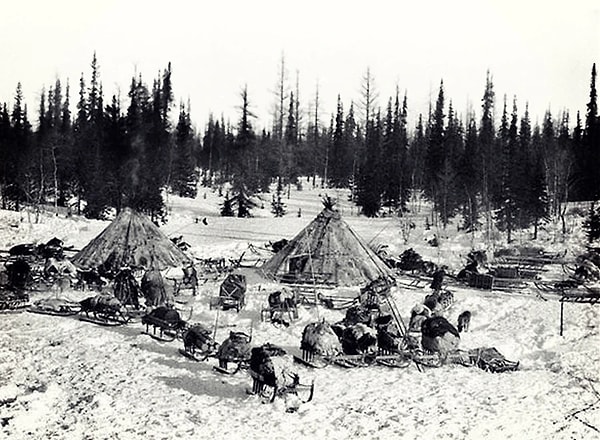
The untraceable disappearance of a community or village population forms a powerful narrative in our collective memory, as it confronts us with one of the most fundamental questions: Where do people go? Hence, all stories of 'ghost villages,' whether real or mythical, continue to live on in cultural memory. Researchers define the function of these narratives as 'collective uncertainty management': inexplicable losses can be controlled and made sense of through storytelling. In this context, places like Anjikuni Lake or Roanoke serve as cultural mirrors reflecting the human mind's way of dealing with uncertainty, independent of historical reality.
Keşfet ile ziyaret ettiğin tüm kategorileri tek akışta gör!
 Test
Test
 Gündem
 Magazin
 Video
Video



Send Comment