


The Oldest Cave Painting in the World Has Been Discovered: It Dates Back to 67,800 Years Ago!


The archaeological community has been sent into a whirlwind with a captivating find from Indonesia. A hand stencil, discovered in a limestone cavern on Muna Island, in close proximity to Sulawesi Island, has been traced back to an astounding 67,800 years ago. This remarkable timeline has bestowed upon it the prestigious title of 'the world's most ancient cave painting'. This revelation significantly recalibrates our understanding of the inception of modern human artistic expression, pushing it back by approximately 15,000 years further than previously estimated.
Find more details below 👇

Under the enlightening guidance of science, time travel has been brought to fruition.
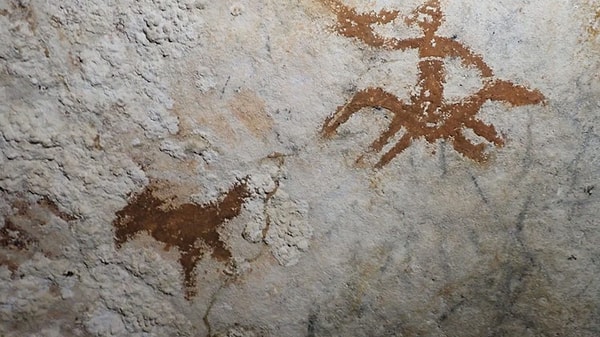
In a collaborative research endeavor spearheaded by scholars from Griffith, Southern Cross, and the Indonesian National Research (BRIN) universities, a meticulous technique dubbed 'uranium-series dating' was utilized to ascertain the antiquity of the painting. The examination of the slender mineral strata encasing the depiction corroborated that this handprint has endured unblemished for an extensive period, spanning tens of thousands of years, and has arrived at our contemporary era unharmed. Additional discoveries within the cavern suggest that societies frequented this locale recurrently over millennia, preserving their artistic endeavors until roughly 20,000 years in the past.
The enigmatic claw detail on the wall and its symbolism.
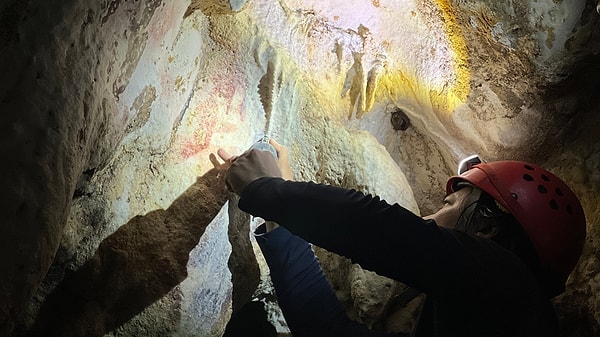
What makes this discovery unique is not merely its age. An unusual design detail in the hand stencil has left scientists astounded. It has been determined that the artist who left the mark intentionally narrowed their fingertips to create a 'claw-like' form. This style, never before seen in rock art, is thought to represent a symbolic narrative of the spiritual bond between humans and animals. This aesthetic intervention proves that early humans were not just recording the world around them, but also possessed the ability to think abstractly.
The findings shed light not only on the history of art, but also on major debates in the world of anthropology. This nearly 68,000-year-old mark indicates that humans used the routes from Southeast Asia to Australia (the Sahul continent) much earlier than previously thought. It is speculated that these first artists in Sulawesi were closely related to the ancestors of the ancient people who later settled in Australia. This discovery reaffirms once again that the chain of Indonesian islands was one of the most critical migration stops in human history.
Keşfet ile ziyaret ettiğin tüm kategorileri tek akışta gör!
 Test
Test
 Gündem
 Magazin
 Video
Video



Send Comment