


Surprising Shift in Istanbul's Air Quality: Cleanest and Most Polluted Districts Revealed


Critical data has been shared concerning Istanbul, a city home to millions of people where the quality of air is a constant topic of debate due to a myriad of factors ranging from traffic to industry. A recent study conducted by Istanbul Technical University (ITU) revealed a notable improvement in the air quality of the megacity compared to the previous year. Along with the report, the districts with the cleanest and most polluted air in Istanbul have also been identified.

Is the air quality in Istanbul improving?
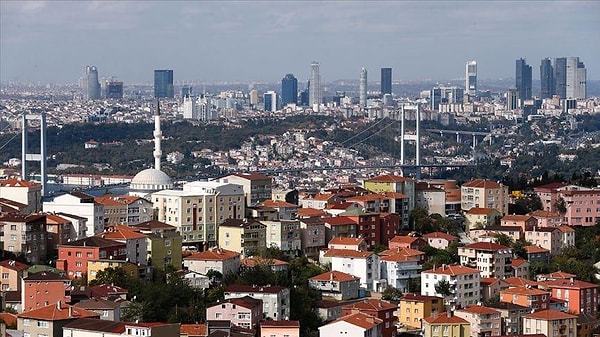
Under the leadership of Prof. Dr. Hüseyin Toros, the Head of the Department of Climate Science and Meteorology Engineering at the Faculty of Aeronautics and Astronautics of Istanbul Technical University, a comprehensive study was conducted to map out Istanbul's air quality. The research involved a meticulous analysis of official data obtained from air quality measurement stations belonging to the Ministry of Environment, Urban Planning and Climate Change, as well as the Istanbul Metropolitan Municipality.
The focus of this study was the concentration of particulate matter (PM10), airborne particles that can lead to respiratory issues when inhaled.
According to the official results obtained, the average particulate matter, which was 34 micrograms per cubic meter in May of the previous year, decreased to 31.2 micrograms in the same month of this year, as measured at 26 different stations across Istanbul. This overall decline paints an encouraging picture. However, it also starkly highlights the significant disparities in air quality between different districts when examined on a micro-scale.
The place with the most polluted air: Sarıyer.
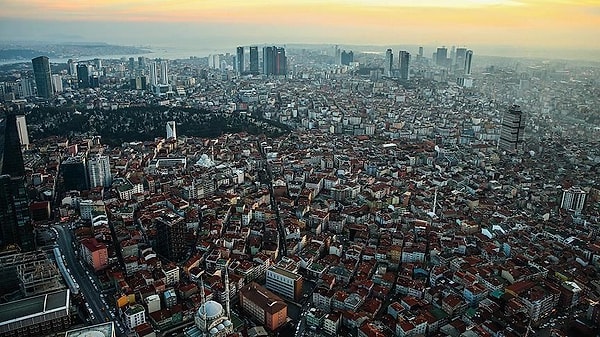
While air pollution has been receding at 17 stations across Istanbul, significant increases have been detected at 9 others. Compared to the same period of the previous year, the location where air pollution escalated most aggressively was the 'Sarıyer' station, with a record-breaking increase rate of 90.57%. Sarıyer was closely followed by 'Arnavutköy,' which also exhibited a steep rise in pollution, with an increase rate of 79.39%. The reasons behind the surge in these areas, known for their proximity to the northern forests, are still under scrutiny by experts.
On the other hand, the station that demonstrated the most successful performance in combating pollution and managed to clean its air the fastest was 'Sultangazi 1,' with a whopping decrease of 58.59%. Other notable regions that managed to improve their air quality were 'Esenler' and 'Ümraniye 1' stations, which recorded a decrease of 36.34% and 35.97% respectively.
The place with the lowest air pollution: Sultangazi.
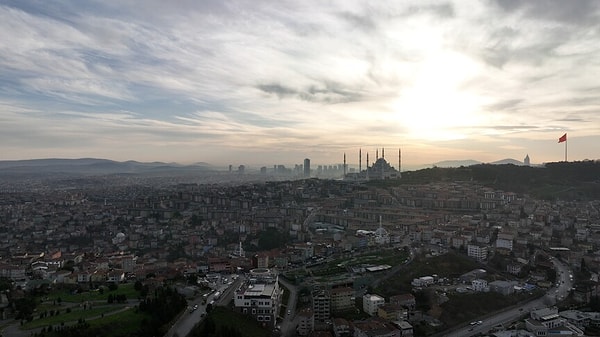
The most striking results in the station-based analysis of the report were observed in the district of Sultangazi. In May, the point with the highest concentration of particulate matter pollution in the city was the 'Sultangazi 3' station, with a measurement of 54.62 micrograms per cubic meter. This area was closely followed by the 'Sultangazi 2' station, which recorded a high level of 53.74 micrograms per cubic meter, and the 'Tuzla' station, located at the heart of industrial and logistic routes, with 47.64 micrograms.
In stark contrast, the cleanest air in Istanbul in May was also found in the same district. The 'Sultangazi 1' station recorded the lowest pollution level, with a particulate matter ratio of 17.37 micrograms per cubic meter. This station was followed by the 'Büyükada' station, known as one of Istanbul's clean air reservoirs, with a ratio of 18.45 micrograms, and the 'Alibeyköy' station, where the ratio was measured at 19.05 micrograms.
Keşfet ile ziyaret ettiğin tüm kategorileri tek akışta gör!
 Test
Test
 Gündem
 Magazin
 Video
Video



Send Comment