


Solar Heat in Asphalt: How Innovative Roads Are Used to Warm Homes and Melt Ice


The French infrastructure company Eurovia is radically transforming the traditional concept of roads with its developed Power Road technology. The system, which traps solar heat through special pipe lines laid beneath the asphalt, not only warms homes, swimming pools, and industrial facilities, but also cools cities in the summer and prevents icing on roads in the winter.

The quest to combat the climate crisis and reduce carbon emissions is driving engineers towards unconventional solutions.
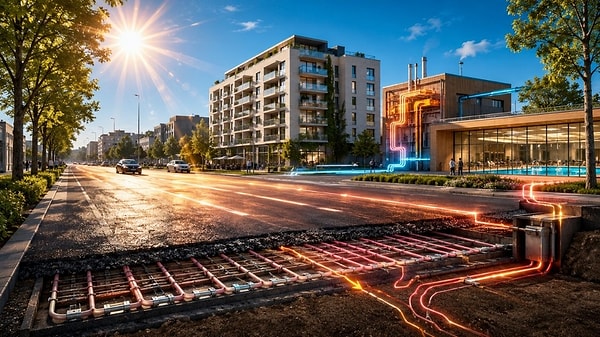
Asphalt, which until now has been seen merely as a transportation surface and criticized for increasing city temperatures during the summer months, is transforming into a new hub for green energy. Power Road technology, developed by Eurovia/VINCI Construction and successfully implemented in many regions of France, is turning roads into massive solar energy collectors.
The engineering behind Power Road technology is based on a rather straightforward logic:
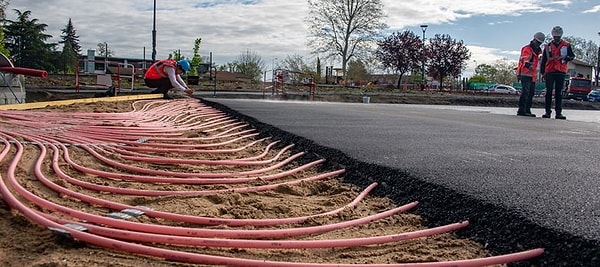
Special pipe networks are laid just 5 to 8 centimeters beneath the surface of asphalt, which heats up throughout the day due to solar radiation.
The heat transfer fluid circulating within these pipes can warm up to 35 °C under the influence of the sun's rays.
This collected thermal energy can either be directly transferred to nearby buildings or sent to special storage areas where it can be kept for months.
In this way, the road not only fulfills its primary transportation function without a hitch, but it also converts the heat that would otherwise dissipate into the environment into useful energy.
The system offers a flawless alternative, particularly for heating buildings and producing hot water during the winter months.
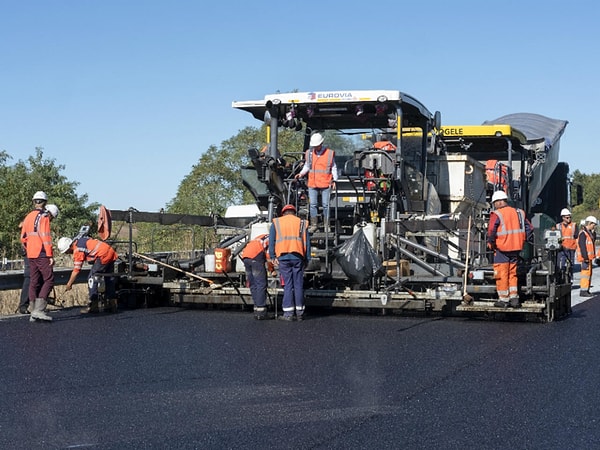
Depending on the technical context of the project and the integration of the heat pump, it is possible to decarbonize up to 95% of domestic hot water production, swimming pools, or industrial processes in direct use scenarios. The system can meet 80% of a building's energy needs from renewable sources.
Yet, the technology does more than just generate energy. It also tackles one of the biggest problems in cities, the 'urban heat islands' issue. As the heat accumulated in asphalt is drawn off through pipes, the road surface temperature drops by an average of 10 °C. This results in much cooler cities during the summer months.
In contrast, the process is reversed during winter months. The stored heat is pumped back into critical road curves or parking lot surfaces during cold periods. This prevents snow and ice formation without the need for chemical salting, thereby enhancing road safety. This winter safety application is actively used in the 5th generation road project in Egletons and the parking lot of Xavier Marmier middle school in Pontarlier.
Projects that gained momentum between 2018 and 2023 have demonstrated the vast array of fields into which technology can be integrated.
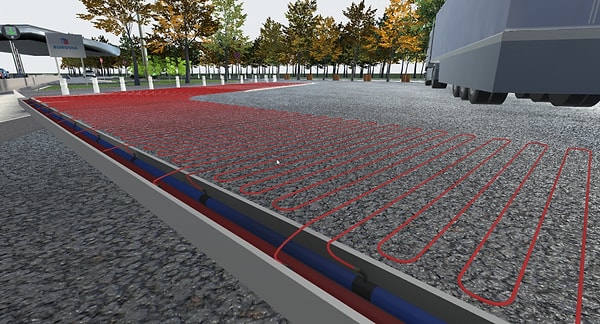
The system is currently functioning successfully in the following locations:
- A residential complex consisting of 61 apartments in FleurysurOrne,
- The Forez and Haut Léon Communauté swimming pools in Feurs and SaintPoldeLéon respectively,
- The SaintArnoult motorway service area near Paris,
- The Agneaux energy authority,
- And the Olonzac technical services center.
Experts emphasize that while the Power Road technology holds significant potential, it's not feasible for every street to automatically transform into an energy source. The success of the system hinges on proper installation, the thermal demand of nearby facilities, compatibility with equipment such as heat pumps, and a thorough analysis of regular maintenance costs.
Keşfet ile ziyaret ettiğin tüm kategorileri tek akışta gör!
 Test
Test
 Gündem
 Magazin
 Video
Video



Send Comment