


Science Has Identified Two Distinct Biological Traits in Psychopaths


Psychopathy is generally perceived as a personality disorder characterized by profound lack of empathy, absence of guilt or remorse, and superficial emotions. Psychologists emphasize that psychopathy doesn't stem from a single situation, but is seen as a collection of diverse personality traits. The most commonly observed characteristics in psychopathic individuals are identified as boldness, ruthlessness, and impulsivity.
Recent research, however, has uncovered the underlying biological causes of these traits.
Source

Bravery, ruthlessness, and unrestraint...

Psychologists assert that psychopathy is not a single, homogeneous condition, but rather manifests as a collection of disparate personality traits. Psychopathy can present at varying levels in individuals and is typically examined under three main categories: bravery, ruthlessness, and impulsivity.
Bravery is perceived as social dominance, emotional resilience, and fearlessness.
Ruthlessness manifests as a lack of empathy, a tendency to exploit others, and insensitivity.
Impulsivity, on the other hand, is defined by impulsive behavior, irritability, and difficulty in controlling urges.
Researchers have delved into the underlying causes of these traits, yielding two distinct findings. Firstly, it was suggested that psychopathic behaviors stem from a fundamental emotional deficiency. According to this theory, the brain is unable to produce normal fear or empathy responses due to inadequately functioning sensory regions.
The second theory highlights an 'attention deficit'. According to this idea, psychopathic individuals focus so intensely on a target or primary stimulus that they fail to process secondary information. For instance, they may not recognize when they are under threat while engaged in a task, or fail to see another individual's distress.
An experiment was conducted with 115 individuals, none of whom had any criminal records or clinical psychiatric diagnoses.
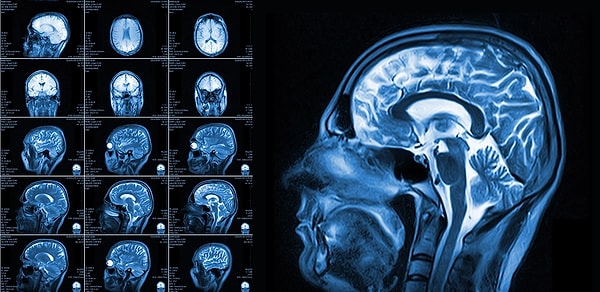
TingFang Soong, a neuroscience researcher at Erasmus Medical Center, orchestrated a study in collaboration with his colleagues in the Netherlands and Australia. Soong and his research team selected 115 healthy adults for their experiment. None of these participants had any criminal records or clinical psychiatric diagnoses. Evaluating this sample from the general population allowed the researchers to investigate how psychopathic traits function across a normal spectrum.
The group was keen to see whether specific brain responses could distinguish attention deficits from emotional deficiencies.
To begin with, participants completed a survey to measure levels of bravery, ruthlessness, and impulsivity. In addition, a separate survey was conducted to broadly assess their cognitive, emotional, and physical empathy capacities.
During the experiment, participants were shown a series of positive, negative, and neutral images. The negative images featured distressing scenes, while the positive ones included adorable scenarios.
As they watched these images, participants were occasionally subjected to loud noises through headphones. To monitor their brain activities, they were fitted with caps embedded with electrodes.
The research findings revealed that psychopathic traits are associated with distinct brain responses.

For instance, bravery has been particularly associated with a significant attention deficit among male participants. This implies that these participants allocated fewer mental resources to sudden loud noises during intense focus. These individuals, unfortunately, failed to perceive other events occurring in their surroundings.
The tendency towards malevolence, on the other hand, was found to align closely with the theory of emotional deficiency. These individuals exhibited a mild startle response when viewing negative images. However, it was expected that individuals' nervous systems would be 'primed' after viewing disturbing images, a situation that did not occur among these participants.
So, what benefits do these studies provide us?

Understanding psychopathic personality traits and their biological origins can pave the way for psychologists to intervene more effectively at an early stage. If a person's antisocial behavior stems from attention deficit, treatment can be centered around cognitive therapies that broaden awareness. On the other hand, if the behavior arises from an emotional deficiency, emotional pathways can be targeted.
Despite certain limitations of this research, investigators have managed to track specific brain wave patterns known as 'potential'. Future research is anticipated to yield even more successful results.
Keşfet ile ziyaret ettiğin tüm kategorileri tek akışta gör!
 Test
Test
 Gündem
 Magazin
 Video
Video



Send Comment