


Psychology Behind the Habit: Why Do We Sleep in the Living Room When We Are Sad?


Sometimes, even a single social media post can broaden our horizons and prompt us to delve into in-depth research on a subject. A user on platform X shared a post that resonates with many of us, discussing our tendency to sleep on the couch or in the living room when we're feeling down or going through psychologically challenging times. So, what could be the reasons behind this behavior?

The post went as follows.

We too delved into the reasons behind this situation.
In Search of Security and Comfort
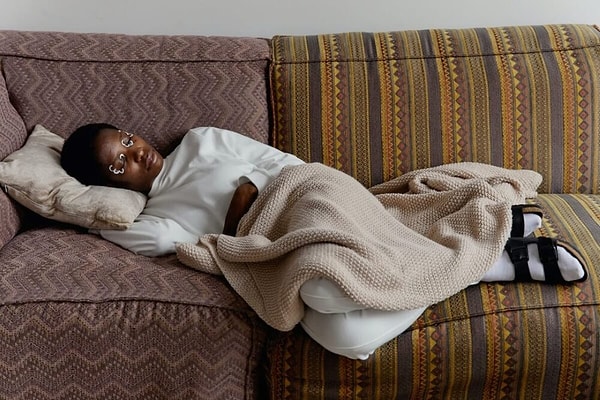
The living room, being the more 'communal' and open space of the house, often provides a sense of security for many people. In contrast, the bedroom can evoke feelings of solitude, darkness, or a sense of being 'closed off.' Particularly when feeling down, the brain seeks a less vulnerable environment - even curling up on the couch can feel like a safe haven. When depression or anxiety escalates, the bedroom can start to feel 'threatening' or excessively lonely.
Not Bringing Unhappiness into the Bedroom

Many people express, 'I love my room, I don't want to bring my negative energy into it.' It seems that sleeping in the living room, a space for everyone, works as an effort to keep the bedroom 'clean' and safe. This acts as a mechanism to prevent confining negative emotions to a single room.
Sleep Anxiety and Lack of Pressure
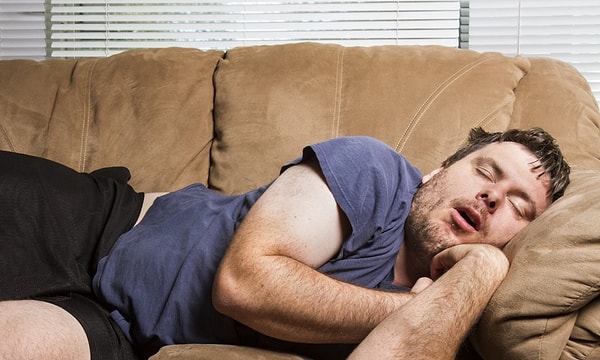
The pressure to sleep can be overwhelming when in bed, especially in the presence of insomnia or depression. Falling asleep while watching TV on the couch, sprawled out comfortably, feels more natural because sleep doesn't seem like an obligation. When the brain establishes a connection between the bed and stress/insomnia (a conditioned sleep anxiety), the couch becomes a 'neutral' and comfortable alternative.
Self-Punishment or Feeling Worthless
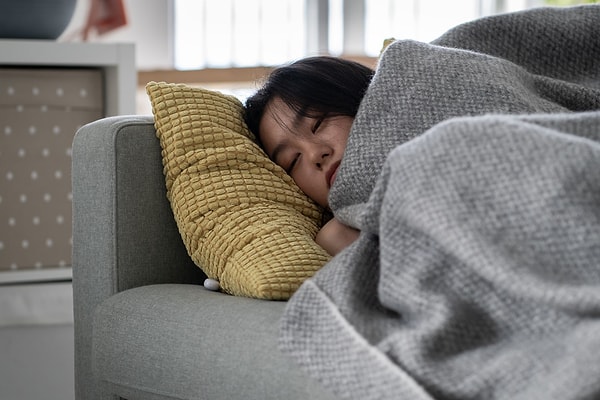
A person suffering from depression may feel as though they 'don't deserve comfort'. Opting to sleep on an uncomfortable couch instead of a cozy bed could be a subconscious form of self-punishment or carry an underlying sentiment of 'I don't even deserve this'.
The General Impact of Depression
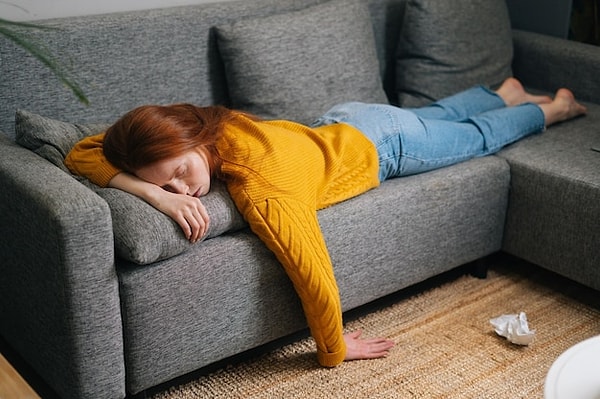
Depression disrupts sleep patterns: It can manifest as either excessive sleepiness (hypersomnia) or insomnia, triggering the tendency to sleep in unusual places. There's a reciprocal relationship between sleep and depression — poor sleep exacerbates depression, and in turn, depression disrupts sleep.
Keşfet ile ziyaret ettiğin tüm kategorileri tek akışta gör!
 Test
Test
 Gündem
 Magazin
 Video
Video



Send Comment