


How Engineers Interlocked 7,000 X-Shaped Concrete Blocks to Fight Earthquakes and Waves


Situated atop one of the world's most active fault lines and constantly battling harsh ocean waves, New Zealand has embarked on a massive engineering project to safeguard its transportation network. In the city of Wellington, a critical coastal strip where the highway, railway, and bicycle path run side by side, has been fortified with 7,000 specially designed X-shaped concrete blocks, interlocked as if pieces of a giant jigsaw puzzle. This futuristic coastal barrier, which cost approximately 349 million New Zealand dollars, has earned the distinction of being the world's first earthquake-tested shoreline protection system.

On May 16, 2026, New Zealand unveiled the most strategic section of the "Te Ara Tupua" project, offering an uninterrupted route for pedestrians and cyclists alike, seamlessly connecting the cities of Wellington and Lower Hutt.
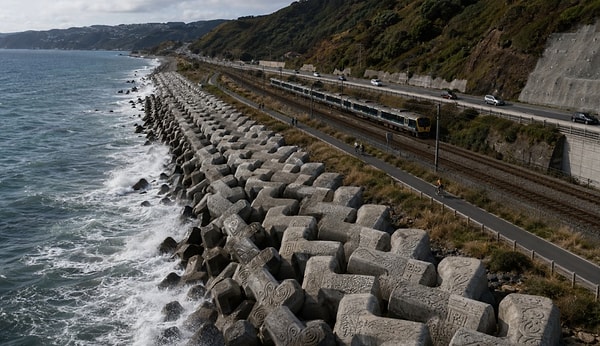
However, this inauguration was not just a display of a new route, but also a colossal defense wall built against the ocean and earthquakes.
The region where the project was constructed is situated not only amid giant waves and storms, but also directly on an active earthquake fault line. To counter this geological risk, a special technology named 'XBlocPlus' was utilized, developed by the Dutch engineering firm, Delta Marine Consultants.
Approximately 6,650 X-shaped concrete blocks, strategically placed along a nearly 2-kilometer stretch of the coastline, interlock perfectly as they are stacked on top of one another.
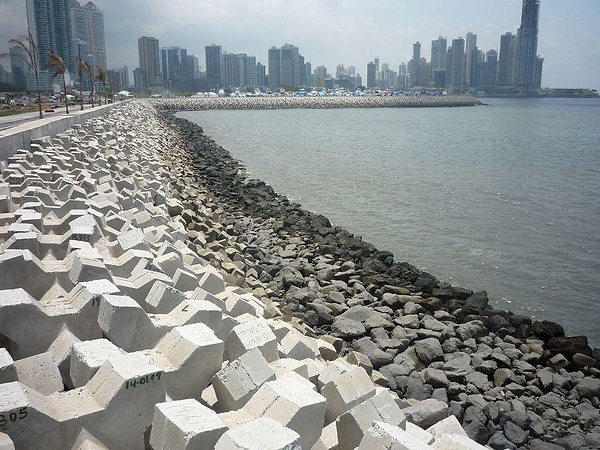
This structure, thanks to its geometric shape:
Absorbs the power of colossal waves from the ocean, thereby completely preventing coastal erosion.
These blocks, which have been tested for seismic performance (earthquake resistance) for the first time in the world, do not collapse when the fault line moves. Instead, they interlock with each other, keeping the structure standing.
These blocks, which can be installed at a much steeper angle compared to conventional stone fillings, not only save space on narrow coastlines, but also cut down the construction time by a full 12 months.
The total cost of the project, aiming to shield the state highway and the Hutt Valley railway network from sea level rises linked to the climate crisis, has been disclosed as 348.7 million New Zealand dollars.
This colossal budget was jointly covered by the government, the transportation agency, and local councils.
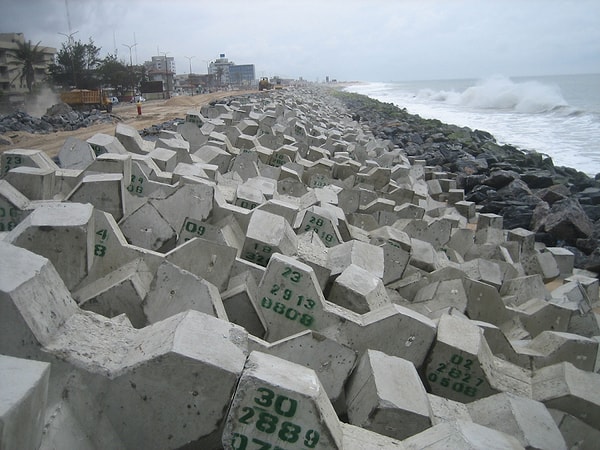
In contrast to ordinary, cold concrete blocks, these X-shaped structures lined along the beach feature special Maori patterns. This design, named 'Te Ripowai' (The Movement of Water), was developed through the collaborative efforts of indigenous tribal leader and designer Len Hetet and ecologists.
Designer Hetet encapsulates the philosophy with these words: 'If we take good care of the land, the water will reciprocate in kind.'
The unique textures etched onto the surface of these blocks mimic the natural rocky structure, facilitating the growth of marine plants and supporting the marine life in the region.
Keşfet ile ziyaret ettiğin tüm kategorileri tek akışta gör!
 Test
Test
 Gündem
 Magazin
 Video
Video



Send Comment