


No Need for Land or Forests: They Built a Massive Solar Farm in the Middle of a Lake


A groundbreaking technology in energy transformation has been brought to life in Germany, shattering conventional methods. Scientists who have discovered a way to generate clean energy without encroaching on forest lands or agricultural soils, have now set their sights on the surface of artificial lakes. SINN Power, a Germany-based energy company, has officially launched the world's first large-scale vertical floating photovoltaic (PV) system on the artificial Jais Lake located in the Starnberg region of Bavaria.
Dubbed 'SKipp', this patented technology stands tall in the middle of the artificial lake, needing neither soil nor forest, thereby breaking the mold.


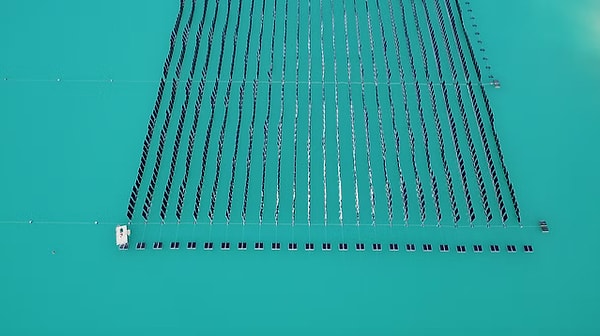
While traditional floating solar panels are laid out horizontally on the water surface, the SKipp system consists of vertical solar panels aligned in an east-west direction.
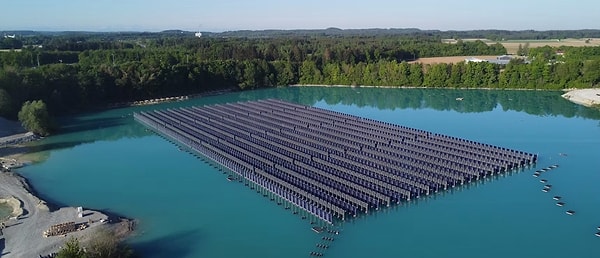
There are open water corridors at least 4 meters wide between the panels.
Behind this vertical architecture lies a marvel of engineering logic:
The vertical layout ensures steady power production throughout the day.
During the morning and evening hours when the sun comes at an oblique angle, a time when traditional horizontal panels generate the least electricity, the vertical panels maximize production.
A submerged and narrow infrastructure (the backbone), extending 1.6 meters below the water surface, keeps the panels in place. This structure provides controlled flexibility in high winds and changing water levels, thereby protecting the system.
This colossal facility, established on the Jais gravel pit lake, boasts an installed capacity of 1.87 MW and is anticipated to generate approximately 2 GWh of clean electricity annually.
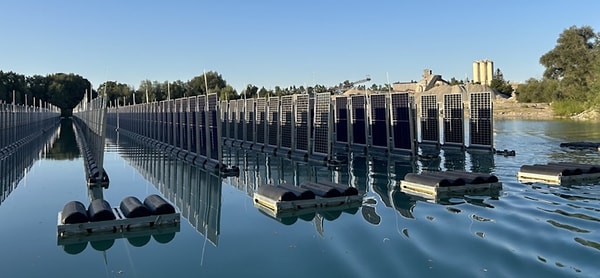
Kies und Quetschwerk Jais, the company operating the gravel pit, has managed to reduce its grid electricity consumption by 60% right from the get-go, thanks to the vertical panels. Once production stabilizes completely, this saving is expected to reach up to 70%. Moreover, only 4.65% of the lake's surface is covered during this massive energy production. This percentage is significantly below the legal limit of 15%, which is why the installation of a second phase with a capacity of 1.7 MW on the lake is also being considered.
Environmental monitoring data has proven that this extraordinary vertical structure does not harm the lake ecosystem, but rather, it provides positive effects.
The vertical structure of the panels allows sunlight to reach deeper water layers, enhancing the water's oxygen exchange and thereby improving its quality.
The local inhabitants of the artificial lake adapted to the system in no time. Observations show that water birds are nesting on the floating platforms, while schools of fish are breeding and taking shelter around the 1.6-meter stabilizing spine underwater.
The facility is connected to the shore feeding point via a floating cable system, transmitting energy to the grid without harming the lake's bottom or its ecosystem.
Bavarian Premier Markus Söder spoke highly of the project, expressing his thoughts as follows:
'This colossal floating solar power plant on the lake, ingeniously generates electricity based on the position of the sun. This project is a perfect example of engineering expertise for Bavaria, a land of engineers and entrepreneurs and a leader in renewable energy.'
SINN Power plans to carry this concept of vertical floating solar panels into offshore and ocean applications in the future. Meeting the technical requirements for sea operations, this system could potentially integrate with offshore wind farms in the future, creating massive clean energy havens in the middle of the oceans.
Keşfet ile ziyaret ettiğin tüm kategorileri tek akışta gör!
 Test
Test
 Gündem
 Magazin
 Video
Video



Send Comment