


Engineering Marvel: $30 Billion Artificial Island Built With 350 Truckloads of Soil Daily

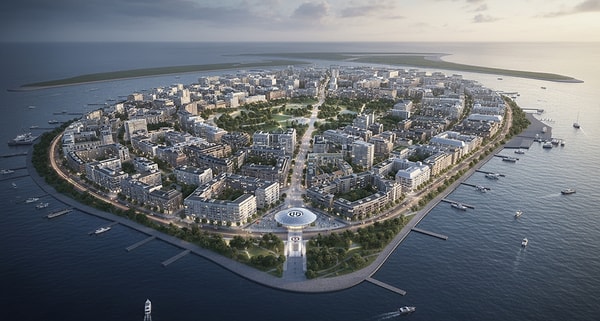
Denmark is undertaking one of the most ambitious engineering projects in modern history, with the dual aim of expanding its capital, Copenhagen, and protecting it against rising sea levels. The artificial island project, named Lynetteholm, is making waves in the middle of the Baltic Sea and maintaining its place in global discussions with its massive logistical operations and environmental debates.


The Lynetteholm project is not merely designed as a new residential area, but also as a colossal "climate shield" for Copenhagen.
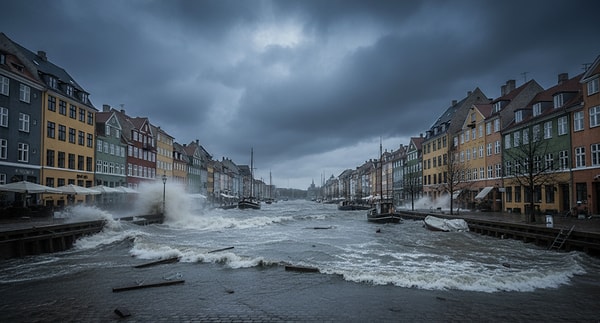
Since 1900, the Baltic Sea has risen by 17 cm and the intensifying storms have left the city facing a serious risk of flooding.
The project, spearheaded by former Prime Minister Lars Løkke Rasmussen and former Mayor Frank Jensen, was approved in June 2021 by the parliament with a significant political consensus.
The primary objectives of the project are as follows:
Creating a new neighborhood to accommodate 35,000 people.
Generating job opportunities for 35,000 individuals on the island.
Constructing a natural barrier to safeguard the city against storm surges.
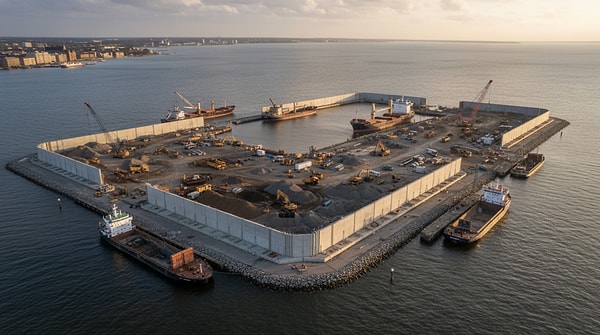
As of August 2025, the second phase of the project has already exceeded 50% completion, with 5.2 km of the planned breakwaters already finished. The project's financing will be covered through a 'self-sustaining' model, based on the sale of plots on the island.
One of the most striking aspects of the project is the source of the materials used.
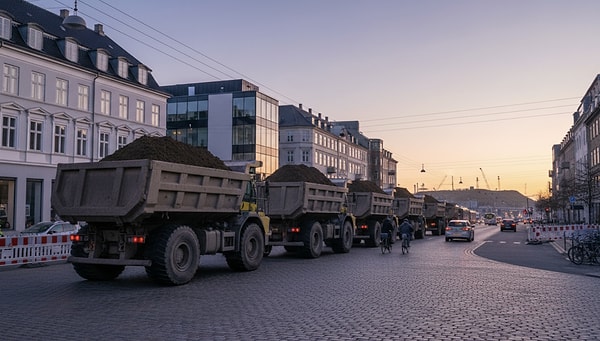
The island is being constructed through the recycling of waste soil from other construction projects across Copenhagen. However, this has sparked discontent among local residents, as it has resulted in approximately 350 trucks entering city traffic each day.
The project is not only a local issue, but also the focal point of an international debate. The Baltic Clean Coalition and neighboring Sweden argue that the artificial island could reduce the flow of oxygenated and salty water into the Baltic Sea by 0.5%. Citing potential ecosystem disruption, Sweden has formally objected to the project under the Espoo Convention.
Despite the criticisms and risks, the Danish administration remains steadfast in its plan.
Shaped by the architectural touches of prominent offices such as COWI, Arkitema, and Tredje Natur, the island will be integrated into the city through an extension of the metro line and a harbor tunnel. By the time we reach 2050, what is currently open sea will have transformed into one of Copenhagen's most modern and secure neighborhoods. Experts suggest that this model could serve as a significant point of reference for Brazilian port cities like Santos and Salvador, which are grappling with the climate crisis.
Keşfet ile ziyaret ettiğin tüm kategorileri tek akışta gör!
 Test
Test
 Gündem
 Magazin
 Video
Video



Send Comment