


2,000-Year-Old Ship’s Cargo Discovered Underwater, Containing Thousands of Artifacts!


In the depths of Lake Neuchatel in Switzerland, two underwater archaeologists have made a remarkable discovery dating back to AD 20-50. The salvaged ship cargo reportedly contains over a thousand ceramic artifacts and swords. According to a report by Euronews, this significant discovery was kept under wraps for a while.
Source


A sunken relic dating back to the Roman Empire era was discovered in Switzerland.
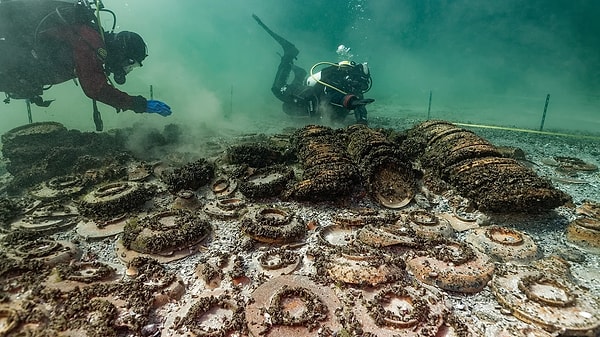
As reported by Euronews, two underwater archaeologists, Fabien Langenegger and Julien Pfyffer, made a striking discovery in Lake Neuchatel in Switzerland. They uncovered an exceptionally well-preserved shipwreck that dates back to the Roman Empire. In an interview with Euronews, Julien Pfyffer revealed that the find likely contained a cargo from a ship that sank between 20 and 50 AD, which was in an incredibly well-preserved state. 'We remained motionless over this cargo for several minutes. As I watched Fabien, I realized we were witnessing a truly unique moment,' he said.
Despite this significant discovery taking place in late 2024, it was kept secret from the public for a long time due to the risk of looting.
Underwater archaeologists affiliated with the Octopus Foundation carried out excavations in 2025 for two weeks and in 2026 for about a month, unearthing more than a thousand artifacts. The investigation began when a dark spot, which had been increasingly visible in recent years, caught the researchers' attention in drone footage taken over Lake Neuchatel.
It provides significant clues about the ancient trade networks in the region.
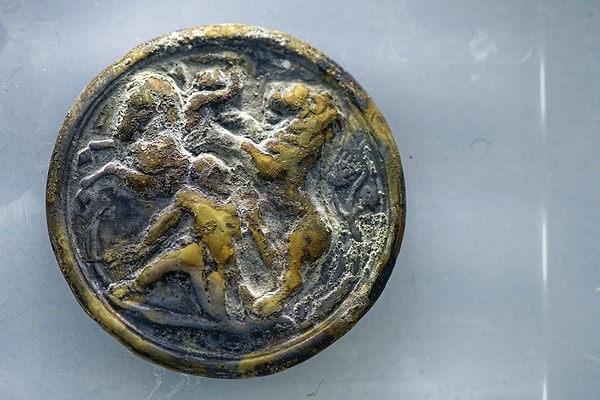
The finds are believed to belong to a cargo ship that set out to transport kitchen utensils, produced in Switzerland, to a Roman camp. The dating of one of the crates to AD 17 indicates that the discovery extends back to the early Roman period.
However, the wreckage of the ship itself has yet to be detected in Lake Neuchatel. In recent years, Roman ship remains unearthed in the Rhine and Rhone rivers continue to provide significant clues about the ancient trade networks in the region.
Moreover, it's reported that two gladiator swords, a dagger, a belt buckle, and a fibula were found during the excavations. According to archaeologists, these pieces suggest that Roman legionnaires may have accompanied the ship.
The team from the Octopus Foundation is working on a book and a documentary, planned for release in 2027, to share the findings of the discovery with a broader audience. In addition, an exhibition is being planned to display the discovered artifacts.
Keşfet ile ziyaret ettiğin tüm kategorileri tek akışta gör!
 Test
Test
 Gündem
 Magazin
 Video
Video



Send Comment